
Stress hasn’t left any generation or any age except for infants, toddlers, and people with poor mental health who have lost the power of thinking. Yes, they aren’t stressed because they are not dealing with worldly materials. This doesn’t mean the others have to be constantly stressed about something or the other.
Human life is all about stress and stress management. Hence learning the right techniques and executing them should be the need of the hour. Here in this article, I will talk in detail about the condition of stress and stress management. You can go through it and learn from head to toe about the topic.
My first tip will be to, Be grateful to people in life. Show gratitude by being 9 times more positive than counting on their negative values. I always work on one rule, “One negative serves as a crab’s legs more than thousands of parts of lacquer”.
Understanding Stress: Causes, Symptoms, and Impact on Well-being
What is Stress?
Is it synonymous with anxiety?
Anxiety is the result of stress, and being anxious makes dealing with stress more difficult. Stress is the mental and physical state of distress. It can be reversed with conservative measures and support from loved ones.
Stress can have several signs of representation as everybody has a different level of expression. It is not always evident that stress has some symptoms. One may be in the preliminary levels and most probably ignoring the signs due to work or some other reasons.

Stress takes up a toll on one’s physical and mental health simultaneously. Physically one may or may not be injured but mentally there’s always a chemical reaction going on.
A few prominent signs of stress that I have recorded include:
Psychologically
- Not able to focus
- Worried always
- Anxious irrelevant
- Difficult to memorise events
Emotionally
- Angry
- Frustrated
- Irritated
- Moody
Physically
- Hypertensive
- Inapparent loss or gain in weight
- Frequent transitions in the menstrual cycle
- Mostly Ill due to infections
- Libido
Behaviorally
- No self-care
- Addicted to drugs, alcohol, and smoking
- Not joyous
- Pessimistic thinking
The impacts of stress and anxiety can be beyond imagination. A stressful lifestyle is a boring monochromatic lifestyle that can be reversed if one starts as soon as possible. Some detected ones have been seen to land in clinics taking psychiatric help. Stress is not only a problem for the person dealing with it but also for his/her loved ones. It can be a financial downfall, addictions, disregard in the workplace, or disrespect from colleagues and relatives.
Therefore I feel blessed to be a conflict resolution counsellor and help generations of conflicts to be solved through the mutual help of the seeker.
The Role of Stress Management Counselling: Empowering Individuals to Cope
Stress crosses limits and the undiscovered stressors start getting discovered. But it’s too late if one is dealing with everything alone. So here comes the need for an expert. Stress management counselling can be a sure-shot way of coming out of a traumatic experience. Here’s what stress management counselling under me holds for its bearers.
Get to Know What Triggers Stress Buttons

Therapy is magic. One can speak about everything that is stressing them out in a wholesome manner because the front-end personality is never going to judge the sufferer based on their condition.
A good therapist will analyse the situation and identify stressors that have been bothering the person.
For instance, interns in a corporation take too much stress due to their job, senior colleagues, and family pressure. They don’t know how to manage time when new and are stressed due to the imbalance in their lives. Hence good therapy can suggest ways to deal with work and personal life simultaneously.
Know Healthy Ways of Venting Out Stress
One cannot say that after some point in life, they will be stressed free. There’s always some of it remaining hidden in some cortex of the brain. So why not vent it out safely?
Make space for new ones so that there are new solutions for them. Getting stuck with old problems never lets people grow in life. So move on as fast as you can!
Face the stressors of life. Let the counsellor help to peacefully outgo the stress. Either solve it or leave the stuff behind.
Coping with the Situation and Practising Self Care
Listening to a guide motivates more impact than doing the thing itself with no motivation. Hence we counsellors try to identify the stressors in your life and be prepared for the worst.
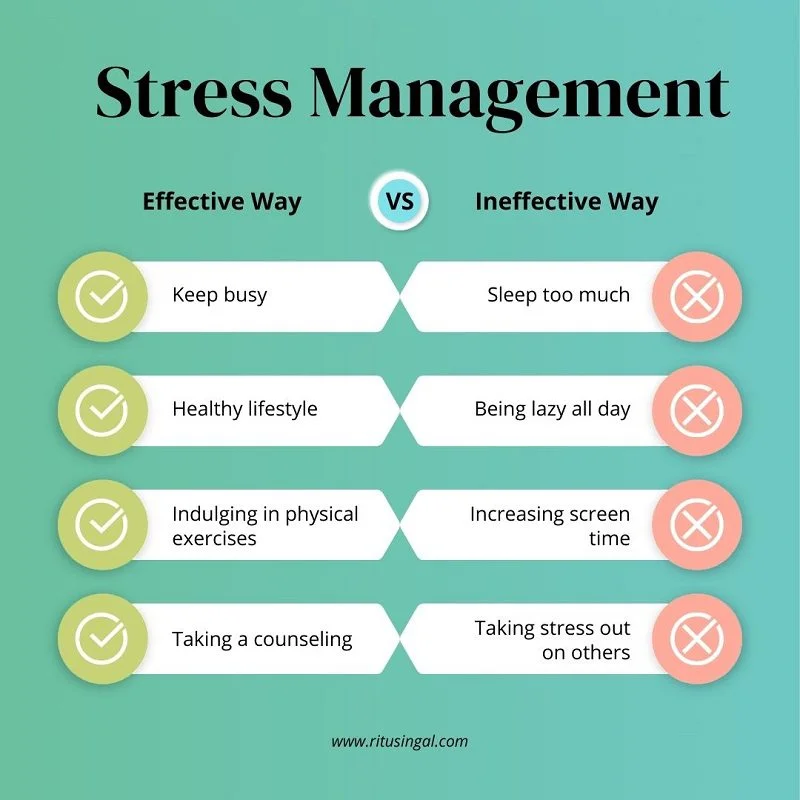
Stress will come and go but self-love and self-care shouldn’t be forgotten. Self-care includes maintaining good health, practising meditation, breathing techniques, self-grooming, listening to good music, and enjoying outdoor activities.
Identifying Personal Stress Triggers: Gaining Self-Awareness for Effective Management
Stress levels and stressors differ a lot from person to person. But gaining self-awareness through the help of counsellors gives a healthy way of dealing with stress. Let’s learn how to identify these stress triggers because this is going to be the first step towards a stress-less lifestyle.
Watch out for Physical Health:
Often stress has a peculiar effect on physical effect. It makes the face lose charisma and appears dull and gloomy. Too much hair loss and irregular bowel and bladder habits also count. Similarly, people get lethargic and lose the zeal to put effort into work. Bad stomach aches are the commonest symptoms as reported by people.
Think about Responsibilities:
Think about whether he/she feels happy whenever they move inside the work cabin or when returning home. If there’s something that is unusually not giving good vibes, then that can be their stressor. Think about the people staying there, do they make good companions?
Evaluate Daily Life:
People may be multitasking thinking they can manage everything but here’s where they have been going through a lot of unidentified stress. For instance, single moms and dads have to take care of their kids, handle office work, do household chores, earn a decent amount, and even then act sweet always. Life isn’t always easy.
Find External Stressors:
Sometimes unfavourable weather, bad transport in metro cities, traffic and accidents everywhere, and political elections have bad effects on mental health. The common man is the one to suffer in all this with the least help from big influential parties.
Relaxation Techniques: Cultivating Inner Calm and Peace
Long inhalation and exhalations help to activate the parasympathetic nervous system and get relief from activated sympathetic nervous systems. Why be in a fight and flight mode when one can be calm and quiet? I have seen conflicts destroy most of our healthy lifestyles.
The soul mantra of conflict resolution lies in taking help from an unbiased source. My observation says that conflicts mostly arise when people start considering themselves as always right and don’t heed others’ perspectives.
So here are some of the relaxation techniques that help in the long run if practised religiously daily.
1) Discover inner peace rather than finding peace outside the world. One can be calm while standing in the most crowded streets while some people even get panic attacks on the massage table. So it’s all about discovering the happy space.
2) As said, take long breaths. Long inhalation helps to take maximum oxygen to vital parts kike the brain and heart. Long exhalation gives time to empty the lungs properly. Controlled breathing goes a long way in finding determination and the goal of life.
3) Nobody can keep everyone happy at the same time. So hold on, thinking that someone is fighting with the odds.
4) Knowing and recognising each emotion in the story is crucial. One cannot stop the inevitable to happen but preparation for the worst is even more important.
5) Know the Story: People may think that everything is going out of control but it gets slower once they read their own story. Know the lacuna of the sky. Label each emotion and why that emotion got birth. Don’t run away from the problems but resist and face them. Inquire about the emotions and treat them with kindness and love.
6) Acknowledging, Connecting, and Talking about the Emotions he/she may be dealing with alone. It helps in distributing the sorrow and handling it properly.
7) Don’t ignore the joy list. A joy list is a complete sequence of activities one loves to do when they are happy. At times of stress, it will help them in reminiscing about the moments and tackling them with fun activities.
8) Cultivate a sense of gratitude towards every small thing happening. Smile in the morning in front of the mirror and give a good start to body and mind. Be thankful for this human life.
9) Accept that challenges will come and there will be exams. No one can escape from this situation because after every dawn there is a dusk and vice versa.
10) Serve the needy and get blessings for the future. Practise good self-hygiene such that infections don’t have a chance to enter the healthy body.
Cognitive-Behavioural Approaches: Restructuring Thoughts for Stress Reduction
There are always alternative perspectives on a particular situation. Cognitive behavioural thinking teaches people to be stressed free by choosing the less stressful options. It’s all about healthy thinking without pessimism.
For instance a group of friends went out for a movie but forgot to invite a friend to the next room. That friend might grow negative thoughts against his friends thinking they did it deliberately because they don’t like him. But cognitive thinking asks people to sort out the matter by talking and discussing. Other perspectives can be, maybe they forgot to invite as they were full, maybe the uninvited person missed their invitation or anything else.
Time Management and Prioritization: Achieving Balance and Efficiency
Time management reduces stress among people because they do not forget important events. Being punctual to deadlines decreases half of the work stress as one doesn’t have to work late at night in the last hours. There’s a good time for every hobby to follow. The secret lies in what value we give to those 24 hours allotted to us. A lot of wisdom and a lot of planning can change the perspective of time management.
Must Watch:
- Organise the list of tasks to be done in a day or week or month.
- Analyse and prioritise what is important and has to be done immediately.
- Set realistic goals and divide each step into a target.
- Communicate with respective delegates who will help in completing the task.
- Maintaining a flexible time frame for work purposes.
- As a senior employee, one can even delegate some work to subordinates
- Planning for good time management.
- Taking the help of experienced advisors and counsellors for the work.
Healthy Lifestyle Habits: Nutrition, Exercise, and Sleep for Stress Relief
Quality sleep with caffeine deprived diet and regular moderate levels of exercise can help for a healthy stress-free life. Choose 30 minutes of walking over 30 minutes of Netflix and chill. Care for 8 hours of sound sleep. Choose green vegetables and proteinaceous homemade food over fried mouth-licking eateries.
Mindfulness and Meditation: Cultivating Present-Moment Awareness
Mindfulness comes through meditation. Living in the present moment and knowing the purpose of what one is doing and why he/she is doing is known as mindfulness. Mindfulness doesn’t come overnight. It has to be cultivated through breathing techniques, going to social gatherings and participating in social activities.
Meditation under guidance becomes easy to adapt to rather than starting up with zero ideas. Whatever you do at a particular moment, give it your 100%. Don’t be diverted thinking about some other work while you are busy doing something else. This makes task accomplishment a lot easier.
Setting Boundaries and Assertiveness: Empowering Yourself in Stressful Situations
Being assertive is better than being passive or aggressive while in a meeting with a bunch of delegates. As an assertive, one can express their views and keep their stand. Qualities of assertive behaviour include:
- Respects others views
- Takes time to present their views
- Polite and respectful
- Stands for personal interests without hurting others’ perspectives.
- Never say yes without knowing the facts.
- Doesn’t have feelings of victimisation by showing passive behaviour
- Never aggressive on formal fronts.
Building Resilience: Strengthening the Ability to Bounce Back from Stressful Events
Every time life gives a blow, strong people stand up again and move forward while weaklings give up.
So how to be a strong one?
Build resilience and bounce back to normalcy every time stressful events hit up.
My life story is no less difficult than any other woman today. I have experienced the upbringing of an independent woman after her husband’s death when everything was on the brink of utter loss.
Along with my two young girls, I have. brought up the entire business and tried to inspire many other women worldwide. Today I stand strong and competent in the male-dominated corporate world and provide financial and emotional support to several educational programs for women and young girls.


As a life coach and a parent, I understand the challenges of navigating the digital landscape with our children. Technology has become an integral part of our lives, and it’s essential for parents to understand how to guide their children through this ever-evolving world. In this blog, I will share my insights and experiences to help you become a more informed and confident digital parent.
There are a variety of resources available to help parents understand what they might be up against so that they can make better decisions for their children.
The first step in protecting your child is to understand what you are up against. As we become more digitally connected, it is important to recognize that the internet is not a “safe” place where children can freely explore under our watchful and protective eyes. The internet has risks associated with it, just like the real world has risks.
The same rules for being safe and responsible online apply as for being safe and responsible offline. In the digital age, we are all faced with a new set of challenges, including peer pressure and cyber-bullying. It is important for parents like me to understand their role in helping their children develop socially in this virtual world.
Balancing Screen Time: Setting Healthy Limits for Children
The screens are always on. The internet is always on. Our children’s bedroom may be your child’s bedroom, but that doesn’t mean they aren’t using their smartphone or laptop to access the internet at night, while you are trying to sleep!
As parents, we want to ensure that our children have a healthy relationship with technology. One of the most critical aspects of this is setting appropriate limits on screen time. It’s essential to establish boundaries and create a balanced schedule that includes time for homework, physical activity, and social interactions.
Encourage your children to take regular breaks from screens and engage in other activities to promote their overall well-being.
I recommend starting by setting clear rules around when and how long kids can use devices. Limit screen time to 1-2 hours on weekdays and a bit more on weekends for older children. Devices should be charged overnight outside of bedrooms and have parental controls enabled.
There are many apps available that help control screen time and help you stay informed about how much their children use the internet and how it impacts their sleep.
Checkout: Parenting Techniques for Working Parents That Actually Work Brilliantly
Promoting Digital Literacy: Empowering Kids for Responsible Technology Use

Digital literacy is the ability to use technology effectively and responsibly. As parents, we must teach our children how to evaluate online information, communicate respectfully, and understand the potential consequences of their digital actions.
Encourage your children to think critically about the content they consume and the information they share online. By fostering digital literacy, we empower our kids to make informed decisions and become responsible digital citizens.
I aim to have open conversations with my kids about these topics and model good digital habits myself. In my opinion, children should be able to:
- Think critically about what they are reading and evaluate the information for validity, bias, and bias-related tactics
- Read critically about what they are reading and evaluate the information for validity, bias, and bias-related tactics
- Evaluate a source’s credibility in order to make a decision about whether or not to believe that source
- Identify when a source is biased toward one point of view or another
- Protect their identity in ways that do not allow others to use their accounts
- Use fact checkers who can identify questionable information Understand how to protect their privacy online
- Know what dangers exist when using technology (e.g., predators)
Cyber Safety: Ensuring Online Security for Your Children
As a parent, keeping my children safe online is a top priority. This involves teaching them never to share personal information with strangers, how to avoid cyberbullying and inappropriate content, and the importance of using strong passwords.
I also utilize parental control apps and features that allow me to restrict certain websites, monitor messaging apps and track the location of my kids’ devices.
I teach my children not to click on suspicious links or download apps from untrusted sources. Install security software and parental controls on all devices your children use. I also monitor their social media use and get to know who their online friends are.
If your children encounter something inappropriate or someone makes them uncomfortable, instruct them to tell you immediately. Make sure they know they will not be in trouble for reporting such incidents. With proper education and precautions, you can significantly reduce your children’s risk of cyber threats and exploitation.
Checkout: Parent Children Relationship – Life Coach Ritu Singal
Digital Parenting Styles: Finding the Right Approach for Your Family
Different families have different needs when it comes to digital parenting. I aim to take an approach that is tailored to my children’s ages, personalities and developmental needs. For younger kids, I tend to take a more restrictive approach with firm rules and limits.
For teens, I shift towards a more democratic style, negotiating screen time and privacy policies together. The most important thing is open communication and trust. It’s essential to find a balance that works for your family and aligns with your values. Be open to adjusting your approach as your children grow and their needs change.
Permissive styles with few limits also tend to be ineffective. Instead, focus on educating your children about technology and the reasons behind your rules. Explain that your role is to keep them safe while still allowing for appropriate autonomy and risk-taking. With time, trust, and consistency, you’ll find a digital parenting style that works for your unique family.
Encouraging Offline Activities: Striking a Balance in a Tech-Saturated World
While technology has its benefits, I believe it is important to encourage non-screen activities for children’s healthy development. I aim to lead by example by limiting my own device use and prioritizing family time that is screen-free.
I enroll my kids in sports, arts programs and other activities that foster social and motor skill development. On weekends, we go on outings to parks, museums and spend time with friends and relatives.
Plan regular outings that get your children away from technology, like going to the park, museum, library, or mall. Enroll your kids in sports, arts, or other activities that focus on in-person interaction and skill-building. Make time on weekends for unstructured play – whether that’s building forts, reading books, or simply daydreaming.
Building Trust and Open Communication:
Nurturing a Digital Relationship with Your Child
 The foundation of effective digital parenting is open and honest communication with my children. I aim to have frequent conversations about their online activities in a non-judgmental manner.
I want my kids to feel comfortable coming to me if they encounter any issues online. By fostering a relationship built on trust, I hope to guide my children towards making safe and smart choices in the digital world.
Let your children know they can come to you for help dealing with anything uncomfortable or confusing they encounter online. And when they do come to you, make sure to validate their feelings and thank them for their honesty.
Over time, your children will learn they can trust you with sensitive issues that arise in their digital lives. With this foundation of openness and trust, you’ll be able to guide your kids toward safe and productive technology use.
Online Privacy and Reputation Management: Safeguarding Your Child’s Digital Identity
As my children get older, I educate them about the importance of protecting their privacy and digital reputation online. This involves teaching them to avoid oversharing personal information publicly, being careful what they post on social media, and managing privacy settings appropriately.
I emphasize that anything they post could remain online forever and impact their future opportunities.
As your children create and post online content, discuss the permanence of the internet and the importance of maintaining a positive digital footprint. Teach them to think carefully before posting anything that could be embarrassing, inappropriate or unprofessional in the future.
Monitor what they share and who they connect with online. If they do post something regrettable, help them learn from the experience and determine the best way to remove or minimize the content’s impact. With guidance, your children will develop habits that protect their privacy and help them curate an online presence that reflects positively on them now and in the future.
Cyberbullying Prevention: Supporting Your Child in a Digital Social Environment
I aim to teach my children how to be kind, thoughtful members of their online communities. This includes promoting empathy, respecting differences of others and intervening if they witness cyberbullying.
If my children come to me about being bullied, I aim to listen without judgment, gather the facts, document the abuse and work with the school to resolve the issue. I want my kids to know I have their back and am there for them.
I am sharing one incident with you about a girl who was a victim of cyberbullying. She came to me and told about her boyfriend that they both clicked some illegitimate pictures and now he was blackmailing her. She said that he asked her to get physical with him or he will leak those pictures online.
That is where we must educate our children not to overtrust someone and if by chance something happens they must seek help from elders or report to the cyber police department.
Tell your children that if they are bullied or witness bullying, they should tell you or another trusted adult immediately. Emphasize that cyberbullying is never their fault and they will not be punished for reporting it. Install reporting features and parental controls that allow you to monitor and restrict problematic content and contacts.
Consider restricting their access to the app or platform where the bullying occurred. Report the bullying to the site administrators. Seek help from your child’s school or contact authorities if the bullying is severe or persistent. With open communication and proper safeguards, you can help prevent and address cyberbullying before it causes lasting harm.
Checkout: Transforming Indian Parenting Techniques
Leading by Example: Modeling Healthy Digital Habits for Your Children
As a parent, I know that my own device usage and digital habits have a huge influence on my children. I aim to lead by example by demonstrating responsible technology use, moderating my screen time, and using devices mindfully. I want my kids to grow up seeing technology as a tool to be used intentionally, not something that controls our lives.
To model good digital habits, set clear limits on your own screen time, especially around your children. Put away devices when spending time with family and friends. Explain to your kids why you’re putting your phone away or stepping away from screens for a period of time.
When you do use technology, demonstrate safe practices like using strong passwords, reviewing privacy settings, and thinking before posting online.
Your children are more likely to follow the rules you set if they see you following those same rules. So, reflect regularly on your own technology habits and prioritize moderation. Remember: as a parent, you have the opportunity to shape how the next generation will engage with an increasingly digital world. Leading by example is one of the most impactful ways to do that.
Closure
Navigating the digital world alongside my children has been an ongoing journey of discovery for me. There are still so many aspects of technology that I’m learning right alongside them. But by keeping the lines of communication open, setting clear boundaries and fostering trust, I hope to guide my children towards making safe and smart choices online.
I don’t have all the answers, but I’m there for them every step of the way. Together, we’ll navigate this digital landscape – one conversation, one rule, and one teachable moment at a time. I’m so proud of the thoughtful, kind and curious kids they are becoming.
With patience, love and plenty of laughter, I believe we’ll continue to grow together into the future, screen time and all.

Living in a free country is a privilege we Indians have cherished for the past 76 years. Freedom is our fundamental birthright according to the constitution of India. We all know our Indian constitution doctors the fundamental rights of all Indian citizens, the most important being Freedom of speech and expression.
But have you ever questioned yourself about this right? “Do we feel free to express our feeling and have the freedom to give voice to our thoughts?”
As a life coach, I counsel people who live their life encaged with negative thoughts, failures in the past or fear and pain of losing a loved one. The worst of all is losing yourselves to depression, anxiety and a state of sad remorse which deepens the void inside us.
We tend to negate the positivity in our lives, making ourselves slaves to negative experiences. The reasons for this slavery might be endless and unique for everyone, but eventually, it’s the freedom we all seek.
Being a Life coach, one with her own happy and sad experiences in life, I want to act as a sounding board through difficult decisions and motivate people by sharpening their skills.
As I always say, Life coaches can solve difficult situations with a far-stretched vision. They can guide you on how to do things with a clearer perspective without getting stressed out and bring out the best in you.
Let’s peek into some common issues where I can help you to be a Freedom fighter rather than a caged slave.
Stress Management
Stress is an emotional feeling that leads to physical tension under circumstances that make you feel angry, frustrated, or nervous. It’s a reaction of our body to a challenge.
Our endocrine system releases hormones during stress that gives us extra energy and strength to cope with a stressful situation. Stress in low doses is good for your health and encourages you to perform well under pressure, like meeting deadlines.
I narrated a story in one of my youtube motivational videos on “How to forget memories?” It was about two monks standing at the river bank and saw a woman who wanted to cross the bridge. But due to bad weather, she was unable to do so. She pleaded with the monks to help her cross the bridge.
The two monks looked at each other in bewilderment because they had taken the pledge not to touch a woman. But the senior monk strode towards the woman, picked her in his arms and crossed the bridge. He gently set the woman on the ground on the other side of the river.
The woman thanked the monk, but the disciple was agitated and didn’t speak to him. After a week, the disciple told the old monk that he no longer respect him as he didn’t honour his vow.
The senior monk smiled at the disciple and calmly replied, ”I touched the woman once and carried her to the other side of the river. But you have been moping on it and have carried the women in your mind for a week.
Now tell me, who is at fault? The moral of the story – Do not cling to your past and learn from it but don’t carry the burden of memories. They will not make you move forward but will pull you into the darkness of stress and anxiety.
“Life is riding a bicycle. To keep balance, you must keep moving.” -Albert Einstein
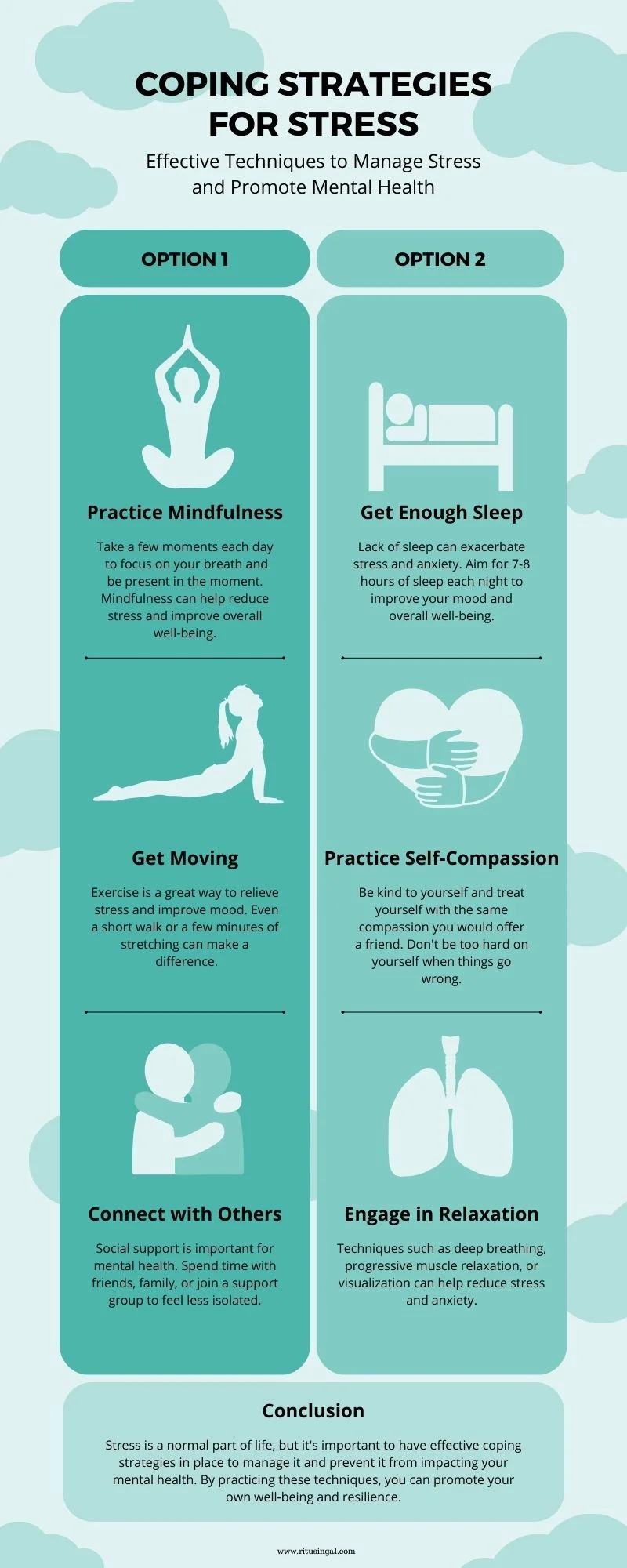
I have counselled many personnel about, how to maintain a work-life balance and free themselves from the shackles of the past. There are a few points regarding Stress management that I insist on-
- Get up early in the morning. Say your prayers and plan your day.
- Try to maintain a balance between daily work routine and find time to relax
- Be active and exercise regularly
- Walking, cycling, swimming, reading, and meditation are a few stressbusters
- Shun the negative feelings and take control of the situation. Have faith in yourself.
- Socialising is an effective tool in relieving stress. Connect with like-minded and positive people
- Setting up goals and trying to meet the challenges, whether at home or work gives purpose to your life
- Avoid unhealthy habits like smoking, drinking alcohol, etc.
- Volunteering for community work or helping out a friend or relative might work wonders with your self-confidence and help you cope with a stressful situation
- Develop a hobby and pursue it, giving yourself a much-needed me-time
- Recognise and counter the signs of stress and seek help from your friends, family or a trusted life coach
- Talk to a therapist or a health professional if stress is affecting your well-being
- Stay positive and smile a lot because “Smile improves your face value”
Time Management
Time is the most valuable coin of our lives. You spend it wisely and reap the benefits. Once you lose it, you never regain it.
“Time is Free, but it’s Priceless. You can’t own it, but you can use it.” -Harvey Mackay
It’s the need of the hour to manage your work timely and proficiently. I have counselled numerous men and women on how to manage their time. In my blog on “How you can accomplish your dreams with effective time management coaching”, I have tried to explain the importance of utilising time productively and efficiently by prioritising your work schedule.
In my youtube video about “How to manage time better”, catching three rabbits in a go, you need to plan your move. One rabbit is family (my children being the priority), another is work, and the third is my social responsibilities. I tried to give 100% attention and efforts to whatever I did without getting distracted.
The same 24 hours, which were earlier not enough to complete the daily tasks, became a child’s play. I have learned to use every minute of the day to its fullest without getting distracted and mastering the art of compartmentalisation.
Getting the work done on time is half the job done, making you feel free from stress and anxiety. The timely completion of the deadlines at work or completing your household chores boosts your self-confidence.
Self-discipline and self-reliance effectively influence various aspects of life, leaving no room for procrastination. I always emphasise in my coaching the following points to effectively manage your time and hence the work schedule:
- Do a Time Audit, i.e. List the to-do things in the order of priority and not preference
- Set goals and time limits for the same
- Prioritise tasks based on urgency and importance
- Avoid multitasking. You are a human being, not a machine
- Block distractions
- Take ‘time-out’ sessions between hectic work schedule
- Organise yourself depending upon the best time to dedicate to completing specific tasks
- Work smarter, not harder
- Plan ahead so that you may hit the road the next morning
Mental health Counselling
Depression is an emotional state of mind in which a person feels sad and losses interest in activities. The symptoms of this disorder may vary from mild to severe, leading to a decrease in the ability to work efficiently at home or office.
One in every six people experiences depression at some time in their life. A staggering figure, isn’t it? Death of a loved one, loss of a good job, ending of a relationship, unable to maintain social status, and the list goes on experiences that are difficult to endure by both men and women.
Although women are more prone to depression due to hormonal changes at various stages of their life and making a mark in this male-dominated world is quite challenging. Medications like antidepressants might be helpful to control it but have side effects like drowsiness or fatigue and hamper daily activities.
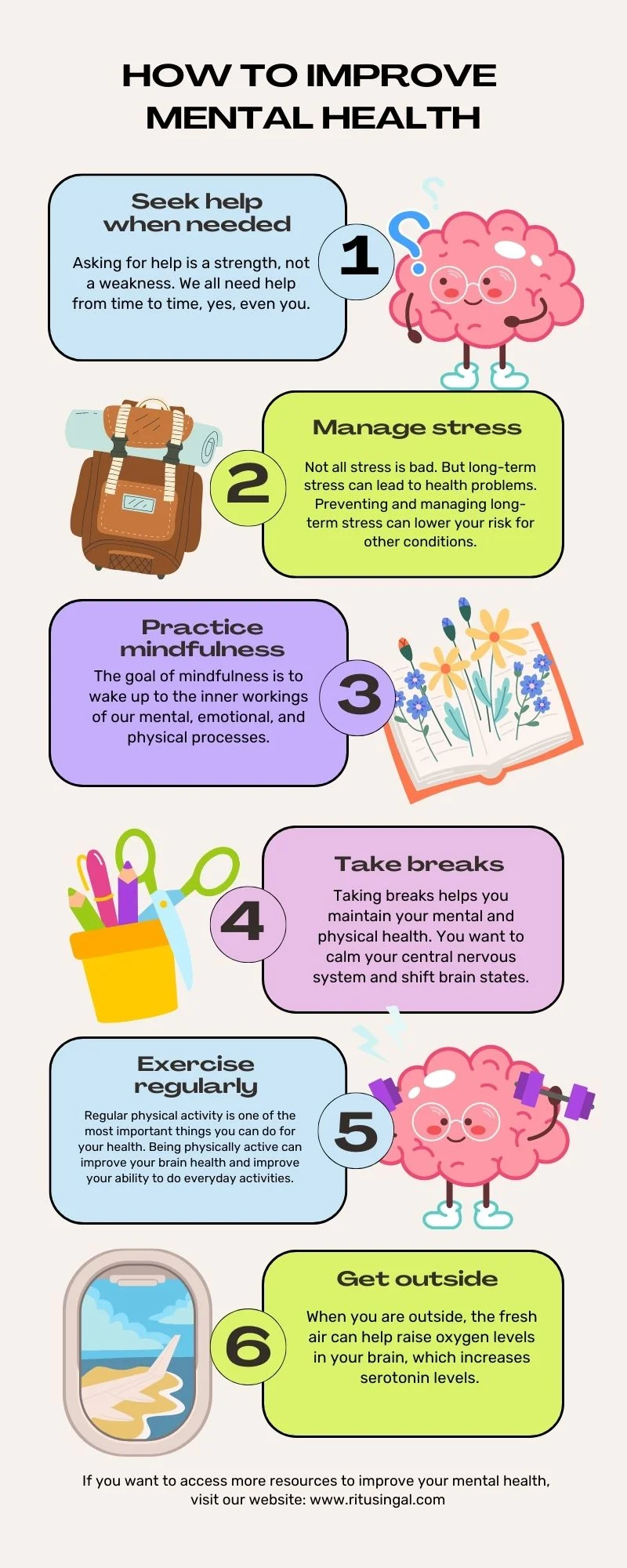
By adopting a holistic approach to mental health, accompanied by other therapeutic approaches like counselling, lifestyle changes and support system networks, one can improve their overall well-being.
My youtube video “Tips to improve from mental Sickness”, targets mainly teenage kids handling depression just because there was no support from parents. The stigma regarding mental health is devastating. People feel shy to talk about it with even their closest friends or family.
At this stage, a person needs mental health counselling through an experienced life coach. Counselling is a way to identify the cause of issues that affects the mental health of a person and address problems like-
- Anger or mood swings
- Drug addiction or addiction to social media
- Illusions
- Behavioural changes
- Victims of domestic violence
- Fear, etc.
Self-awareness and a positive attitude help in improving mental health. Mental counselling is required in every walk of life from sports, schools and colleges to business houses and even extent to small children and housewives not leaving the elderly behind. Here are some tips to help-
Ø Take a walk through nature and exercise regularly
Ø Don’t bottle up your feelings. Express them
Ø Talk things through a person you trust or seek a life coach
Ø Shun the habit of smoking, drinking alcohol or taking drugs
Ø Manage your finances and clear your debts timely
Ø “Sleep tight, wake up bright, to do what’s right with all your might”
LET’S HEAR YOU SAY!
We are all freedom fighters trying to conquer our fears every day. So let’s pledge to free ourselves from the shackles of stress, anxiety and depression and lead a life full of contentment and happiness rather than the one that harbours the gloominess of mental health issues.
For any queries regarding life’s difficult situations, please feel free to contact us.

The relationship between a teenage son or daughter and their parents often gets sour. If you are confused about why your child is behaving a certain way, don’t worry, as it is natural in most cases. Teenage children start questioning everything and often raise conflicts with their parents.
It is seen that in adolescence, teenagers are forced to make social decisions about what is socially acceptable and what is not, especially in the case of gender issues that may arise.
When these decisions are framed by parents on the part of the teenager, the result can be a conflict between parents and their children.
A few days ago, I met a family for the counselling of their child. They had a daughter who was in tenth class. I was greeted well by everyone, but the girl was hesitant to talk much. Now the parents loved their daughter a lot, but they somehow felt that they were getting disconnected with their child.
So, I decided to talk to the girl. I asked her a few things but she did not talk much, so I took a one-on-one session with her. As soon as she started talking, tears started rolling down her cheeks. She opened about her problems and how she feels anxious. She described how her parents would often say hurtful things like you are useless or a burden.
Now the parents loved their child so much, but were not mindful of their words. I think it is one of the most common teenage problems. Parents often say things out of anger or frustration, thinking teenagers will forget. However, many times parents say things that stay with their child. Such hurtful words can leave an impact and shake the confidence of a child.
As a coach, I always try to highlight the positive qualities of a child. If I feel something is not right, I would thoughtfully explain it to my daughters. It makes the child feel valued and do better next time.
What causes the problem?
One of the most common causes of teenage problems is that teenagers begin to feel uncomfortable with their bodies. A natural development process of the body changes during puberty, which is accompanied by various changes in the brain. Some of these body changes are related to sex hormones released throughout the body, while others reflect changes related to emotions, like depression or other emotional issues. These feelings often build up and cause physical problems for the teenager who, in turn, will likely try to deal with these problems without parents.
One way to help solve the problem of teenagers with parents is to address these issues when the child is likely to be receptive to accepting advice. Parents who have experienced some of the body changes and emotions associated with adolescence should be able to provide helpful insight to their teenage kids. Family conflicts and teenagers often complement each other.
What are the common teenage problems with parents?
- Arguing
Arguing problems of teenagers with parents is common in today’s society where parents are too busy to nag and scream at their teenagers. The best solution to such a problem is to discuss it frankly with the children. I have seen that most parents don’t want to talk to their children directly. Parents can be tactless and stubborn sometimes, and therefore, when they do not listen to children and try to justify their attitude, children simply avoid arguing with them.
Teenagers tend to feel embarrassed and uncomfortable in discussing their problems with their parents. It is because of various reasons. You cannot blame them for not wanting to hurt your feelings, or you could not blame them if they do not know how to talk to you reasonably. Hence, it would be better if you learn how to discuss the problem tactfully with your parents.
When parents find out that you have a problem with them, they should take the necessary steps to solve it. However, you should not start demanding their time or money before you solve the problem.
- Lack of communication
Lack of communication problems of teenagers with parents can be sorted out by setting up a simple communication system at home. For example, one can easily teach his teenager a simple “sit” command while showing him how to repeat it back to him. It will help him learn to behave appropriately while talking to his parents.
Many times I have seen teenage children walk or talk in a certain attitude. They just don’t know the difference between right and wrong, and it often leads to embarrassment in parents. So to avoid this embarrassing situation, they need to learn the difference between right and wrong.
Lack of communication between teenagers and parents therefore can be effectively solved by setting up a regular time and day when you and your teenage child can sit together and talk. If this regular time and day are set up before going to bed, then even if he makes a mistake, he would at least realize his mistake and try to rectify it the soonest possible time. In case he continues to do this, then you can discuss the problem with him. You can also inform your teenage daughter about this, and she can decide on her own whether she likes it or not.
- Demanding perfection
The number of parents demanding perfection from their teenage children has increased enormously in recent years, with many teenagers admitting to have been very hard on themselves during their formative years. Unfortunately, this hard work at making the life of their children better is sometimes carried into adulthood, and this, in turn, can have a detrimental effect on society as a whole.
 Many of the problems in our society today are carried through families and legacies. In many ways, we have an attitude about how young people should behave now that we are adults, and these standards sometimes become the norm.
In a way, this relates to how parents react when their teenage child is involved in even the most minimal negative activities. It almost becomes a form of guilt trip that is used to try and make the teenager feel responsible for their actions. When parents are told that they cannot control the teenagers, they become convinced that it is better not to discipline them to avoid the embarrassment and possible rejection they would experience if they were to be confronted.
For many parents, this means that they are constantly trying to convince their teenagers to act more responsibly. A teenager’s life goes by very quickly, and he or she soon realizes that they need to get on with the rest of their lives, and the responsibility of making a life for themselves comes with it. However, when parents leave their children during their teens to enjoy, such children become messed up adults. They are unable to bear any responsibility and hard work.
- Frequent lying to parents
Frequent lying to parents is a problem that has been in existence for quite some time. The reason behind this is that it serves as an outlet for children to feel that they are strong and in control while at the same time doing some dangerous things that can be harmful to society. Teenagers usually lie about their whereabouts on weekends, their absences, their friends, school friends, etc. Teenagers lying to their parents is considered normal in comparison to teenagers who are not prone to lying; however, to know the difference between the two you need to look into the root cause of such behavior.
Teenagers lying to their parents is normally caused due to various reasons. Teenagers love to make their parents happy and are always willing to do things for the sake of their parents’ happiness. Due to this, your teenager starts lying about his/her whereabouts on weekends, when you are not at home, etc. It is not only parents who have to face problems with lies, children too face such situations, but it is more common in teenagers.
Parents have to constantly monitor all activities of their teenage children. Teenagers lying about their location on weekends and absences is a serious issue, and parents have to be very vigilant about this.
The only way to solve this gap is to build a relationship of trust. When you become friends with your children, they get candid with you. If your children have your trust, they will not hesitate once in telling you their problems. However, if your children are scared of you, lying becomes a routine activity for them.
- Spending too much time on the internet
Teenagers spending too much time on the internet is something that concerns many parents these days. It is hard to keep your kids under control, and many times it looks like they are spending all of their time online at games, social networking sites, chat rooms, and just chatting with their friends. It is something that can be very dangerous and should be dealt with quickly. However, many parents feel that they are doing a lot of things to try to make their teenagers responsible for their own lives and wonder why this is happening. They may not realize that they are part of the problem and need to step up their game to make sure that they don’t continue to allow their children to become so easily distracted.
Many parents have noticed that even when they spend some time away from the computer and come back to see what happened, their teenagers are still extremely involved in the games they were playing or chatting with their friends. It is something that has to be stopped dead in its tracks right away. Parents need to sit down and play with their kids. They need to learn how to take a break from time to time and find a way to stop their kids from wasting all of their free time on a computer that will not serve them. Sometimes, all it takes is a change of environment for teens to start paying attention.
Teenagers spending too much time on the internet is a serious issue that can be fixed if parents take the time to realize what they are doing wrong. Unfortunately, many parents just don’t realize that they have allowed their child to become too easily distracted, and they haven’t been doing anything to help fix the problem.
If you spend too much time on the Internet, it is time to sit down and make a plan to get your kids back into the habit of being responsible for their own online time. The more focused they are on finding some type of activity to do, the more likely they are going to listen to reason and stop wasting time online. When this happens, the problems that exist with teens using the computer will eventually disappear.
- Unable to understand emotional problems that teenagers are facing
It is a fact that most parents of teenagers are unable to recognize the emotional problems their children are facing. They think their children are not capable of understanding such problems and so they should not disturb them. The truth, however, is that most teens have these problems, and most of them do not even know how to solve them. It means that parents themselves also have a lot to learn in this regard.

One very important thing that all parents should know is that teens are facing these emotional problems because they are being exposed to many harmful activities daily. All this does is trigger negative behaviors on their part. It is what causes most of the teen’s problems. In order to identify the root cause of these emotional problems that teens are facing, one needs to be very sensitive to the things happening to their teens. It is probably the only way for parents to help their teens get over these emotional traumas.
The best way for parents to help their teens is to understand and accept whatever is going on. Parents should never get too frustrated and annoyed with their teens. They should understand that while their teens may be having some behavioral problems, there is always a good chance that their teens have some mental problems as well. When they accept this, both parents and teens are then able to address the issues one by one and find a way to resolve them.
- Peer pressure that teen gets influenced by
Peer Pressure is an issue that many teenagers face, especially in their teenage years. Peer Pressure is when a child feels forced to do something he doesn’t want to do or feels uncomfortable about. Some of the things your teen might be pressured to do include; smoking pot, drinking alcohol and doing drugs. Most teens will face peer pressure at some point, but it can be a big problem if you don’t look for help to get out of the situation.
Sometimes teens get caught up in these types of problems because they do not know any better. If you have a teen who is suffering from peer pressure, you must get help for them as soon as possible. Many teenagers do not discuss such issues with their parents. It is also because they don’t want to be called old-fashioned. If you start talking to them about these kinds of things they will only think about how embarrassing it is for you to get involved in those kinds of things.
It is always best to keep an eye on your teenager and make sure they are not being influenced by peer pressure. If you find that your teen is being pressured then you need to talk to them about these things so that you can find out what is going on. It might be that there is something wrong with them, and they need to find someone else to be in school with. You need to be able to talk to the people who are influencing your child because you do not want them to put your child in a situation where they can be hurt.
- Setting timing rules for teenagers
Parents setting time strictness for teenagers is usually caused by teenagers being out too much on the weekends or having friends that are not good role models. It may also be because parents want to spend more time with their kids and don’t want them hanging out with random people that aren’t good influences. In any case, parents must set some time rules on teens so they can get back to being a child in peace. Of course, we all know that children are always going to be a little cranky, and some kids simply don’t listen to any rules that are set. But parents need to do so anyway so that their teenagers can get back to doing what they were doing before getting suspended or sent home.
Parents who decide to put time restrictionson their teens generally just do so one night and then never change it. Some parents even continue to do this until their children turn thirteen or sixteen. It is a lot of pressure to put on a child, and parents who don’t back it up with actual discipline may find themselves out of a job in a short period. Parents that stick to their word and follow through with rules are usually the ones that get along better with their children.
But, there are some advantages to having your children set a time limit of some kind. For one thing, teenagers tend to become a little more reckless at this age because of their lack of proper direction and structure. Having a set time that they have to go to every day helps prevent them from doing things that they might regret later down the road, which is always a good thing. And most of all, having a set time during the day when you want your children to come home and do homework is a good way to make sure that they do homework on time, so they learn something, too.
Overall Outlook
Life gets arduous during teenage years, not only for the child but also for the parents. Being a good parent to a teenager is a task in itself. However, the teenage years are crucial for the growth of your child. These years can make or break the future of the child. As parents, you need to be more open, communicative, attentive, and friendly to your teenage child. It will build a strong relationship and prevent daily family conflicts with teenagers.