
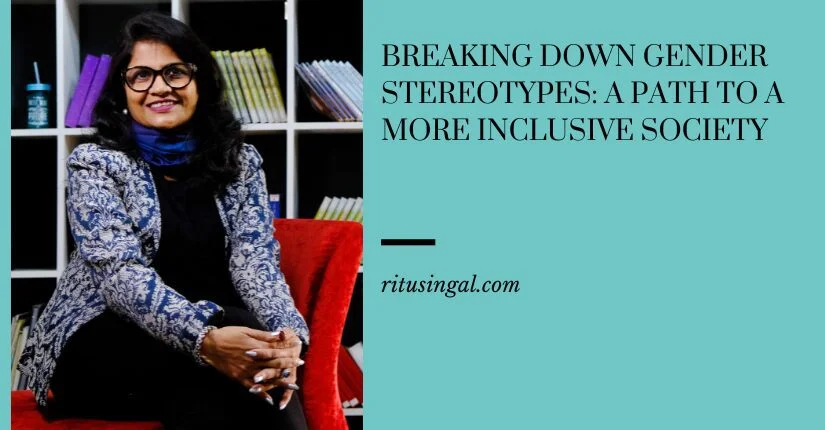
Hi everyone. Today, I want to talk about something that’s deeply ingrained in all of us, something we’ve seen and heard for as long as we can remember. It’s the simple, yet profound, idea of who we are supposed to be based on our gender.
We’ve all heard the sayings: “Boys wear this shirt,” “Girls do that.” Girls are supposed to be soft, nurturing, and take care of the house. They must cook and have children, so what’s the point of a good education? Boys, on the other hand, are expected to be strong, fearless, and the sole breadwinners of their families. As an online life coach, I see these deeply held beliefs impacting people’s lives every single day.
Beyond the Binary: Embracing Our Shared Humanity
We are so conditioned to these two narrow roles that we often fail to recognize the rich diversity of human experience. We have so many other genders, yet we don’t understand them. Homosexual, asexual, transgender—these identities are often met with judgment and cruel names. “Butch,” “chakka,” “Barbie doll.” We have a whole vocabulary for belittling anyone who steps outside the line we’ve drawn.
Where do people who feel differently go? I believe they lead lives filled with fear. They can’t share their true selves with their parents, their friends, or their partners. They are terrified, as if they’ve committed a crime simply by being who they are. It’s crucial that we, as a society, learn to understand and respect everyone’s feelings. At our core, we are all human beings.
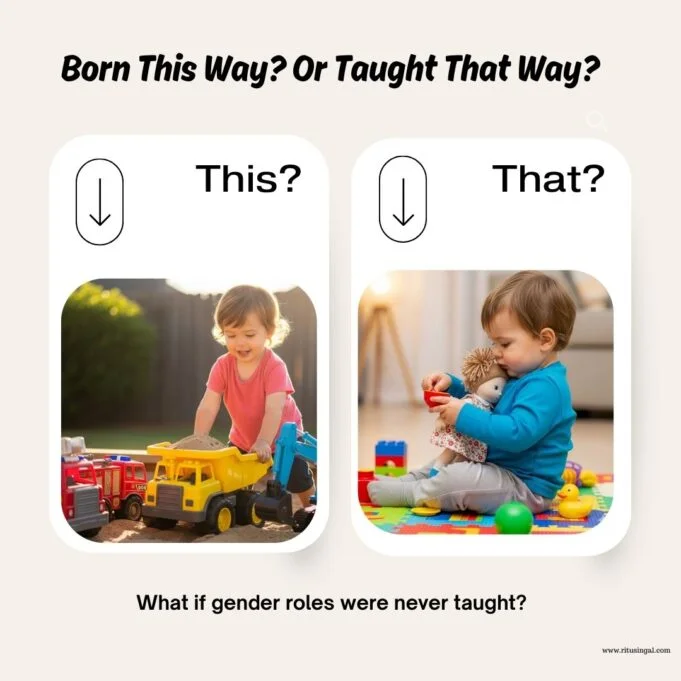
Yes, there are biological differences—the ability to reproduce is a part of that—but our emotions and inner selves are what truly define us. As a life coach, I’ve spoken to so many boys and men who desperately want to cry and share their pain, but they feel they can’t. They were abused as children, they had tragic upbringings, but they’ve been taught to be strong and hide their feelings.
So many young men come to me, and as they share their stories, I am truly shaken by the struggles they’ve silently endured. They couldn’t share these feelings with anyone. We must understand that we all have emotions, problems, strengths, weaknesses, and vulnerabilities—regardless of our gender. Girls can be incredibly strong, and boys can be incredibly sensitive. We are all human beings.
Cheeckout: Why do you need a personality development coach for your success?
The Construct of Gender Roles: How Society Shapes Our Thinking
Where did this rigid system of gender roles come from? It’s not something innate; it’s something we’ve created culturally over the past 2,000 years. Our thinking has been shaped by the songs, movies, and societal norms we’ve consumed. Remember the Bollywood song, “You are the sand of the moon and I am the dust of the earth”? These subtle messages reinforce the idea of one gender being superior to the other.
I once conducted a simple experiment. I asked a group of men and women a hypothetical question: “If you woke up tomorrow and were suddenly the opposite gender, what would be the first thought to cross your mind?”
The women’s answers were fascinating. “I wouldn’t have to wax anymore,” one said. “It would take me less time to get ready.” Others mentioned career advantages: “My career can be great now because I won’t have to quit my job when I get married or have kids. I’ll get a good salary.” The men’s answers were equally telling. “Now we can sit on the train without feeling guilty,” one man said.
Another worried, “I’ll get a lower salary. There will be more job opportunities for girls, but the salary will be low.” They worried about needing more time to get ready, having bigger wardrobes, being judged for their weight, or not being able to have a guilt-free outing on a Saturday night.
What changed? Nothing at all, except for a single thought. Just the idea of being the opposite gender completely altered their perception of their daily lives. You are the same person. Why do girls have to wax? Why can’t they go out without makeup or dressing up like boys? Why do they get paid less?
My daughter, a doctor, once pointed out a form for a high-level government institution where a man was addressed as “Dr. Mr. So-and-so,” but a woman was addressed as “Dr. Miss So-and-so.” Why are there so many distinctions in our society? We have created this world, and we are actively encouraging it with every statement and action.
When a boy or a man comes home from work, we instinctively tell a girl in the house, “He’s tired. Get him some water.” But when a girl comes home from work, have you ever heard someone tell a boy to get his sister a glass of water? These seemingly small actions perpetuate inequality. I’m not a feminist who believes women should dominate.
In 2019, I spoke at a college and asked a group of girls to draw what they wanted the world to look like by 2030. One team wrote that they wanted women to dominate society. I was saddened. Why would we want a society where anyone dominates another, whether it’s men or women? We should be striving for an ideal society where everyone is respected.
Checkout: Navigating the Impact of Digital Technology on Parenting
Beyond Traditional Gender Roles: Unlocking Potential and Happiness
In my own business, when I wanted to hire a female HR manager, everyone had doubts. They said, “The labor force is all men. A man would be better at handling them.” I simply laughed and reminded them, “Our managing director is a woman. If she can run the entire factory, why can’t a woman handle the HR department?” These restrictive, limiting beliefs are heartbreaking. They hold back careers, happiness, and self-esteem.
And what about the pressure on boys? The expectation that they must be strong and muscular leads them to take steroids, drugs, and protein supplements to build their bodies by any means necessary. They become suicidal when they can’t express their feelings. As a life coach, I talk to young boys who are suffering in silence. This system hurts everyone.
We talk a lot about patriarchy and feminism. While feminism aims for equality, patriarchy—and the inflated masculinity it encourages—is what’s truly spoiling our society. We’ve inflated the male ego so much that now, some girls feel they must be aggressive to counter it. This imbalance is getting worse every day, and everyone suffers.
MUST WATCH
The philosopher José Ortega y Gasset said, “When you have a dream arising with emotions, you will work with logic.” We often say girls are emotional and boys are logical, but it’s not true. If we are passionate about something, both our emotions and our logic will work together.
Who says girls don’t have logic or boys don’t have emotions? We have been conditioned for centuries to believe these falsehoods. This conditioning makes boys feel they must behave in a certain way, and girls feel they must behave in another.
We’ve been told that boys can only focus on one thing at a time, while girls can multitask. This is a myth. Look at how a man running a business handles purchasing, marketing, HR, and finance all at once. They do it because they’ve been taught that their careers are their sole responsibility.
Likewise, girls have been told they must be nurturers and take care of everything—the house, the kids, and their careers. So they do it, and they do it well. In the US, I’ve seen my daughter’s male friends cook, clean, and excel in their jobs. They can focus on more than one thing because they haven’t been constrained by these old notions. We have created this chain reaction, and it keeps multiplying because we continue to believe in it.
The Power of Equality: Raising Children and Building a Better World
I have faced these biases myself. After I lost my husband, many people came to me and said, “Your life is over now. What will you do? You are helpless.” Some even said, “If you had a son, he would have taken care of you.” Do you think my daughters are any less responsible? My daughters are just as capable. We need to treat our sons and daughters equally. We need to be careful with every single word we say to them.
In my office, an officer once told me he needed to “meet the madam.” I corrected him and said, “Meet the managing director, not the lady.” This is the core of it. I’m not for men or women; I am for human beings. We are all humans. Let’s respect each other. Let’s treat everyone with dignity and create a wonderful society for all. Let’s build a better world to live in.
Remember, as a life coach specializing in marriage counselling and personal growth, I believe in the power of respect and understanding. If you or your partner are struggling with these issues, an online life coach can provide guidance and support to help you build a healthier, more equitable relationship and a happier life.
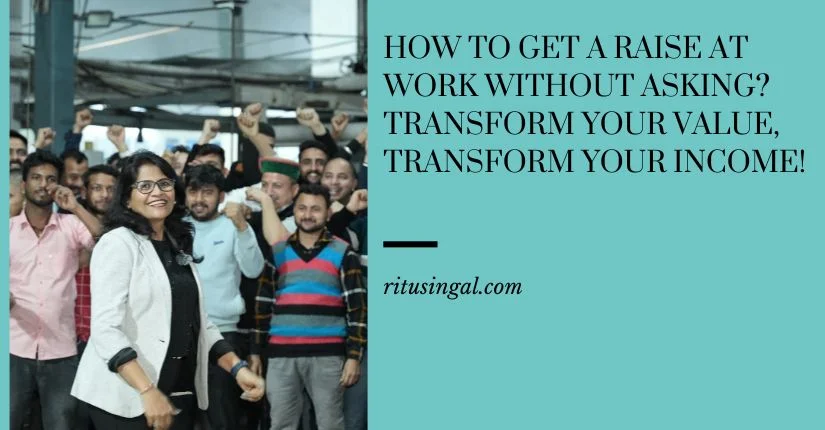
Namaste, wonderful souls! It’s Ritu Singal, your life coach, here to talk about something that touches many of us: salary, recognition, and feeling valued at work. Have you ever felt overlooked, underpaid, or like your hard work isn’t getting the acknowledgment it deserves? Perhaps you’ve watched a colleague, with similar experience and qualifications, soar ahead with promotions, hefty raises, and even company perks, while you’re left wondering, “What am I doing wrong?”
If this resonates with you, trust me, you’re not alone. I hear stories like this often, and it brings to mind a powerful parable about a king and two employees, a story that holds the key to unlocking your true worth at work.
The King’s Insight: A Tale of Two Employees
Imagine a man, eager for work, who approaches a king and is hired at a fixed salary of 5,000 dinars. He starts his new role, full of anticipation, only to discover another employee, doing what appears to be the exact same job, earning a staggering 20,000 dinars! Naturally, he feels a surge of injustice. “Your Majesty,” he protests, “this is completely unfair! We do the same work, yet he earns so much more. Why?” The wise king, with a knowing smile, simply says, “Let’s wait and see.”
A few days later, a commotion erupts in the kingdom. The king calls the first man, “Go check where this noise is coming from.” The man returns, “Your Majesty, some people have gathered, and that’s why there’s all this noise.” The king presses further, “But who are these people? Where did they come from?” The man goes again, returns, and reports, “Your Majesty, some people have come from another state, wearing saffron clothes.” “What do they do?” the king asks.
He goes, inquires, and comes back, “They sing and play music.” “How much do they charge?” the king inquires. Yet again, the man sets off, returns, and states, “They charge 10,000 dinars.” Finally, the king instructs, “Ask them how much they would charge if I hire them.” The man goes one last time and returns with the answer: “They want 6,000 dinars.”
At this point, the king calls the second man. “There’s some noise,” he says, “go check what’s going on.” This man leaves, and in mere minutes, he returns with a comprehensive report: “Maharaj, some people have come from Rajasthan. They’re wearing traditional clothes, singing and playing music, and they charge 10,000 dinars.
They asked for 6,000 dinars, but I negotiated it down to 4,000 dinars.”The first man, who had been listening intently, suddenly understood everything. “Maharaj,” he exclaimed, “now I get why my salary is low and theirs is high.”
Checkout: Personality Development- The Perfect Route to Attain Success
MUST WATCH
The Uncomfortable Truth: Are You Solving Problems or Reporting Them?
This story, my friends, holds a profound lesson for all of us yearning for a raise or promotion. It’s not always about asking for more money; it’s about demonstrating your indispensable value. The difference between the two employees was not their initial qualifications or even their perceived “job description.” It was their approach to problem-solving, their initiative, and their commitment to seeing tasks through to completion.
The first man was a reporter of information. He answered questions, but each answer required a separate trip, a separate query. He was reactive, not proactive. He provided data, but not solutions.
The second man, however, was a solution-provider. He didn’t just report the noise; he identified the source, the origin, the purpose, the cost, and even negotiated a better deal for the king. He anticipated the king’s next questions and provided all the relevant information without being asked. He took ownership and delivered a complete, actionable outcome.
Your Salary Reflects Your Value to Management
Here’s the harsh but liberating truth: If you don’t give management a comfortable level of confidence in your ability to handle things independently and effectively, it’s not management’s problem – it’s yours.
Think about it:
- Do you fully understand your work, not just the tasks, but their impact on the company?
- Do you put your heart and soul into every aspect, big or small?
- Do you see initiatives through to the very end, anticipating challenges and finding solutions before they become management’s burden?
- Are you focused on contributing to the company’s growth, or are you primarily concerned about what others are earning?
- Do you get caught up in office gossip and distractions, or are you laser-focused on your objectives?
If your answers lean towards the latter, it’s time for a crucial self-evaluation. Being a manager, whether in title or in action, means managing things properly and taking them all the way to the finish line. It means taking initiative, foreseeing problems, and presenting solutions, not just problems.
Why Your Colleague Got the Car and the Promotion
You mentioned your colleague, with the same MBA and experience, got a car, a promotion to manager, and a significantly higher salary and incentives. While it feels unfair on the surface, the king’s story illuminates the potential reason.
It’s highly probable that your colleague, like the second man in our story, has demonstrated a higher level of:
- Proactive Problem-Solving: They don’t just identify issues; they present solutions.
- Initiative & Ownership: They take charge and see tasks through to completion, often exceeding expectations.
- Strategic Thinking: They understand the broader implications of their work and contribute to the company’s strategic goals.
- Reliability & Trustworthiness: Management trusts them to deliver without constant oversight.
- Value Creation: They consistently find ways to add significant value to the company, whether through cost savings, increased revenue, improved processes, or enhanced client relationships.
The MBA and experience are foundational, but it’s the application of that knowledge with a proactive, solution-oriented mindset that truly sets individuals apart and makes them indispensable.
Checkout: Empowering Leadership: Senior Management Training and Work-Life Balance with Ritu Singal
How to Become Indispensable and Command a Higher Salary (Without Asking)
 So, how do you shift from being the first employee to the second? How do you become so valuable that the company naturally wants to reward you with a better salary, promotions, and perhaps even that coveted car?
Here are the key steps, rooted in the wisdom of our story:
- Evaluate Your Work with Radical Honesty:
- Assess Your Output, Not Just Your Effort: Are you just completing tasks, or are you delivering exceptional results? Are you consistently exceeding expectations?
- Identify Gaps in Your Proactiveness: Where could you take more initiative? Where could you anticipate problems and offer solutions before being asked?
- Measure Your Impact: Quantify your contributions. How have you saved the company money, increased efficiency, or contributed to revenue? Numbers speak louder than words.
- Become a Master Problem-Solver, Not Just a Problem-Identifier:
- When you encounter an issue, don’t just report it. Think about potential solutions.
- If you bring a problem to your manager, always bring at least one or two potential solutions along with it. This demonstrates critical thinking and initiative.
- Think like an owner: If this was your business, how would you resolve this?
- Take Extreme Ownership:
- See projects through from conception to completion. Don’t drop the ball once your part is done.
- Anticipate the next steps, potential roadblocks, and what information your manager or other stakeholders might need. Provide it proactively.
- Be the person who consistently delivers on commitments, no excuses.
- Understand the “Why” Behind Your Work:
- Don’t just do tasks; understand how your work contributes to the larger goals of your department and the company.
- This understanding will allow you to make more informed decisions, prioritize effectively, and identify opportunities for greater impact.
- Focus on Value Creation (and Make it Visible):
- Constantly look for ways to add more value. Can you streamline a process? Improve customer satisfaction? Identify new opportunities?
- Crucially, make your contributions visible. This doesn’t mean boasting, but rather effectively communicating your achievements and impact in regular updates, performance reviews, or informal conversations. Highlight the results of your work, not just the activities.
- Shift Your Mindset from “What I’m Owed” to “What I Can Offer”:
- Your salary isn’t just about your qualifications; it’s a reflection of the value you bring to the organization.
- When you focus on maximizing your value, the compensation naturally follows. Become indispensable, and the company will recognize your worth. They won’t want to lose you.
- Minimize Distractions and Maximize Focus:
- Are you wasting precious time on office gossip, social media, or unproductive activities?
- Re-direct that energy into deepening your skills, learning new aspects of the business, or focusing intensely on your core responsibilities.
The Power of Perspective: Change Your Inner World, Change Your Outer Reality
The final wisdom from the story rings true: “Change your mindset, and the stars will change. Change your perspective, and the whole view will change. You don’t need to change the boats, just change the direction, and the shores will change.”
This isn’t about blaming you for your current situation; it’s about empowering you to take control. Your external reality – your salary, your title, your incentives – is often a direct reflection of your internal approach and perceived value.
When you genuinely put your heart and soul into your work, when you become a solution-driven, proactive, and indispensable asset, you become invaluable. Companies cherish such individuals. They will naturally reward you with a good salary, promote you, and yes, perhaps even give you a car, because they understand that investing in you is investing in their own success.
So, my dear friends, which category do you fall into? The first or the second? It’s time to evaluate your own work, see how much passion you truly put into working for management and the company’s growth. Are you focused on your work, or are you consumed by comparing yourself to someone else’s salary?
Your power lies not in asking, but in becoming. Become the kind of employee no company can afford to lose, and watch as your career, and your income, transform.

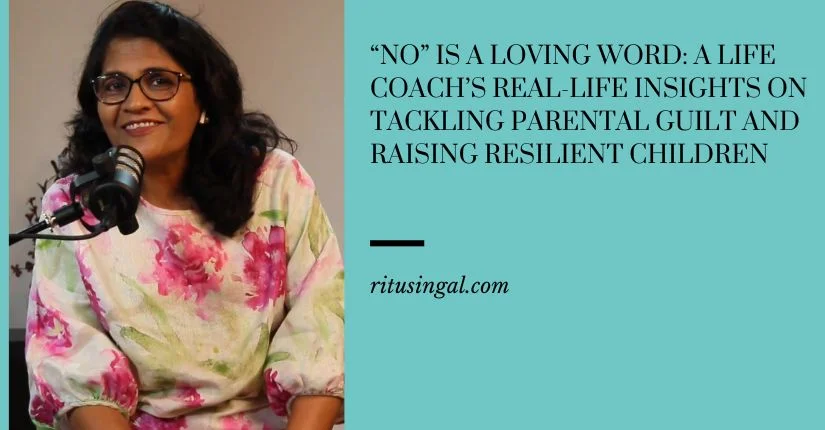
Parental guilt. It’s one of the most invisible yet emotionally exhausting parts of raising children. We don’t talk about it openly, but we all feel it—especially when we find ourselves saying “no” to something our children deeply want. Whether it’s that second toy, a phone upgrade, or another ride on the fair swing—saying “no” often leaves us wondering: Did I just hurt them? Am I being too harsh? Am I failing as a parent?
The truth is—“no” can be one of the most loving words a parent ever says. And I say this not just as a mother, but as a life coach who has walked this road both personally and professionally.
Let me begin with a small story—one of many real-life moments that shaped my parenting philosophy.
The Fairground Test: A Seed of Wisdom Planted Early
Years ago, when my daughters were very young, I took them to a local fair along with a friend and her daughter. It was a simple outing—balloons, swings, candy stalls, laughter in the air. The girls went on a swing ride and, naturally, after one round, they wanted to go again. “Please Mama, just one more!” they said, wide-eyed and pleading.
I smiled and gently said, “Today, we’ll do just one ride. Now let’s go pick something to eat—you can choose whatever ice cream you like.”
My friend looked surprised. “It’s just ₹10,” she said. “Let them go again.” I replied softly, “It’s not about the money. It’s about training their mind. In life, you don’t always get what you want—and learning that early is a gift.”
That moment stayed with me—not because I refused them a second ride, but because I saw a lesson take root. It wasn’t about the immediate gratification of another swing; it was about laying the groundwork for a much bigger life lesson: delayed gratification and the reality that desires aren’t always instantly fulfilled. This simple “no” was an act of profound love, teaching them to navigate disappointment with grace, a crucial skill for future happiness.
The Honda City Demand: Unchecked Indulgence vs. Healthy Boundaries
Years later, I visited another friend. Her daughter, just admitted to college, was demanding a Honda City as her first car. It wasn’t a conversation—it was a confrontation. Tears, shouting, emotional blackmail, and financial stress were all at play.
This wasn’t about a car. It was about how unchecked indulgence turns into unrealistic entitlement. Somewhere along the way, the child had learned that love equals giving in—and any denial meant rejection. This scenario painfully illustrates how a lack of firm boundaries in childhood can lead to significant emotional and relational challenges in young adulthood. The inability to hear “no” becomes a barrier to adapting to the real world, where consequences and limitations are inevitable.
Guilt Gifts and Emotional Gaps: The Cost of Over-Giving
Another close friend, a single working mother, tried to make up for her absence by granting every wish her child expressed—gadgets, branded shoes, lavish gifts. She told herself, “I’m not there enough, at least let me give her what she asks for.”
MUST WATCH
Years later, her daughter faced serious anxiety and identity issues. Over-giving hadn’t bridged the emotional gap—it had widened it. When material possessions become a substitute for genuine presence and emotional connection, children can feel a deep void. They may struggle with their sense of self-worth, believing their value is tied to what they own rather than who they are.
I, too, have raised my daughters as a single mother. But I made a clear choice early on: I would be present, not just provide. I refused to let guilt become the driving force behind my parenting. And the results? Children who are emotionally secure, grateful, grounded—and happy. This wasn’t easy; it required constant self-awareness and a willingness to stand firm in my convictions, even when it felt uncomfortable. But the peace of mind knowing I was fostering resilience and true contentment in my children was invaluable.
Checkout: Development of Self-Control in Young Children: A Life Coach’s Perspective
Why Parents Struggle to Say “No”: Unpacking the Pressures
Today’s parents are under intense pressure. The external forces and internal struggles often make it incredibly difficult to utter that simple, yet powerful, two-letter word: “no.”
- Social media comparison: We scroll through curated feeds, seeing other children with the latest gadgets, designer clothes, or on exotic vacations. This can lead to an insidious thought: Why does her child have more? Am I depriving mine? The constant barrage of seemingly perfect lives creates an unrealistic benchmark, fueling parental insecurity.
- Cultural expectations: Especially in joint families or certain cultural contexts, there can be immense pressure from in-laws or other relatives to indulge children, sometimes viewing any denial as harshness. This can lead to internal conflict for parents who are trying to instill different values.
- Fear of being judged: Am I a bad parent if I don’t provide “the best” for my child? This fear often stems from a desire to be seen as a “good” parent, leading us to overcompensate with material things or endless concessions.
- Working parent guilt: Especially among single parents or mothers returning to careers, there’s a pervasive feeling of not being “enough.” This guilt often manifests as a desire to compensate for perceived absence by fulfilling every whim, leading to an unhealthy cycle of over-indulgence.
But here’s the truth: Children don’t need everything. They need enough—love, guidance, structure, and trust. They need parents who are secure enough in their own values to set boundaries, even when it’s met with resistance.
The Psychology Behind “No”: Building Character and Resilience
Saying “no” is not about denying joy—it’s about preparing children for life. Every refusal, when done with empathy and explanation, becomes:
- A reality check in a safe environment: Childhood is the ideal time for children to learn that the world won’t always cater to their desires. Learning this within the loving confines of their home, rather than through harsh external experiences, allows them to process disappointment in a supportive setting.
- A chance to develop emotional resilience: The ability to bounce back from disappointment is a cornerstone of mental well-being. When children learn to cope with not getting what they want, they build emotional muscles that will serve them throughout their lives.
- A training ground for delayed gratification: In an instant-gratification world, teaching patience is more critical than ever. Saying “no” now, with the promise of something later (or nothing at all), helps children understand the value of working towards goals and appreciating what they have.
In a world that won’t always say “yes” to their ideas, demands, or relationships, our job as parents is not to cushion every fall but to prepare them to land strong. We are building their internal compass, equipping them with the tools to navigate life’s inevitable ups and downs.
Mindset Shifts for Parents: Embracing the Power of Deliberate Parenting
Shifting our internal narrative around saying “no” is crucial. These are some beliefs I personally follow—and often share with my clients—that have profoundly impacted my approach to parenting:
MUST WATCH
- Saying “no” is not rejection; it’s redirection. You’re not rejecting your child, but rather redirecting their focus, energy, or expectations towards something more beneficial or realistic.
- Love is not measured by how much we give, but how wisely we guide. True love isn’t about material abundance; it’s about providing the wisdom and structure necessary for a child to thrive emotionally and intellectually.
- We’re raising adults, not pampered children. Every decision we make as parents should be viewed through the lens of what kind of independent, resilient, and responsible adult we want our child to become.
- A moment of disappointment today prevents years of entitlement tomorrow. While it’s hard to see our children upset in the short term, remember that these small disappointments are building blocks for a healthier, more grounded future.
Practical Tools to Say “No” Without the Guilt: Empathetic Boundaries
Saying “no” doesn’t have to be a battle. With the right approach, it can be an opportunity for connection and growth.
- Connect Before You Correct: Children must feel heard. Acknowledge their feelings first.
- “I see how excited you are for another ride. It’s fun, I know!” (Connection)
- Then add the limit: “But today we’re doing just one. Let’s look forward to our ice cream now.” (Correction with redirection)
- Offer Alternatives: Not “no” without hope, but “no” with options. This teaches flexibility and creativity.
- “We’re not buying that toy today, but let’s add it to your ‘wish list’ and work towards it.”
- Explain Your Values: Let them understand why you are setting a boundary. This helps them internalize your family’s principles.
- “In our home, we don’t buy everything just because we can. We make thoughtful choices about what we truly need and value.”
- Let Them Contribute: Encourage earning or saving. This instills financial literacy and the value of hard work.
- “If you still want that by next month, let’s think about how you can save some of your pocket money or do a few extra chores to contribute towards it.”
Exercises to Tame Parental Guilt: Self-Compassion in Action
Parental guilt can be a heavy burden. Here are some simple yet powerful exercises to help you reframe those feelings and cultivate self-compassion:
- The Guilt Reframing Journal: When guilt strikes, take a moment to write down your thoughts.
- Trigger: What specifically caused the guilt? (e.g., “I said no to a new video game.”)
- Reality: What were your limitations or reasons for saying no? (e.g., “It’s outside our budget right now, and they already have several games.”)
- Growth: What is your child learning from this? (e.g., “They’re learning about budgeting, patience, and that not everything is instantly available. They’re developing resilience.”)
- The Five-Breath Pause: Before giving in to a demand out of guilt, pause.
- Breathe in for 5 counts, exhale for 5. Repeat a few times.
- This simple act gives you a moment for logic to replace the immediate emotional pull of guilt, allowing you to respond thoughtfully rather than react impulsively.
- The Self-Coaching Statement: Create a mantra that empowers you.
- “I am not denying my child love. I am giving them strength.”
- Repeat this to yourself whenever you feel that familiar tug of guilt. It’s a powerful reminder of your higher purpose as a parent.
Helping Children Cope With “No”: Nurturing Emotional Intelligence
Children, like adults, don’t enjoy rejection. But with the right tools, they learn to handle it, transforming moments of disappointment into opportunities for emotional growth:
- Name Emotions: Help them articulate what they’re feeling.
- “You’re feeling upset—totally okay. It’s natural to feel that way when you can’t get what you want. I sometimes feel that way too.”
- Create a ‘Someday List’: Let them record their wishes. This teaches patience, goal-setting, and gives them a sense of agency.
- Have a special notebook where they can write or draw things they wish for. Revisit it occasionally.
- Praise Emotional Maturity: Acknowledge and reinforce their positive responses to disappointment.
- “You stayed calm even when I said no. That shows real strength and maturity.”
- Turn It Into a Teachable Moment: Share your own childhood disappointments and how they made you wiser or stronger. This normalizes the experience and builds connection.
- “When I was your age, I really wanted a particular toy, and my parents couldn’t get it for me. It felt disappointing at the time, but I learned to find joy in other things, and it taught me patience.”
Checkout: The Art of Self-Care Prioritizing Your Physical, Emotional, and Mental Well-being in 2025
Prioritising Your Wellbeing Without Guilt: The Non-Negotiable Self-Care
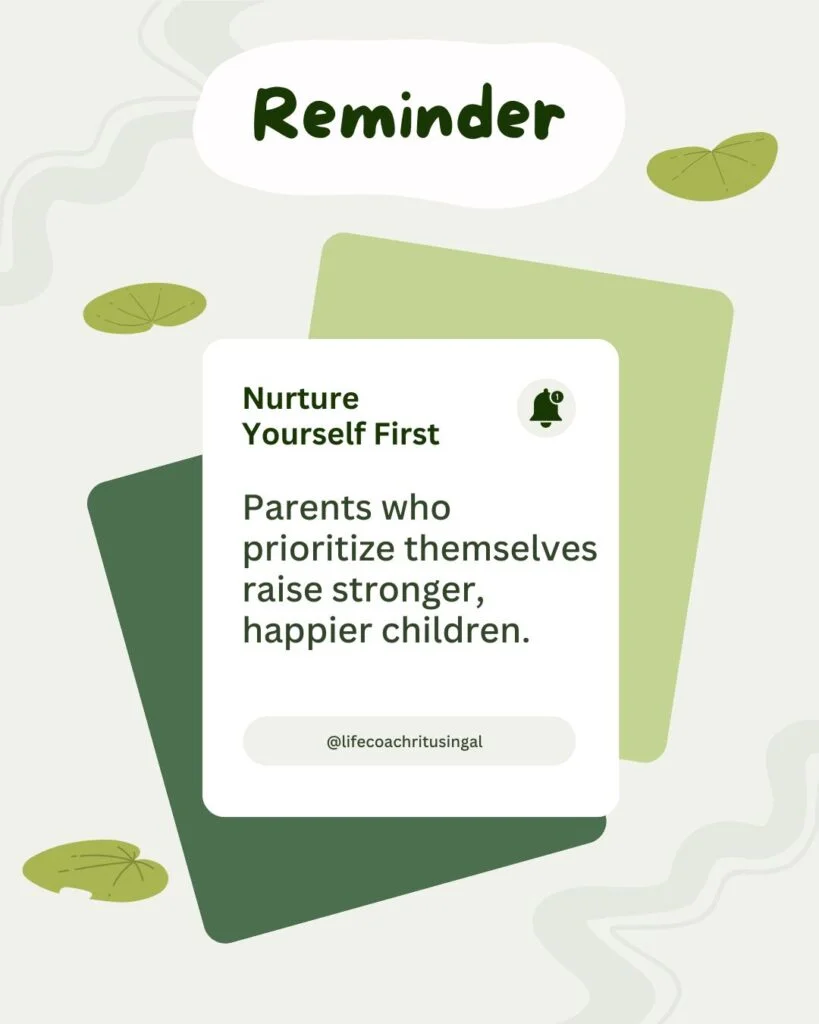
Especially in Indian culture, parenting often becomes an identity of constant sacrifice, particularly for mothers. There’s an unspoken expectation that a good parent always puts their child’s needs first, often to the detriment of their own well-being. But burnt-out parents cannot raise emotionally nourished children. An empty cup cannot pour.
Make space for your needs; it’s not selfish, it’s essential:
- 15 minutes of silence in the morning: Before the chaos begins, find a moment of peace.
- A cup of tea without multitasking: Savor a moment just for yourself, without checking emails or doing chores.
- A weekly outing for yourself: Even if it’s just a walk in the park or a coffee with a friend.
And critically, explain it to your children. Say:
“When I take care of myself, I’m happier and have more energy. And that means I can love you even better and be the best parent I can be.” This also models healthy self-care for them, teaching them the importance of balancing their own needs with their responsibilities.
Final Reflection: What Are We Really Saying? The Enduring Power of “No”
When we say “no” with love, we are not shutting down a dream—we are opening the door to deeper lessons:
- That real joy doesn’t always cost money; it can be found in presence, experiences, and connection.
- That not getting what we want is a natural, inevitable part of life, and we have the capacity to cope with it.
- That parents are guides, not vending machines, here to illuminate the path, not just fulfill desires.
- That love is not measured in quantity of things, but in quality of presence, guidance, and unwavering support.
My daughters today thank me for those moments when I stood firm. They understand now that what I gave them wasn’t just boundaries, but emotional muscles to face life with grace, resilience, and a deep sense of self-worth. They are capable, independent individuals who understand the value of effort and the beauty of gratitude.
And every time I speak to another parent torn between guilt and guidance, I remind them gently:
“The most powerful thing you can give your child is not the world—but the wisdom to walk through it.”
What “no” are you ready to say with love today, knowing it’s a profound act of parenting wisdom?