

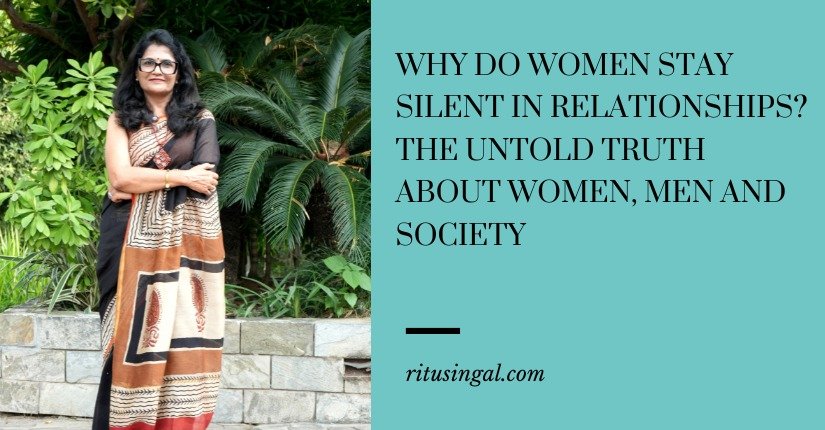
Why do women hesitate to speak their minds? Why does saying “NO” feel so difficult? And why are independent, confident women sometimes misunderstood in relationships?
These are questions I believe we need to discuss more openly.
Over the years, through my experiences, conversations and work as a Life Coach, I have realised that relationships are not just about love, commitment or responsibilities. They are equally about understanding, emotional freedom, mutual respect and the courage to express ourselves.
Today, women are becoming financially independent, professionally successful and increasingly confident about making their own decisions. Yet, when it comes to relationships, many still struggle to express their feelings, set boundaries or make choices without feeling guilty.
This makes me wonder: Is financial independence enough to empower a woman? Are traditional family expectations still influencing modern relationships? And are men and women really understanding each other’s emotional needs?
These are some of the important questions I explored in a special episode of Zindagi Talks – Soch Badlo, Zindagi Badle, where I had an insightful conversation with Vandana Shukla, Poet, Author of Unclaimed and A Monk Postpones Nirvana, Freelance Journalist, Educator and Communication Coach.
MUST WATCH
Our discussion went beyond stereotypes and touched upon the realities of women, men, relationships and the society we live in.
Here are some of the thoughts I would like to share with you.
1. Why Do Women Often Choose Silence Over Speaking Up?
I feel one of the biggest challenges women face in relationships is the pressure to adjust.
For generations, women have been taught to compromise, maintain family harmony and put the needs of others before their own. While adjustment is certainly important in every relationship, it should never mean suppressing your identity or emotions.
I have often observed that women hesitate to express disagreement because they fear being judged, misunderstood or labelled as difficult.
But why should expressing an opinion become a reason for conflict?
I strongly believe that silence should never become the price a woman has to pay to maintain a relationship. Every individual deserves the freedom to express feelings, opinions and expectations without fear.
Checkout: The Power of Pre-Marriage Counseling: A Guide to a Strong and Healthy Relationship
2. Saying NO: Why Is It So Difficult for Women?
One of the most important aspects of self-respect is learning to say NO.
Yet, many women find it difficult to refuse requests, express discomfort or establish personal boundaries. The reason often lies in years of social conditioning, where women have been encouraged to prioritise everyone else’s comfort over their own.
I want women to understand something important: Saying NO does not mean you are disrespectful, selfish or insensitive.
It simply means that you recognise your limits and respect your own choices.
A healthy relationship is not one where partners always agree. It is one where they can disagree without disrespecting each other.
Remember, you do not have to sacrifice your self-respect to prove your love.
3. Does Financial Independence Mean Emotional Freedom?
Financial independence is undoubtedly an important step towards women’s empowerment. It gives women the confidence and ability to make decisions about their lives.
However, I believe true empowerment goes much deeper.
A woman may have a successful career, earn well and manage her professional life independently, yet still experience emotional pressure, guilt and expectations within her family.
Emotional independence means having the courage to express yourself, make personal choices and prioritise your well-being without constantly seeking approval.
Real empowerment is not just about earning your own money. It is also about having the freedom to think, speak and live with dignity.
4. Patriarchy and Changing Gender Roles in Modern Society
Our society has traditionally assigned different roles to men and women.
Men have often been expected to earn, provide and lead, while women have been expected to nurture, manage the household and adjust.
But times are changing.
Women are challenging traditional expectations, and men are also adapting to changing responsibilities within families and relationships.
In my opinion, the solution is not to replace one set of restrictions with another. It is to create relationships where both individuals have equal opportunities, responsibilities and freedom.
We need to move beyond outdated gender expectations and develop a more balanced understanding of partnership.
Checkout: Life Coach Services in India: Transforming Lives through Personal Growth
5. What Do Men Expect From Independent Women?
This is an interesting question that deserves attention.
As women become more confident and independent, expectations within relationships are also evolving. Sometimes, men and women interpret independence, emotional needs and personal freedom differently.
A confident woman may be perceived as dominating, while a man expressing his expectations may sometimes be misunderstood.
I believe we need to stop looking at these situations as a battle between genders.
Instead of blaming each other, we should make an effort to understand each other’s perspectives.
Independence should not threaten a relationship. When supported by mutual respect, it can actually make the relationship stronger.
6. Marriage, Communication and Emotional Connection
In my understanding, marriage is much more than fulfilling responsibilities or living under the same roof.
It is about companionship, emotional intimacy, trust and feeling valued.
Many relationship challenges arise not because there is a lack of love, but because expectations remain unspoken and communication gradually disappears.
Both partners need to feel heard. Both need to feel appreciated. And both must be willing to make an effort.
I believe a successful marriage is not about one person constantly adjusting to keep the relationship alive. It is about two individuals growing together while respecting each other’s individuality.
7. Family Values and the Next Generation
One thing I strongly believe is that children learn more from what they observe than what we teach them.
The way parents communicate, resolve disagreements, share responsibilities and treat each other becomes an example for the next generation.
If children grow up watching mutual respect and equality at home, they are more likely to develop healthier relationships in the future.
We must preserve our family values, but we must also allow those values to evolve with changing times.
Tradition and modern thinking do not have to oppose each other. They can coexist when guided by understanding and respect.
8. Beyond Gender Wars: The Need for Mutual Respect
Whenever we discuss women’s empowerment, gender equality or changing relationships, the conversation should not turn into a competition between men and women.
Both have their own experiences, challenges and emotional expectations.
Women deserve independence, dignity and the freedom to express themselves. Men, too, should feel comfortable expressing their emotions without being restricted by traditional ideas of masculinity.
I believe the real objective should be understanding, not blaming.
We need to create an environment where neither men nor women feel that they have to suppress their identity to fit into society’s expectations.
My Final Thoughts: Perhaps We Need to Listen More and Judge Less
After reflecting on these questions, one thing becomes clear to me: Relationships cannot flourish through expectations alone. They need understanding, communication and mutual respect.
Financial independence, emotional freedom, gender equality and healthy relationships are all interconnected.
Perhaps we should stop asking who is right and who is wrong, who should adjust and who should lead.
Instead, we should ask ourselves: Are we really listening to each other? Are we respecting each other’s individuality? Are we creating relationships where both people feel emotionally safe and valued?
Through my conversation with Vandana Shukla on Zindagi Talks – Soch Badlo, Zindagi Badle, I wanted to open up these important questions and encourage people to look beyond conventional thinking.
I believe that meaningful change begins when we question our conditioning, challenge unnecessary stereotypes and become willing to understand different perspectives.
Change your thinking. Change your life.
I invite you to watch the full episode of Zindagi Talks – Soch Badlo, Zindagi Badle and join this important conversation about women, men, relationships and society.
Because a better relationship begins with better understanding, and a better society begins with a change in our thinking.