
“We make a living by what we get. We make a life by what we give.” — Winston S. Churchill
करुणा समस्त मानवीय गुणों में ऐसा गुण है, जो मनुष्यों को अन्य जीवित प्राणियों से अलग करता है. लेकिन इसका यह अर्थ कदापि नहीं है कि मनुष्यों के अलावा अन्य जीवित प्राणियों में करुणा का अभाव होता है. वास्तविकता यह है कि अन्य जीवित प्राणियों में पाई जाने वाली मित्रता और भाईचारे की भावनाओं से ही अंतत: मनुष्यों में करुणा की भावना का विकास हुआ है। किसी अन्य प्राणी मात्र की पीड़ा को महसूस कर उसकी सहायता की इच्छा होने की भावना ही करुणा है। करूणा स्नेहपूर्वक किया गया वह उपकार है, जिसे करने वाले को इसके बदले में कोई अपेक्षा नहीं होती है। जितने भावों को आप अपने अंदर पोषित कर सकते हैं, उनमें से करुणा सबसे कम बंधनकारी और उलझाव पैदा करने वाली है। सच कहें तो यह सर्वाधिक मुक्तिदायक और प्रफुल्लित करने वाली भावना है।
करुणा समावेशी होती है
ध्यान से देखें तो अकसर किसी के प्रति आपके प्रेम का ईंधन जुनून होता है। और करुणा का अर्थ है इस जुनून का विस्तार। जब तक यह प्रेम किसी एक पर केंद्रित है, यह प्रेम जुनून रहता है, जब यह सबको अपने आप में शामिल कर लेता है तो यह करुणा बन जाता है।
करुणा आपको सीमाओं में कभी नहीं बांधती है, बल्कि यह तो अच्छे-बुरे के बीच फ़र्क़ भी नहीं करती है। इसीलिए करुणा निश्चित तौर पर प्रेम की तुलना में मुक्तिदायक है। तुलनात्मक तौर पर प्रेम सुंदर तो है परंतु सीमित होता है। हम इसी प्रेम को करुणा में बदल कर मुक्ति की ओर बढ़ सकते हैं।
This kindness may assume myriad shapes – physical, mental, social, financial and otherwise. Throughout the history of mankind, we have consistently seen great men and women advocate, exalt and worship the idea of helping the common good of society. If history has been witness to numerous tyrants and dictators, who made life a hell for their subjects and others, there has also been no dearth of kind-hearted souls, who went all the way to bring succor, relief and love to those in dire need. So, for every Hitler or Mussolini or Changhez Khan, we have a Florence Nightingale, a Mother Teresa and an Adbus Sattar Eidhi.
Kindness can take many forms – giving money, eatables, clothes, one’s time, attention or just being there for someone who is in need. In fact, the idea of kindness needs to be properly understood in its right perspective. By giving something to someone in need, we are not doing a favour to him/ her; rather, we are doing ourselves a favour by paying back to the society a part of what we had received from it. Therefore, calling it kindness or donation or giving would be a misnomer; sharing is a more appropriate expression here.
Sharing is not all about money. Rather, it is more about kindness, helpfulness, unselfishness, sacrifice, giving, service, love, etc. A few words of sympathy can make a tremendous difference to a troubled soul. The idea of sharing implies that we are just making someone a part of what we have, which belongs to us all. Underlying this idea of sharing is the belief that one is trying to pay back at least part of what the society had given him.
For example, an industrialist, in the course of his business, uses all possible kinds of societal resources in the immediate and distant vicinity- people, water, power, materials, crops etc, depending on the kind of business she/ she is in. As a responsible corporate, his organization has a bounden moral duty to replenish the stock of resources consumed by his organization. Consequently, if the organization undertakes programmes for environmental improvement, vocational training and women empowerment, it is a fit case of discharging one’s corporate responsibility by sharing its resources with its community. Keeping the statutory requirement for such work aside, it is more vital to sensitize the productive sectors of our economy towards doing their fair share of societal responsibilities by developing a spirit of sharing. Even the sacred Shri Guru Granth Sahib enjoins upon us to
ਕਿਰਤ ਕਰੋ ਵੰਡ ਛਕੋ
(Work hard and share its fruits with others)
The joy of sharing is beyond words as it takes courage to give something from your life to others. But if we have the heart to do something for others without expecting anything in return, it makes us expand our life to a great extent.
Sharing happens only when a person is filled with gratitude for all that he has received in life. And for this to happen, humility is the basic starting point, in the absence of which, no gratitude or sharing can happen. People full of complaints and criticism will find it difficult to feel gratitude in life.
In fact, the more we give others, the more we get from the universe. Our relative happiness can come from materialistic things, but a genuine sense happiness comes from sharing it them with others.
Examples
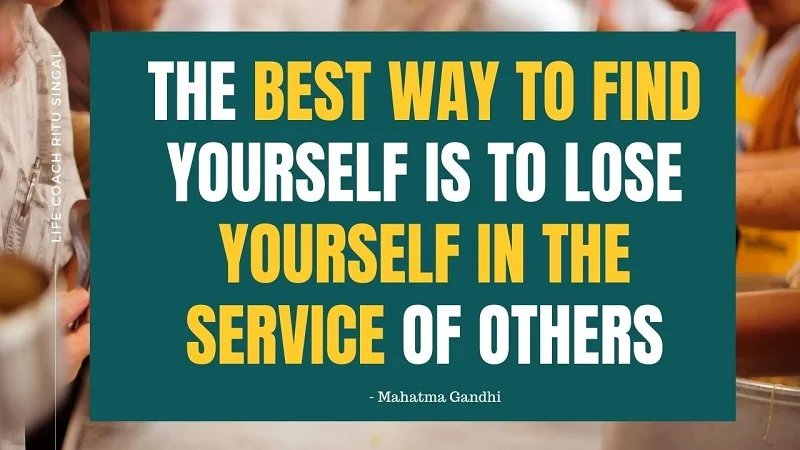 Mahatma Gandhi once said “The best way to find yourself is to lose yourself in the service of others.” Thus, true joy consists in giving without expecting anything in return.
The gifts of caring, attention, affection, appreciation, and love are some of the most precious gifts we can give, and they don’t cost anything. Leo Buscaglia, an American motivational speaker said: “Too often we underestimate the power of a soft touch, a gentle smile, a kind word, a listening ear, an honest compliment, or a small act of caring, which can turn a life around.”
Those Who Gave It All
Bill Gates
Human history has seen plenty of great, kind souls who gave away whatever the earned in life, towards the greater good of society. Of all the modern day philanthropists, Bill Gates is referred to most often. The Microsoft founder, worth over $130 billion, has given away over $50 billion (Around 40 lakh crore rupees) through the Bill and Melinda Gates Foundation over the past few years to various nonprofit organizations he is passionate about.
The Bill and Melinda Gates Foundation, founded in 2000, aims to “improve the quality of life for individuals globally.” With billions of dollars to use, the foundation has done a broad range of charity work in providing educational resources, medical research and healthcare. One of its biggest donations has been to the GAVI Alliance to help increase access to vaccinations and to research on malaria elimination and AIDS vaccine. As two of the world’s biggest philanthropists, Bill and Melinda have found a way to make the world a better place through their common goal of giving back.
Warren Buffett
Known as the Oracle of Omaha, thanks to his legendary investing wisdom, which made him the richest man for a long time, Warren Buffett has given more than $46 billion to charity, making him one of the world’s biggest philanthropists. Buffet, who has had a dream professional run as the world’s most iconic stock investor, began a Giving Pledge in 2010, in association with the Bill and Malinda Gates Foundation to motivate the world’s richest to donate majority of their wealth to charity.
Not only has the philanthropist given away a substantial chunk of his wealth, but he has also helped motivate other ultra-rich people to follow suit. In 2010, Buffet and Bill and Melinda Gates launched The Giving Pledge, urging billionaires to publicly dedicate the majority of their wealth to philanthropy. Along with this amazingly incredible generosity, Buffett is also known for humility and commitment to modest living, showing his strong values.
Azim Premji
Premji, a businessman known for austerity, grew Wipro from $2 million in sales (1966) to a $11 billion giant selling software and consumer products. With a donation of 9,713 crore, Premji again tops the EdelGive Hurun India Philanthropy List 2021. India’s most generous citizen is not an accidental philanthropist. The idea in 2001 of setting up a charitable foundation, which is now backed by an endowment of $21 billion making it among the five largest endowments globally, took six months of discussions.
Between 2001 and 2019, Premji donated Wipro shares worth nearly $12 billion in a staggered manner to this endowment. Earlier this year, he made the country’s single-largest donation by transferring 34% of his Wipro shares worth $7.5 billion to Azim Premji Philanthropic Initiatives and Azim Premji Trust.

Though he took some time to announce his intent, but the desire to give back to society had always been there. It was partly fired by his mother Gulbanoo M.H. Hasham Premji’s spirit, a trained doctor who dedicated her life to setting up a children’s orthopedic hospital in Bombay, while serving as chairperson of Wipro after the death of her husband. Besides, Mahatma Gandhi’s idea of trusteeship of wealth greatly inspired him
Primary education was finally chosen as the Foundation’s focus as it was a critical factor that significantly impacted other issues. Today, his Premji Foundation trains thousands of teachers across 50 districts in six states to improve learning outcomes in government schools, with its impact on pedagogy and education policy.
Premji’s vision is driven by the idea that for philanthropy to be meaningful, it has to bring about large-scale changes or at least initiate them. For this reason, he refuses to “give cheques” just to appease his conscience and has chosen to focus the foundation’s work on what he is most passionate about.
research on malaria elimination and AIDS vaccine. As two of the world’s biggest philanthropists, Bill and Melinda have found a way to make the world a better place through their common goal of giving back.

The title may startle you into asking Grow? YES! Grow. Read on to find out!
The COVID-19 pandemic has possibly been the most significant variable for the global economy in a very long time, with its widespread impact on all economic sectors and businesses. Considering the uncertainty and the never-before challenges it has brought, businesses need to change the way they work to serve their customers. A strategic shift can help pandemic-era businesses take better care of employees, satisfy customer needs, and enhance their own financial health.
Black Swan
Mostly, we make our plans and budgets on the basis of our knowledge of the past. But right now, this knowledge can’t be as helpful as you think because we are witness to a so-called “Black Swan” event, as Nasim Taleb puts it in his eponymous classic. The current pandemic is a black swan event i.e. an unpredictable event beyond what we normally expect in a situation, which has potentially severe consequences. It has brought about huge unpredictability in our current and future lives.
You don’t need a business coach to tell you – thanks to this unpredictable event with widespread ramifications, the rules of business have changed. For example: the fact that you grew consistently @ 10-15% in the past few years CANNOT predict your business growth this year, or the next year. At a juncture when many companies are in the remote working mode, are operating at limited capacities or are shut down completely, there may seem to be very few opportunities for business growth. But not all is lost!
Here are some business strategies that can not only keep your business afloat, but also help it move ahead:
Relevance of Product/Service
As any business coach would tell you, the COVID-19 pandemic crisis has changed consumer needs and preferences in a big way. Therefore, while building customer relationships and sales channels, you need to ensure that your product/ service remains relevant. A relevant product that delivers customer value is going to generate demand and contribute to business growth. Make efforts to understand customer expectations and aspirations to tweak your offering so that they can survive these tough times and look to a future.
A good business coach can ask you to look at your brand from the vantage point of the consumer- Are you different? Affordable, Convenient? Do you deliver value? Does the market really need you? There is always an opportunity for unique and compelling products regardless of the state of the economy, but during these exceptional times, you need to have a carefully-crafted approach.
Understanding Customers

My corporate counselling experience suggests that most organizations aren’t good at understanding their customers, while it should be the first important step while formulating any marketing strategy. An in-depth understanding of your customers will help you boost your sales and business. However, this lean period caused by factors like the global pandemic can also be occasioned by changing consumer behaviour. Therefore, it is important to have a clear picture of the type of customer who buys your products and what prompts their buy decisions. You cannot adopt a one-size-fits-all shotgun approach that “everyone is a customer” – to know which kind of customer you deal with most often, and which type earns you the most revenue and focus on that customer type and the demographic. Collecting this kind of background information can help you identify ways of delivering customer value.
The pandemic has made it even more essential for businesses to acquire and maintain core customers. Your customers are spending more time online, working remotely, taking virtual classes and even hosting family events over Google Meets and Zoom. Against this background, the companies obviously need to be savvier with respect to social media and email marketing. If you ever had any doubts about your company’s online searchability, the navigability of your website or your social media presence, this is the time to act. Let your customers know you are there and that you value them, and offer them incentives to spread the word about how much they love your offerings.
Revisit Marketing Plans
A restricted access to brick and mortar businesses, the pandemic in public places, and increased prices of products and services and supply chain disruptions have reduced your ability to reach potential customers. COVID-19 has affected household incomes and consumer spending across the board in all the countries globally. The proportion of the households affected so is staggering in India, which has led to lower FMCG sales and reduced profits for most businesses except those working in pharma, healthcare and nutraceutical sectors. Therefore, the pandemic crisis and the period thereafter warrants that you revisit your marketing plans and efforts periodically.
The social media has emerged as a great force to reckon with in practically all spheres of activity. With geography becoming history now, you may want to leverage social media to drive customer engagement, sell your products, build brand awareness and deliver services. You can consider offering greater customer convenience by ensuring delivery of products to your customers.
Besides, during economic downturns, every rupee matters. Therefore, all marketing decisions need to be precisely targeted and data-driven to ensure you get the best bang for your buck. Use marketing technology and platforms that integrate with all your channels to track which posts are performing and how your customers are responding to and acting on the information. You may also consider hiring domain consultants with marketing expertise in your industry to boost your profile and drive customer interaction across social media platforms.
KYC (Know Your Competitors)
Being forewarned is being forearmed!
I often suggest all those, who seek corporate counseling, to conduct a KYC (Know Your Competitors) operation in terms of their competition. As Any business that aspires for growth needs to identify standards against which it measures its progress. Before fighting your enemy, it’s essential to know him, his arsenal, his strategies etc. before you can think of a gamelan to counter him. Thus, it’s imperative to know your competitors in terms of their business growth and use this information to find how well you are performing. It can also let you learn the strategies other businesses are using to achieve growth.
Team Matters
No business or for that matter, no organization can ever hope to run without talented manpower. As more people are doing remote work now, having experienced professionals who can work with minimal supervision can benefit you in many ways. Besides, you could get business advice from experts to get the edge you need over your competitors.
Invest your resources in your team as it is your greatest asset, which deserves to be protected during downturns. Well, doing so means reducing the salaries or bonuses of the CEO or the board to reduce/ minimize the need for layoffs. And it may also mean providing the employees the resources to do their work successfully from a remote location e.g. project management tools and flexible work schedules for better work-life balance.
Your team needs leadership in a time of crisis. You can use this time to build a stronger sense of community among your team. It can give your employees a better sense of their worth to the company and make them motivated and productive, which ultimately leads to business growth.
Money Matters
Finance is the blood of a business and any obstruction to its flow can cause the heart to collapse. Thus, the finances require proper management during the pandemic to realize business growth. Of course, you may have to slash certain expenditures and invest more in growth areas to earn more profits. Analyze your balance sheet, profit and loss account and cash flow statements to ensure that the expenses are under control.
Digital Transformation in Business

Technology can empower you to compete successfully with the more established brands. Advanced technologies can facilitate communication with employees working remotely and give you new ways to engage with your customers. As a businesses, you need to understand the importance of digital transformation and automation. Adoption of technology will contribute to more efficiency besides saving valuable time and money.
Go Virtual
The chances of your growing your business during the pandemic are contingent on your business type, competitive positioning, strategy and the ability to use digital technologies and marketing automation.
Here’s a digital marketing strategy to grow your business and ensure that your business is on a safe, secure path to exit the pandemic successfully:
Functional website
First and foremost, a functional website, providing a customer journey that delivers growth in visits and generates leads, is a must. You should be active on at least 2-3 social media and must implement a revised content strategy for the pandemic to deliver growth.
Add more functionality/content to your website to increase its growth and leads. Make your website more valuable with downloadable offers for users, improve your its usability and better articulate your value proposition.
Email marketing
Try to monetize your subscriber base by a list-building campaign to connect with new subscribers. Email marketing delivers one of the best ROI’s on each marketing rupee you spend. Once the economy begins to recover and the demand begins to normalize, this subscriber base can help you capture those dormant sales rapidly.
Social Media
Add a new platform that you had overlooked in the past. Social media is now a constant in our lives, more so in the current pandemic. It’s a great time to add another relevant platform to your media mix.
Use the Google Pay Per Click method and online advertising on social platforms to find new leads and sales. During such downturns, you can find more affordable ads, lower ad click costs and more impressions than during better economic times.
Your prospects are unlikely to remember you unless you actively work to ensure recall. And the more you can do to help them get through the pandemic, the more “reciprocity” you will find when they are ready to make a purchase. If they save your recent tip or coupon on their mobile phone, they can easily reach you at the right time.
Affiliates
Think of using affiliate marketing to tap new markets for your products and services.
- Regular, SEO- optimized content in the form of blogs needs to be added to your website monthly.
- A revised search engine optimization (SEO) strategy for the pandemic needs to be put in place.
- Virtual sales calls aren’t considered any less professional these days; they are as good as in-person meetings. The staff just needs to ensure that they are dressed professionally with an optimized background and the audio and video are clear to ensure seamless communication.
- During such virtual sales, the seller needs to be proactive by offering relevant tools and guides to the prospects. It will ensure that you enjoy a top of the mind recall for your target customers, even if you aren’t able to close the deal right away. There is always an opportunity for unique and compelling products but in these exceptional times, you need a carefully executed approach while engaging with your customers.
- Hosting relevant virtual events for customers is a great way to provide value but you’ll have to find ways to make your webinars stand out. Try to have an interactive experience and close the event with a clear call to action that leaves the audience feeling connected with your brand and willing to continue the relationship later.
- The pandemic has put a stop to in-person events, networking functions and conferences, but virtual events can draw and accommodate larger, more diverse audiences. Besides the product content can be recalibrated for social media and websites to engage additional customers.
Webinars on topics relevant to your business can draw interest, especially if they are addressed by high-profile speakers in an interactive way. Think of adding giveaways and other incentives to draw interest and promote it across social media channels.
Try New Things
It’s time to broaden your digital marketing channels. Let’s say your marketing efforts includes regular emailing to your subscribers, and marketing via Facebook and Instagram. But maintaining them wouldn’t be enough as the business environment has got tougher. New leads can be harder to find and may take longer to close. During such a downturn, adding more marketing activities to build a sales pipeline has to be a priority in the face of current limitations in marketing.
Live on a budget or Invest?
Do you pare down and carefully manage the marketing budget or invest to achieve sales growth? For some businesses, this is clearly the time to invest – if you are in a highly competitive industry, or you have been slow to join the digital transformation bandwagon, it can be your defining moment in business. Here are some basics for a decent online presence in this pandemic:
Authentic, transparent communication
Try talking to a business coach and they will tell you that the COVID-19 pandemic has made transparent communication even more important. As customers want to engage with brands online, this is the time to send clear, direct messaging to reassure them that the business is open and provides easy ways to interact and purchase.
You can make friendly appeals on social media about the pandemic directly and the ways you are adjusting and moving forward. More importantly, remind your customers how much you value them, provide incentives for their continued commitment and tell them that you will get through these difficult times together.
And do not forget your team. Remember to listen to your staff by asking about their circumstances and checking in on them frequently to shows you value them. This, too, shall pass, but a little bit of empathy goes a long way.
With almost all countries going ahead with vaccination at a feverish pitch and the introduction of COVID drugs, the road to a post-pandemic world is hopefully being carved out, and this is the time to make the changes to survive the rest of the storm.
Brace for recovery
Hopefully, the pandemic would be brought under complete control, though nobody know when. Most experts echo that the latest virus variant i.e. Omicron seems to be signaling the end of COVID-19, but we are clueless about how long it will take. Therefore, growth-oriented businesses have to focus on the future and be ready for a recovery by staying ahead – purchasing materials, receiving new shipments, improving work environment and forging a strong business culture. Business leaders need to adopt effective leadership practices to encourage employees to realize the desired business growth.
Though there are plenty of growth strategies to ensure the survival and growth of your business during the pandemic and thereafter, but you will have to look for measures relevant to your specific needs.

Undoubtedly, modern technological marvels like the Internet, cell phones and social media have simplified our lives by keeping us connected with a constant flow of information at our fingertips. Social media has sparked movements, highlighted issues and turned many of us into millionaires. But you’ve the ugly side, too – the feelings of shame from comparing ourselves to others, cyber bullies of kids and teens and the effects of spending long hours in front of a screen. Let’s admit: In a tech-driven world, we can’t completely shield our kids from screens. Of course, we can try to use these tools effectively and safely so that our children profit from them without compromising on safety.
Very often, there is conflicting advice on raising confident and successful kids. Add to it the new challenges thrown by the Digital Age and you have an even more complicated parenting, more so during the ongoing pandemic. Nonetheless, it’s important to focus on balancing priorities and responsibilities between the needs of your children, other family members and yourself. The ubiquitous Internet may seemingly make the job easier, but it’s hard to know what to trust.
Parenting styles matter when raising children so much so that experts can predict the kind of personality that emerges from a particular parenting style. To raise a confident child with high self-esteem, having an authoritative (rather than authoritarian) parenting style is more desirable. As an authoritative parent, you would like your child to listen, respect and trust you rather than fear you. You would like to be supportive, and not be a stalking, helicopter parent. Right?
Managing Screen Time
You may dream of raising a screen-free child, but let’s admit it – screens are here to stay. Instead of adopting a binary Yes-No about screen usage, the practical challenge lies in balancing the ideal and the real to find the sweet spot. The ongoing pandemic has upended the social and family fabric, with all social activities from visits to grandma to teenage social networks to tuitions happening on screens. You may like to cultivate some aspects of these positive experiences in your children’s lives like reading books on an e-reader and Zoom calls with distant relatives. Technology is so pervasive now that it covers everything from sleep to study to social life.
Amid all these technological onslaughts is the question of protecting family time. Experts agree that agreeing on certain household rules to govern the usage of such devices and age-appropriate policies is the best thing to deal with the challenge.
Some such policies are appropriate for all, including parents:
- No mobiles at the dining table
- No screen use for an hour before bedtime
The golden mantra: practice what you preach to make it a success. And if you need to re-set these rules as children return to the classesroom, you need to talk about it with kids and explain why it matters to use devices with some limits.
Make sure that besides taking time for family meals and conversations, you sit down with kids and keep a discreet watch over their online life. Do not let them feel you are snooping on them; rather, do it tactfully. Leaving them alone with their devices as babysitters is a recipe for sure shot disaster.
Implications of Excessive Screen Time
Many studies have uncovered the detrimental effects of excessive screen time for kids. Latest data show that children and young adults spend an average of 3+ hours daily on social media. Some parents want kids to have smartphones as a safety measure while others shield their kids completely from screens by removing TVs and other devices. No matter where you fall on the spectrum, it’s clear that parents are concerned about kids’ screen time.
Physical Development
A 2019 study says that toddlers exposed to a screen time of 1 hour + daily reach their development milestones late. At this time, babies are exploring the world around them and picking up basic skills it by learning words, using hands, getting up on feet and absorbing an unbelievable amount of information.

Excessive screen time can lead to a stagnant lifestyle, obesity and poor health. Children can also encounter adult content or fall victim to cyber-stalking or cyber-bullying.
But there’s some good news. Limited screen time with apps and shows can have positive effects. Smartphones and tablets can contribute to hand-eye coordination, language skills and familiarity with technology, which comes in handy later.
Cognitive Development
Engaging a child with physical books, conversation or physical games has a greater impact than using a smart device to divert attention. Excessive screen time can stunt these processes and interfere with normal development. It affects the ability to focus, give attention, communicate and develop a good vocabulary. Reading with your child is much better for their development than sitting them in front of a device. With a tablet, the device does the thinking for the child; who doesn’t need to visualize or anticipate what comes next.
Social Development
Our frontal lobe helps us understand social situations, sense communication cues and empathize with others. Unless kids balance screen time with plenty of in-person communication, they face the risk of developing a blunted sense of empathy and sensitivity to social cues.
It teaches kids to expect instant gratification. When a child touches a smartphone or tablet, it responds immediately. Games and shows are highly stimulating, with a flood of colors, sounds and shapes. Kids get addicted to devices because of this instant response. So it’s important to temper screen time with lots of real-world interaction.
Finding the right balance
Finding screen time balance is the best way to approach the digital experience. Extensive research cautions us to have moderate screen time for positive benefits. The challenge lies in limiting it to a light diet of digital consumption and keeping it from becoming a heavy feast.
Parenting tech-savvy kids
Kids notice adults tinkering with smartphones, watching online shows and browsing the internet. Ever curious as they are, kids are eager to handle smartphones to figure out how they work.
Parent counseling services suggest that WHO guidelines, instead of asking you to keep kids away from it, prescribe that parents teach kids to use them properly and regulate their use until they are old enough to make wise decisions.
Age-specific guidelines
- 0-2 years
From 0-2, parents need to carefully monitor and limit the kids’ screen time without allowing any sedentary screen time, as per WHO guidelines. It’s best for babies to avoid screens until they’re 6+ months old.
- 2 years
Read physical books to your child, who stands to gain so much from it. Books enhance their imagination power and vocabulary and communication skills, besides fostering your bond.
“A child who reads becomes an adult who thinks”
Even if the baby doesn’t show much interest, keep trying by giving different options. Make a routine of reading and teach it new words. To spark a love of reading, try getting them their personalized children’s book. They’ll be thrilled to see themselves as the hero in their favorite story!
- 3-4 years
This is the time for parents to introduce short stints of screen time. At this time, toddlers are busy learning critical life skills and developing their character. Towards this end, reading has to be a strong component of their routine, but introducing limited, age-appropriate screen shows or games – a maximum of 1 hour daily- can also benefit the child.
But alongside, parents need to resist the strong urge to use this screen time as a bargaining chip or a babysitter. Instead, you need to deploy screen time sparingly to entertain and educate them. Get out daily for a trip to the park, games and bonding as a family.
- 5-12 years
The screen time guidelines now become similar to those for adults. The “right” amount of exposure varies in line with the child’s hobbies, schoolwork and other pursuits. The amount of time spent with screens may still be a concern, but you need to educate kids about adult content and cyber bullying.
- 12+ years
It’s important for you to stay up-to-date to help your child navigate the digital world. But while doing so, you may have to grapple with some tough questions:
Does my child need a smartphone?
Should I monitor their messages?
Should I set limits on how and when they use their devices?
My child watches hours of video games and TV everyday – how much is too much?
Unfortunately, there is no right or wrong answer to any of them as every family is unique. One child may be responsible and transparent while using technology while another may be at risk of being exploited online. Thus, it’s important to remain up-to-date with technological trends, understand possible pitfalls and provide kids with guidance and support.
You can also watch our video on – Things not to do in Parenting
Online Safety
You can protect your child from the pitfalls of the digital world by using simple precautionary measures.
Cyber bullying
Cyber bullying, which begins rearing its head among kids and teens, includes:
- Sending threatening/ mean messages through text or online
- Accessing others’ online accounts to send unwanted posts/messages
- Circulating noxious images through text or phone
- Sending sexually explicit/ suggestive messages about others online or through text
Cyber bullying thrives on anonymity and makes it tough for victims to speak up as they may believe none will trust them. Any child can fall victim to cyber bullying, not just the shy, quiet kid who is targeted by bullies in movies.
Look out for the following. Your kid may be a victim of cyber bullying if he/she:
- Acts secretively/defensively about their online activities
- Seems agitated, upset or angry while messaging or using social media
- Feels reluctant about going to school/interacting with others
- Has started doing poorly in classes
- Has problems with eating/sleeping
If yes,
- Encourage them to open up without shame or fear and offer plenty of love and support.
- Work with digital service providers, school and law enforcement agencies to check cyber bullying incidents in future.
- Education and empathy are the best tools to combat cyber bullying.
- Teach your children to recognize cyber bullying and take a stand for self and others
To tackle the menace, parent counseling services typically recommend the following
Action Points
- Report inappropriate/humiliating social media content and try to get it removed
- Report cyber bullying incidents to parents/ teachers
- Support the victims with love and friendship
- Don’t forward explicit, rude or humiliating messages
- Teach your kid to have empathy
Explicit Content
Many kids get exposed to explicit content online before they even know about physical intimacy. Protect your young kids by:
- Setting filters on the internet and social media to prevent access to such stuff
- Encouraging open, age-specific conversations about physical intimacy
- Showing love and support if they confide in you about what they’ve seen online
Scams
We all know about the promises of untold wealth/ lottery from a far away prince or a surprise introduction from a “rich relative” that you never knew about. Many adults get sucked into such scams. So it’s much easier for predators to victimize kids to seek out information about their parents, like credit card data or other sensitive data.
Once again, education is the best antidote to teach your kids to never share sensitive information like name, address or age with anyone online whom they don’t know. Tell them about sensitive vs. shareable information and encourage them to approach you if someone asks for sensitive data.
Pandemic Effects
During the pandemic, many children had to struggle learning in ways that were harder than regular school. With the imminent return to classrooms, children need time to catch up and feel comfortable asking for extra help. They need to receive the message that what matters is the learning and understanding and some rigid schedule they may have fallen behind.
Parents need to step in when kids face academic challenges. Some others missed a step along the way, had a tough time during the pandemic, studied improperly or grappled with a learning difference. Parents should be in touch with their kids’ teachers about how things are going as determining the problem leads to the most helpful solution.
Parents as Digital Role Models
Those, for whom parenting styles matter when raising children, it’s important to know that children mostly learn what they see, not what they are preached. If a parent wants to make a social media post about something the child did that may embarrass him/her, it’s worth considering: Are you posting it to draw attention to yourself?
As a parent, you need to respect the child’s privacy much the same way you respect your friends’, family members’ and colleagues’. For instance, it may look cute to post a picture of a naked toddler but that may not be what your child would like to portray 15 years later. You may need to consider a “no butts” policy for social media.
In fact, we need to teach kids about consent- to being hugged by an uncle or being filmed crying over a lost toy. Children create digital footprints as they grow and you can start by respecting their privacy and using the same standards throughout their lives.
The Right Age for a Phone
A practical answer is: when they need one i.e. outside your direct supervision e.g. a child travelling between two houses or having a sleep-over at a friend’s place. Think of giving graded access to technology like beginning with a feature phone and then moving forward. Always remind them that privileges and responsibilities go hand in hand and increased access to technology should depend on its appropriate use.
Striking Digital Balance
These are incredible times to living in. We’re hyper-connected and technology unrelentingly continues to revolutionize our lives. And as parents, we need to encourage kids to harness technology positively and find balance in their lives. Parent counseling services often advise parents to strike a sweet balance by supplementing screen time with the following:
- Get outside often
Fresh air rejuvenates the body and the spirit. Take out kids regularly to teach them early about appreciating the beauty of nature and to be curious about the world.
- Active lifestyle
Physical activity can do wonders for kids’ development – Run, hike, play, swim and walk and encourage your kids to follow.
- We time
Make dinner, breakfast and dinner your regular bonding times. Eating together not only binds the family together, but also leads to better overall health, happiness and less stress.
- Love of learning
The finest thing you can do right from the beginning is- read with your child. Get books that fuel their imagination, stir excitement and teach them new things. Reading inculcates better vocabulary, improves IQ and can get them into the wonderful world of books. Better still. get them a personalized children’s book and they would love seeing themselves as a hero in their favorite story!

A successful marriage isn’t an easy venture. Love or not, all marriages involve work, sharing, and lots of effort. When you’re in the early days of falling head over heels in love, it’s already assumed that everything else will be just great and romance will be grand – and sometimes, it’s all still taken for granted.
In the rush of those first few euphoric days, there are bound to be some mistakes both on the part of the couple, and on the part of their partners. Mistakes are bound to happen. For couples to stay married, it has to be nurtured. Just like children, partnerships need constant reassurance that they are doing things right – and unfortunately, this is where many marriages go down the drain.
What are Some Common Love Marriage Problem Solution?
Being a life coach and marriage counselor, many people of different age groups come for marriage counseling. Marriages today are fragile. If you do not take care of them, they don’t last. However, one thing that can serve best in saving marriages and relationships is marriage counselling.
I have counselled many people with different problems in my career. I have seen that no relationship breaks in a day or two. It starts one day and breaks a little each day. In simple words, problems in a relationship are like a termite. They do not instantly finish a piece of wood. Rather, it slowly starts eating deep inside, until it is all hollow.
Similarly, even a small problem in a relationship can work like a termite to make your relationship hollow in no time. Here are some issues and concerns that could have been disturbing your relationships. You can discuss them with your counselor and resolve the conflicts.
- Losing trust in someone: One of the normal issues looked by couples is absence of trust. It is very normal for couples to question their accomplice, regardless of whether they have been together for quite a while. A ton of times you begin questioning your accomplice on the off chance that they stay out past the point of no return, or keep away from PDA, and so forth.
- Separations: Most couples who visit for marital counselling come at a stage where they are already separated emotionally. The present age is imperfect with regards to connections. They are persuaded of separating in any event, for the little issues that can just be settled through guiding. On the off chance that your relationship is going through any such stage, you ought to seek relationship help.
- Unfulfilled assumptions: One of the common reasons for struggles in marriages that I have found in couples is the high expectations they keep from their partners. They generally figure their accomplice should carry on this way, do this for them, or get them something specifically. Nonetheless, rather than mentioning to them what you need on the face, they anticipate that their partners should understand their quietness. Such unfulfilled expectations begin gathering in an individual’s brain while the other partner stays unconscious with regards to it.
- Unnecessary Comparisons: One fault that nearly everybody makes seeing someone is that they begin comparing their relationship with another person’s. Individuals begin calculating their love as indicated by another couple’s affection. It gradually begins a feeling of worth seeing someone. It further prompts a great deal of dissatisfaction and issues in your own relationship.
- Cheating your partner: One of the absolute most excruciating encounters of any relationship is discovering your accomplice cheating on you. Many relationships break every day in view of this issue. While one accomplice is broken, the other doesn’t understand how much harm they made. A marriage coach can generally be of extraordinary assistance in such circumstances. They will direct you towards the right track.
- Dating issues: Many individuals think marriage counseling is just for hitched couples. Notwithstanding, it isn’t reality. Relationship counseling can be a great help to couples who are dating and dealing with issues in their relationship. Truth be told, I have assisted numerous young couples with their dating issues. Early relationship counseling bears many fruits in case you are prepared to appreciate them.
- Family/Friend clashes: A ton of times marriages begin getting influenced not as a result of you or your partner, but your loved ones. I have by and by met numerous clients who were confronting such countless problems from families that it was getting burdensome for them to remain together. Imparting and offering space to loved ones similarly helps connections maintain.
- Dropping out of affection: ‘Everlastingly’ or ‘Cheerfully at any point after’ isn’t something you essentially get. All connections go through many good and bad times prior to coming to an eternity stage. It is a mind boggling and tiring cycle to support relations. You need to keep an equilibrium of feelings, regard, trust, and love to keep up with joy seeing someone. Relationship directing shows this to you.
8 Essential Keys to Stay Married
If you want your relationship to have longevity, the best thing to do is to talk. Whether it’s to your partner about the past year or the past five, it’s important to listen to your partner as he or she shares his or her experiences with you. It’s never too late to talk, and if your partner isn’t ready to open up, don’t push the issue. It’s fine to ask questions, after all, you wouldn’t tell a friend about every single detail of your failed relationship without knowing the answers. If you’re in a relationship where there are major keys to a successful relationship, the sooner you start to talk, the sooner your marriage will reap the benefits of a mature conversation.
Communicate clearly and often
There is no doubt that communication plays a very important role in saving marriages. In fact, the faster you learn how to communicate clearly and effectively to your partner, the faster you can move on to improving other aspects of your relationship. It’s surprising to note that 90% or more of the communication problems in marriages can be resolved by communicating better.

So why do so many couples fail to communicate effectively? Often it’s because they are not clear about what they want or expect from the other person. They get into arguments over issues they shouldn’t have even brought up. It happens because most of the communication in a relationship occurs “catnap” style – once you get comfortable with each other and you’ve had time to think about what you wanted to say, you stop talking.
If you want your marriage to work, you need to make sure you communicate your thoughts clearly. You don’t necessarily have to have a lot of time on your hands to be effective – a simple, ” Hi, I hope we meet at a dinner, and I was hoping you had a great evening” will do just fine. People tend to misunderstand communication when they don’t understand the tone or the context of the words used. Communication is a two-way street: you must take responsibility for your own actions, and your partner must do the same for him or her.
Tell your spouse that you’re thankful for having them in your life
If you are looking for a way to tell your spouse that you are thankful for having him or her in your life, there are many ways that you can do it. One way to tell is to write a note to them and send it to their house. It is important to address the note personally and say that you are thankful for everything that he or she has done for you. You need to be sincere and real when you write such letters because otherwise, your spouse may take it for granted and not take your blessings seriously. It will definitely send the wrong message if you are not sincere.
Another good thing to do is to thank your spouse for everything that he or she has done for you. You can start by writing down a few lines and then thank your spouse for everything that they have done for you. You can include how your spouse has taken care of you, brought you joys, and gave you the strength and support you needed during difficult times. If you find it hard to express all your emotions, you can write down the things that you are thankful for in words from your heart. It is a great way to let your spouse know how much you appreciate everything that he or she has done for you.
Make time for you two as a couple
Making time for you two as a couple is crucial. After the wedding, you’ll likely be a busy couple. You may not have much free time, or you may have already put so much work into your wedding that you really don’t know what to do with yourself. Making time for you and your spouse gives you both a chance to take a deep breath, calm down, and figure out how you’re going to move forward. You can’t decide this in one day, but taking some time away from each other can give you some perspective on where you are now and where you want to go.
When couples are married for some years, they usually reach the point where they don’t spend time together as often as they used to. It is hard to figure out how to balance the needs of your family with the need to be with your spouse. But by taking time away, you allow yourself to become refreshed and re-energized to begin a new chapter in your life as a married couple. If you’re fighting about everything, you’ll inevitably end up arguing about time away from each other.
Remember that if your fight is over time, it doesn’t mean that you have to part ways. You can make time for you two as a couple by finding time to be alone and talking. It can be a time alone in the bathtub, alone by yourself, or it can be just talking with friends or family. Whatever you choose to do, spending time away from each other can be a crucial step to saving your marriage.
Understand that it’s OK to disagree
You need to realize that it’s OK to disagree. If you can understand that it’s OK to disagree, all the other components around your marriage will fall into place, and you will be well on your way to a successful marriage. If you don’t know how to deal with conflict, you will see that it can break down your marriage. So if you want your marriage to last, you must understand that it’s OK to disagree, and when you do you can turn it into a positive thing.
One of the biggest things in marriage that keeps it apart is the fact that both parties don’t always understand each other, they just keep talking. They don’t engage in real communication with each other, and this is where many arguments are started. So if you really want to save your marriage, the first step you need to do is get some understanding between both of you because this is one of the most important ingredients to saving it.
You also need to understand that compromise is required. It means that you cannot take everything for granted. Every time you come to a compromise, you should ask yourself why it was acceptable to your partner. You should understand that you might have made a mistake by agreeing to compromise but that your partner feels that it was the best option at the time. If you understand this, then you will never be able to hold off from making compromises.
Infidelity Issues
A breakup of marriage due to infidelity can be devastating for the entire family. The pain that the couple goes through is something that no one should have to go through. One of the main issues that cause this type of heartbreak is the question of rebuilding trust after infidelity. Infidelity has caused irreparable damage to a marriage; it’s very important to get help to fix your marriage and start over. It may be hard to trust again, but it is definitely possible if both you and your spouse are committed to making things right.
Rebuilding trust after infidelity can be a long process. There are some steps that you can take to help your relationship get back on track and slowly, you will see improvements in your relationship. Trust is vital to any relationship, building trust after infidelity is crucial to a successful relationship. There are many ways to rebuild trust after infidelity, there are no “one size fits all” solutions. You must work with your partner to make sure that your relationship is working properly and that your goals and expectations are being met.
The most important step in the process is to communicate, talking, and communication are the building blocks of any healthy relationship, and trust is very important in these types of relationships. There are many ways to help improve your relationship after an affair. Couples just need to communicate and work through the issues and find the strength within themselves to move forward. Infidelity is just as damaging to marriages as well as it is to individual relationships, communication is key.
Learn to forgive
Learn to forgive your spouse when they wrong you. In the same way, you should forgive those who have hurt you. Forgiveness is the key to successful marriage and relationships, and it allows us to move on with our lives without dwelling on the past. It’s a simple principle, really – if we don’t forgive the one with whom we are angry, then we can’t forgive the person who did something wrong to us. Anger begets hatred, and that leads to the unforgiving of another. We must learn to forgive the one who offended us.
Learning to forgive others comes hand in hand with learning to be forgiveness-worthy. When we are forgiving, we also make ourselves better people because we no longer hold resentment or grudges against those who have affected us. If we were constantly worried about what someone else was doing or said to us, we would never be able to forgive them, nor would we be able to move on with our lives. Just remember that forgiveness is not the same thing as forgetting. While forgiveness allows us to forget, it doesn’t make us forgive the person whose mistakes we’ve pointed out.
Learning to forgive can come by not holding grudges and instead focusing on making amends for the mistakes we’ve committed. For example, let’s say you were the person who did the wrong act, but instead of saying “I’m sorry,” you could simply say, “I’m sorry that my actions caused you pain. I know you probably felt upset about it, and that’s totally normal. I hope you can forgive me so I can truly start over and make amends for my previous wrongdoings.”
Get counseling
If you want to get help from a marriage counselor, it would be one of the most effective things that can help your marriage. Even if your marriage is at an end, you will still need to take your time and ponder over what went wrong in your marriage and how you will make your marriage work in the future. So if you are willing to get some counseling, what are the things that you should look for?

The first thing that you need to do before seeking a counseling service helps to analyze what went wrong in your marriage. This way you would be able to determine the things that you should do after seeking help. For instance, you may realize that there are certain things that you should avoid doing or be done again, but it may not be a big problem if you would just listen and take note of these things. The same goes with avoiding certain things and making your spouse angry. You have to learn to read between the lines and determine whether your actions are appropriate or not.
The next step that you would have to take is to ask for the help of a professional. If you are going to get counseling, then the last thing that you would want to happen is for you to get into a situation where you would be arguing with the counselor. A professional would be able to help you sort out your problem, sort out your emotions, and be able to help you resolve some of your issues. This is why you should always try asking for the help of a professional before you think about getting married. You wouldn’t want to go through all that trouble only to have it backfire on you.
Change the patterns
Many married couples, who were once happily married, find that the honeymoon phase of their marriage is long gone. They don’t talk to each other, and they don’t spend as much time together as they once did. They tend to become at odds with one another, and this can be very difficult to reverse if this continues.
The best marriage advice I can give you is to get back in the habit of being friends with your spouse. It doesn’t mean that you should sit around drinking coffee and watching TV. However, you do need to try to stay in contact and share life experiences and news. Without this bonding, you will find it very hard to change the patterns to save your marriage.
Once you have changed those patterns, you will need to let go of the notion that you are in a marriage crisis or that there is some type of crisis that needs to be resolved immediately. A crisis is usually an unnecessary situation that occurs because of poor communication or lack of commitment on the part of both parties. It will go away once the issue is discussed and resolved. If you keep thinking about things, then you are going to create more stress in your marriage. So, instead of focusing on these negatives, you should focus on positive thoughts and feelings.
Conclusion
What matters most to save a marriage is your own efforts. It doesn’t matter if your spouse agrees or not, but it matters most that you have the determination to save the marriage and stop divorce from happening. Marriages end usually because one of the partners has lost their sense of commitment, stopped showing interest in trying to make things work, and just became too comfortable with each other. If you are serious about stopping your divorce, then you need to start doing what matters the most at this point – taking action.
You cannot do anything to save your marriage if you are not willing to take action. I know that sounds like common sense, but people never do anything when they don’t feel like they can. So I implore you to take action on your own. It is so important to save marriage because your marriage is everything that you have ever wanted in life – no more, no less.

We all know about leaders and the work they do. Be it politics, business, technology, science, sports, culture or anything else, leaders are, quite simply, the engines that run their trains to different destinations. And to travel long distances to these destinations successfully and safely, the engine needs to be manned properly and fuelled by the right kind of energy.
Some experts believe that leaders are simply born. Leaders are made, too, say others. The fact is, truth lies somewhere in between. Most credibly, it’s a combination of circumstances and persistence in most cases. Some great leaders you meet aren’t even aware of their leadership qualities. In fact, they may not have even a formal leadership title bestowed on them, even then they exercise decisive influence and come to call the shots.
But it’s not easy being the engine – it needs to be powerful enough, decide the path and stock up on the right kind of resources to travel the distance, have the right kind of people aboard and ensure it stays on track to reach its destination safely and in time.
So what is it that you really need to become a successful, great leader? If you have a majority of the characteristics below, it indicates your potential to become a great leader. Also remember that working on yourself is only half the battle won and over time, your team gets a more significant role to play in your subsequent success.
Qualities of Effective Leaders
Read on to find if you make the grade:
You walk your talk
You walk your talk and your words aren’t just lip service. Rather, you really “live” them. Obviously, it fosters credibility among the team members, who align with the tone you set.
Instead of using persuasion, argument or force, creating an example is the most powerful form of leadership. Social modelling, psychologists tell us, has an extremely powerful impact on bringing about all kinds of behavioural changes, good or bad among babies and kids. This tendency continues well into adulthood and people always come to notice who’s doing what in an organization. And when that person is you, your team members naturally tend to follow you and you become a leader.
You can take effective decisions
There never ever was any indecisive leader in human history. Being a decisive one, you use good judgment in the face of challenges and take a decision in time with confidence. And while doing so, you use logic and your problem solving abilities.
You constantly try to achieve multiple goals in personal life and professional life, be it implementing a new quality control system or improving your fitness. And your confidence grows with every goal you achieve.
You are confident and passionate and move ahead with assurance, being passionate about your beliefs and refusing to let anything stop you. Working consistently towards a cause with vision and confidence makes you a leader. Your confidence makes the workplace a positive environment by bringing infectious energy to the workplace. Contrarily, workplace vampires blame others for making them feel the way they do instead of taking personal responsibility.
You are gifted with charisma
You have a surge of infectious, positive energy flowing through you that gets others excited to get on board. You approach various issues enthusiastically and that reflects a genuine desire on your part in life. You’re the proverbial nice guy/gal gifted with the qualities of head and heart- courage, honesty, morality and righteousness and your displaying these qualities tells others about your good intentions, who reciprocate it with respect.
You inspire others towards change
You know very well the difference between dictating and leading others. Dictating is pressuring your team members into working towards goals but when you lead, you inspire them to put in their best in the direction of goal achievement. As a good leader, you inspire your team to become their own best versions. And when you are always looking to grow your people, their pride is reflected in the kind of work they do and the quality they deliver.
You view your team’s victory as yours as you are happy to see your team thrive by providing them the required support and guidance.
You can empower others
You are ready to make sacrifices for the resources your teams needs for success. You don’t believe in micro-managing others. Rather, you believe in delegating tasks to make others responsible. You are a big support in providing your team with a conducive environment for independent working.
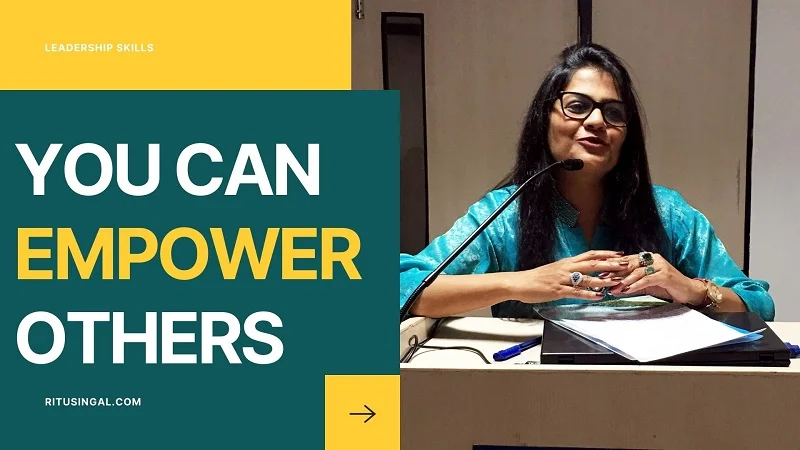
You know that your power doesn’t imply controlling others at all. Your power is your strength and giving it to others. A leader isn’t someone who forces others to strengthen him; rather, a leader is a person willing to strengthen others.
You can communicate well
You set clear expectations and goals and can get everyone behind them. Good communication implies conveying effectively the short-term and long-term vision for the organization, which gets people excited to work.
You can also read our blog on Communication Skills for Workplace Success
You’re persuasive
This most essential tool in your leadership armour enables you to persuade others readily, be it getting someone on board with an idea or convincing another one of your argument, you are known for your ability to convince others.
You evoke loyalty and authenticity
You believe in “living” the principles you expect your team members to follow. Thus, they are much more inclined to follow you. Besides, you inspire others to do good work and can motivate your team about a particular project.
You persist
You show determination to achieve your goals. While fully acknowledging that it isn’t always possible, you make every possible effort to achieve your goal before you concede defeat.
Your positive attitude makes people around you happy. This kind of outlook doesn’t make you blind to problems. Rather, it lets you find some good in every situation and know that eventually things will turn out to be alright. This kind of spirit keeps people motivated and spreads hope and ensures that you are considered a leader.
You inspire trust
Great leaders teach, motivate, and share their expertise with others, who often regard them as a fountainhead of knowledge. They rely on your advice, and you’re more than happy to help them get ahead. You articulate a wider vision that resonates with others so as to ensure good performance, loyalty or other positive outcomes. You can rally your team around yourself in uncertainty or tumult to keep the business intact.
People count on you and trust you to follow through and realize your promises. If you can hold yourself accountable and demonstrate total responsibility that leads others to trust you, you are a leader.
You are a rule-breaker
True leadership consists in finding new, unproven solutions to achieve a better tomorrow. Leadership implies progress and evolution, for which the status quo needs to be challenged. As a good leader, you can think and work outside the box.
You approach a problem using your own original thought as you’re an idea person, a visionary. You try to innovate by challenging the status quo.
Your feedback makes a difference
You are well-aware that negative feedback can be counterproductive if not communicated properly. You have a handle on how and when to deliver both positive and negative (or constructive) feedback to improve individual and organizational results, not to run others down or hurt others’ feelings or egos.
You constantly seek self-improvement
It’s a lifelong mission with you to always keep on improving yourself in all ways possible. Knowing your own imperfections, you let others know that you’re constantly working to become your best version. You are ready to take the blame whenever you are responsible for any negative outcomes and do not pass the buck on to others.
You’re in auto-discipline mode
You are gifted with self-control and self-restraint and you don’t let emotions enter the process of decision making. Desires or negative thoughts cannot carry you away. You don’t yield to temptations easily because you know doing so is integral to success.
You don’t need others for supervision or validation of your efforts. You criticize yourself before others do. You don’t frequently look to others to get you where you want to go.
You have a plan, always

You are the go-to man (or woman!) for all in times of need. You can make effective strategies and embrace challenges as you are confident of overcoming them with your problem-solving abilities.
Your plans are informed by a real-life perspective and are grounded in pragmatic considerations.
You invest in people
You know your biggest assets too well – your people. Obviously you nurture, groom and take care of them. Besides, you also know how to grow them and make their well-being a top priority. Given this, you understand the importance of constantly upgrading the skills and knowledge of your team to enhance their intellectual capital.
You spend time supporting, guiding and sharing your knowledge with others and give them the opportunity for success. If you do everything possible to help them attain success, you’re a leader.
You insist on excellence. When you do that, you tell others to act rather than talk, show rather than say and deliver rather than promise. If you do not make excuses but hold up excellence and quality, you are a leader.
You can also watch our video on Improve Your Leadership Skills
You have an open mind
You are game for absorbing others’ perspectives to evaluate a scenario and make sound decisions based on different inputs. Others feel comfortable presenting their ideas to you as they know you have an open mind and are receptive to differing viewpoints.
You handle criticism well and thrive on others’ feedback. Whether you act on that feedback or not is an uncertain question, but you welcome it and are ready to consider it as genuine and valid.
You’re a good listener. Thus, people love to confide in you. This indicates not only a strong leadership but also that you’re a nice guy/ gal. If listening is more important than speaking to you and if people can confide in you, you are a leader.
You display compassion
You do not consider your own needs to be more important than others’. You show a genuine sense of empathy whenever a team member faces a troublesome personal event. You listen well and are eager to help them with all that you can.
You are ready to admit your fallacies and mistakes and learn from them.
You respect people and it earns you respect in return. If you look for the good in everyone and respect them, they will hold you in high esteem and you’ll be a leader.
You offer advice and counsel. You have a good sense of empathy and your perspective is useful to those around you. If you often help others navigate their work and life, you are a leader.
You can read others’ minds
You’re gifted with good emotional intelligence. You can see if others are lying to you or are trying to mislead you. You can read people’s emotions and you try to learn about how those around you work, and comprehend people’s tendencies and behaviours.
You can also Boost To Your Leadership Skills With Corporate Coaching
You are a peace-maker amid chaos
Yours is a calming and pacifying presence that reassures your team and others amid difficulties. You display calm even amid chaotic times to reassure your team and keep it on track in spite of the goings-on.