A flawless person or relationship does not exist. Despite this, people strive to be the most ideal version of themselves in their relationships. However, a lot of people wind up repeating the same relationship mistakes.
This is likely because they aren’t examining what they’ve done wrong in the past or learning from their mistakes. Relationships are therefore doomed to end. Taking the time to reflect on and evaluate prior relationship mistakes, as well as seek relationship advice, is a vital step in avoiding them in future relationships. Here are a few common mistakes people make in relationships.
Counselling for youth regarding common relationship mistakes
1. Communication with a partner is incredibly important to a successful relationship. Every meaningful relationship must have open communication. Unwillingness to talk openly and honestly can create unnecessary misunderstandings and tension. Is your relationship with your partner well communicated?
Do you regularly communicate with each other? When you’re fighting or having trouble with one another, do you find it easy to share? A big mistake or habit that many of us slip into is refusing to speak up, but it can be difficult to escape from. Refusing to communicate is a surefire way to make any relationship sour, so it is wise to recognize this mistake and actively work against it.
2. Everyone, including you, is imperfect. As hard as it may be, it is imperative to remember that accepting your partner and their imperfections rather than trying to change them is a better approach for any healthy relationship. You won’t appreciate what you have if you spend all of your time trying to alter someone. Of course, you need to make an effort to work things out by making your partner aware of their problematic actions.
Ultimately, this is far more effective relationship advice for improving the relationship. You cannot, however, change your partner’s ingrained personality traits or deeply held beliefs. Put yourself in their position: Can you sympathize with their outlook on life and the way they think? Trying to understand where your partner is coming from can help you move past any disputes that arise.
3. The situation where you don’t support each other’s feelings is a typical relationship issue. Even when you don’t necessarily agree with your partner’s beliefs, it is important to be respectful and express empathy towards them.
Arguments are obvious examples of not supporting the other person’s feelings, but less obvious examples include refusing to respond at all or attempting to change the other person’s mind, such as saying things like, “But think on the bright side, just try to brighten up, and let this pass anyway.”
Taking the time to understand where your partner is coming from and acknowledging their feelings, even if you don’t agree with them, can help you move past any disputes that may arise. Showing empathy towards your partner is a crucial part of maintaining a healthy relationship. Validating sentiments is the remedy for a lack of support.
Validating your partner’s feelings involves not only listening to what they have to say but also responding in a way that shows you understand and sympathize with them. If it doesn’t work, you should take a marriage counselling session.
4. Failure to ensure that you have the same objectives, ideas, or views. This is one of the most destructive relationship destroyers out there. You don’t talk about what you want out of life or how you think relationships should be built. As a result, you face an impossibility when it comes to making those critical choices.
Many people’s religious beliefs are incompatible. Even if two people love each other deeply, if their core beliefs and moral frameworks are too different, the relationship will eventually suffer. That’s why it’s so important to talk openly and honestly with your partner about what you want in life and how you think relationships should be built before taking the plunge into a serious relationship.
5. Either spending too much or not sufficient time with one another. Often, couples make the mistake of assuming they must always be together at the beginning of a relationship; counselling for youth can help rectify this. This is self-destructive and suffocating. Relationships are all about quality, timing, and quantity.
You should spend quality time together getting to know each other and fostering your bond. You must recognize that they are less committed to this relationship than you are if the two of you are unwilling to work together to resolve it. To make your relationship last, finding a healthy balance is crucial.
6. We are all troublesome individuals in some way, which results in problematic relationships. Instead of yearning for what you do not have, you must make use of and cherish what you do have. This does not mean you cannot have a wonderful relationship; you certainly can. Use common sense when interpreting what is being said.
7. When you truly love someone, you may have a compulsive need for their approval and love. Being in this situation is risky because it frequently causes us to let our guard down, which pulls us away from our health. Both partners must uphold boundaries, and they are particularly crucial in clarifying goals and what actions and attitudes are and are not acceptable in that relationship.
8. Does your partner abuse you or demand more from you than they give? If yes, then it is essential to recognize this as a sign that boundaries are being violated and that the relationship may not be healthy. Establishing and maintaining boundaries is essential for a healthy relationship.
Boundaries are a major part of relationship success, as they provide a framework for communication and problem-solving and help to ensure that both partners feel heard and respected. Solid partnerships have a balance, and that balance entails both partners contributing equally to the relationship’s benefits.
It’s possible that when we go off course, this equilibrium changes and tilts our relationship. One partner may exert significant influence or authority while the other is confined to the relationship’s perimeter as a witness.
This imbalance can lead to both resentment and a lack of fulfilment for the less influential partner. Over time, this imbalance can be damaging to a relationship as it perpetuates feelings of unappreciation or a lack of control.
9. When you disagree with the other person’s viewpoint and make an effort to persuade them of yours, you are engaging in an argument. This effort rarely produces results and frequently results in the couple’s emotional detachment. As a result of this, relationships may become imbalanced, with one partner being more vocal and dominant while the other is more passive.
The solution to an argument is to briefly describe what the partner accomplished or did not accomplish about which you have feelings, then explain those feelings, and then stop—all without being harsh or implying that the other has no good qualities. This allows both partners to see their perspectives and eventually compromise or come to an agreement without feeling the need to ‘win’. Marriage counselling assists a couple in addressing and putting on the table their differing viewpoints regarding the relationship in a secure setting.
10. Relationships do not always benefit from consistent communication or even partners who understand what that entails. When we are unable to communicate our feelings respectfully and maturely, we may turn to emotional manipulation to try to maintain some semblance of harmony in our close relationships. Such manipulation is unhealthy and damaging behaviour, as it can lead to one partner feeling obligated to compromise even when they would rather stand firm. However, trying to manipulate someone’s emotions is never a smart idea.
Ultimately, while emotions are an important aspect of relationships, seeking to manipulate someone’s feelings can do more harm than good in the long run. The more often you do this, the more your objectives for the future and your mutual trust will be undermined. Instead, it’s advisable to communicate openly with your partner and work towards a compromise that you can both accept by understanding and respecting their feelings.
11. Traumatic personal circumstances can put an external burden on any bond. Your physical and emotional wellness can be impacted by the loss of a loved one, financial hardship, an illness diagnosis, psychological stress, past violence, or anything else you or your companion have experienced. It is imperative to recognize these issues and not let them harm the bond between you and your partner. As difficult as it may be, being honest with your partner is the most effective way to help both of you move through these challenging times. Keep your partner in the loop.
Discuss any changes in your physical or emotional health with your partner, no matter how difficult it may seem. A family, you are. Together, you will navigate these trying times and come out stronger on the other side. Consider getting marriage counselling if you want to get out of this situation as quickly as possible. Staying connected to your partner is essential during difficult times, and being honest with them about how you are feeling physically or emotionally can be the first step.
 12. If you don’t have a well-thought-out plan and a strong commitment to sticking to it, parenthood can be quite challenging. Developing a parenting plan is crucial to ensuring that both you and your partner are on the same page about raising the family. Take time to consider each other’s points of view and interests. Make sure that you have an understanding of how both parties will contribute to caring for the family.
You should always maintain a united image and discuss any parenting concerns privately with your partner. This will help to create a secure and loving environment for your children, as well as maintain trust and understanding between you and your partner. With a strong parenting plan in place, it is much easier to come together on decisions that involve the children and ensure that each parent is heard, respected, and taken into account when making decisions for the family.
13. Everyone enjoys having their efforts praised. Praising your partner for their efforts can contribute a long way towards creating an environment of mutual respect and understanding. It’s crucial to feel appreciated for the things you do that make your partner’s life easier, whether you have a demanding job or just take care of the house.
Even if it’s just for something small, being appreciative daily might make you both feel more acknowledged in the relationship. Expressing gratitude regularly is an essential part of maintaining a healthy relationship.
14. Relationship issues often have a sexual component. How do you feel about yourself sexually? For some, it is a cornerstone of the relationship, as a sexual connection can be seen as an expression of love and gratitude. Be open-minded and sincere with yourself. Respect each other’s wants and desires on a mutual basis. Both of you will likely be delighted by the results and eager to make some adjustments to your sexual life.
Of course, some personal issues can only be resolved with professional assistance. Your sexual life may occasionally be impacted by a fear of intimacy that you or your partner may share. To overcome this fear, it is important to have meaningful conversations about your romantic interests and relationship goals.
Takeaway
If your life is out of balance, a life coach can assist you. What are you looking forward to? Contact life coach Ritu Singal if you need marriage counselling. Mrs Singal has a special capacity to identify her client’s strengths and shortcomings and work with them to cultivate an inner drive for a successful relationship. With Mrs Singal’s help, one can find the inner fortitude and perseverance to overcome even the most severe challenges in life.
There is never a good time to hire a marriage counsellor. But if one has decided to do so, then Mrs Singal is an ideal choice for helping them to restore their marriage and bring back harmony in their relationship. Mrs Singal understands that in the healing process of relationships, a safe space should be created where both parties can share their innermost feelings with the utmost openness and sincerity. She believes in providing a judgment-free environment so that couples can share their feelings without feeling guilt or shame.

Marriage and family counseling is a form of psychotherapy that focuses on creating and maintaining healthy relationships within a family system by helping individuals gain greater insight into themselves, each other, and their family dynamics. Through marriage and family counseling, individuals can learn to develop better communication skills and gain a greater understanding of their roles within the family.
By understanding the importance of healthy relationships and communication, individuals are better equipped to handle conflicts more positively and constructively. This type of counseling is a great way for couples, families, and individuals to build upon their existing relationships and create healthier ways of interacting with one another.
In this blog we will discuss the role of family and marriage counselors, reasons why marriage and family counseling is important for any relationship, challenges couples, families, and individuals may face in relationships, and other concerns that may arise.
Family and marriage counselors provide guidance and support to couples, families, and individuals who are dealing with a variety of issues, such as communication problems, emotional distress, parenting challenges, infidelity, substance abuse or addiction, depression, or anxiety.
Through counseling sessions, these professionals can help couples, families, and individuals create healthier relationships and learn effective strategies for constructively dealing with issues. Counselors use a variety of methods to assist couples, families, and individuals in developing strong and healthy relationships.
The following list of benefits of marriage and family therapy can help illustrate the positive impact this type of counseling can have on relationships.
Strengthens family relations
By exploring family dynamics, marriage and family counselors can help couples, families, and individuals identify areas of strength and areas that need improvement so that each individual can understand how their actions and behavior affect the entire family.
This understanding can lead to stronger relationships and a deeper level of communication and empathy between family members. In addition, marriage and family therapists can provide an external perspective on relationships that helps everyone better understand the dynamics at play.
These insights and newfound understanding can have a ripple effect, helping to strengthen not just the primary relationship but also all the peripheral relationships that exist within families.
Build strong connections
Families that share an understanding of the principles of justice and fairness can benefit from strong connections and a more meaningful relationship with each other. This is especially true when these principles are embodied in an external perspective provided by marriage and family therapists, who can help to foster a deep appreciation for each family member’s individual needs and perspectives.
A counselor can provide guidance and advice to help families practice these principles in their everyday lives, as well as a structured platform for members to openly communicate their thoughts, needs, and emotions in a productive and safe environment by helping to create an atmosphere of fairness and trust within the family unit.
Additionally, marriage and relationship challenges can be better navigated when the principles of justice and fairness are taken into consideration.
Check out: Healthy Relationship Habits: Relationship Advice From a Life Coach
Develops communicative skills
Communication is the foundation of a strong family unit, and marriage and family therapists can help foster effective communication between family members by teaching valuable skills like active listening, reflective speaking, and conflict resolution that can be used in a variety of contexts in the home.
To do this, marriage and family therapists can provide an external perspective on how family members are interacting with each other, which can be invaluable for improving communication within a family.
They can also help families learn the value of expressing their feelings, needs, and concerns in a constructive manner and develop skills for empathizing with each other’s perspectives, which is essential for cultivating a safe and respectful environment.
Builds self-esteem
Marriage and family therapists can also work to build the self-esteem of all family members by providing a supportive, nonjudgmental environment in which they can express themselves and discuss their concerns openly and honestly.
This in turn will help family members feel more empowered, confident, and connected, which can be hugely beneficial for resolving conflicts within the family and fostering a healthier, more loving relationship between all members.
Not only can this help family members learn how to express their feelings healthily, but it also helps them to recognize and value their self-worth, which facilitates the development of healthy relationships.
Defining roles
Marriage and family therapists can also help to establish clear roles within the family to provide each family member with a sense of purpose and a place in the overall functioning of the family unit. This process is beneficial because it allows for a greater understanding of each individual’s needs and how those needs fit into the bigger picture of the family.
By helping each family member understand the responsibilities of their role, the marriage and family therapist can help establish a sense of order, accountability, and balance within the family.
Marriage and relationship challenges can then be managed more effectively, reducing the chances of family conflict and helping to create a more positive environment in which everyone’s needs are met and respected.
Examine for behavioral characteristics
Marriage and family therapists can also help to identify the behavioral characteristics that each family member brings to the table, as well as pinpoint any possible underlying emotional issues that could be contributing to the dynamics of the relationship.
Through an active, interactive process of observation, questioning, and dialogue, the marriage and family therapist can help create a shared understanding among family members of their behavior as well as that of others, which can lead to an improved sense of respect and understanding within the family.
Allows for forgiveness
Additionally, the marriage and family therapist can also assist family members in developing empathy and understanding towards each other, which in turn can help to create a safe space for forgiveness and reconciliation within the family.
This process of understanding and forgiveness can lead to a profound transformation in the family dynamic, providing members with newfound insight into their behavior as well as that of their loved ones.
Settling conflicts
The marriage and family therapist can also help to resolve any conflicts that may arise within the family by providing the necessary resources and strategies for communication, problem-solving, and conflict-resolution skills that family members can use to ensure their differences are resolved peacefully and respectfully.
This can be an invaluable tool in helping to break any negative patterns that may have formed within the family and allowing them to move forward with stronger bonds and healthier relationships.
Furthermore, through the use of therapeutic intervention, family members can communicate their individual needs and wants while also understanding how their actions and behaviors can affect others.
The foundation of any relationship is trust

Trust is a fundamental building block of all relationships. Every family or couple relationship has issues, but you shouldn’t enter the relationship with the notion that you can’t believe the other member.
Building a strong sense of trust is essential for all relationships to develop and flourish, and marriage and family therapists can help provide couples and families with the tools they need to ensure that trust exists between them and is maintained throughout the entire relationship.
Regardless of the issues, family members must approach each other with an open mind and be willing to give their trust rather than expecting it to be automatically given to them. If trust is not present, it can be hard to navigate challenges and conflicts.
Life interferes
In any relationship, life can often get in the way, and it is important to have the proper tools to navigate these issues effectively. This can be especially true in familial relationships, where feelings and history can often interfere with the ability to have meaningful communication and work together.
Marriage and relationship challenges can be difficult, especially when emotions get in the way. A counselor can help guide both parties in finding effective solutions to these types of problems and can provide an outside perspective when trying to work through difficult times that can often impede progress in a relationship.
Marriage and relationship challenges
Counseling can be an invaluable resource when dealing with marriage and relationship challenges that come up in a family or couple dynamic. Counselors are highly trained to help families and couples navigate through difficult times, as well as a guide for creating better communication and understanding between family members and couples.
It is important to remember that marriage and relationships are dynamic, ever-evolving entities that require ongoing effort and nurturing to keep them healthy and functioning as intended. By utilizing a professional counselor, couples and families can gain insight and skills to help them move forward in their relationships.
Marriage and relationship challenges can be overwhelming, and often couples and families are not sure where to turn for help. Counseling can provide a safe and secure space for couples and families to openly share their feelings, needs, and concerns.
How to choose a marriage and family counselor
When it comes to choosing a marriage and family counselor, it is important to find someone who has the credentials and experience to help with the particular challenges that one is facing in a constructive and supportive way.
Additionally, it is important to find someone with whom one can build trust and rapport and whose style and approach to counseling are compatible with one’s values and beliefs. Choosing the right counselor is essential to getting the most out of counseling and feeling comfortable enough to talk openly about difficult and sensitive topics.
Therefore, it is important to take time to carefully research different counselors, read reviews from past clients, and interview potential candidates to select someone who is a good fit before committing to work with them.
Once an individual has done the necessary research and selected a marriage and family counselor, it is important to take the initiative to participate in the process and be open and honest about thoughts, feelings, experiences, and reactions to get the most out of counseling sessions and foster a trusting and productive relationship with their counselor.
What are the main aspects of marriage and family counseling?
Marriage and family counseling is a form of therapy designed to address the various issues that may arise in a couple or family setting, such as communication problems, relationship issues, and disagreements over values and beliefs.
As such, marriage and family counseling is focused on guiding to help individuals to identify underlying problems, enhance interpersonal relationships, create healthier communication patterns, and foster understanding between family members.
The counselor also works to foster an atmosphere of trust and understanding where all family members can feel heard and supported.
During marriage and family counseling sessions, couples and families learn to better understand one another’s perspectives, gain insight into why they are having issues, develop healthy boundaries, process difficult emotions in a safe space, discuss important topics such as finances and children in a constructive manner, and create strategies to manage stress, conflict, and difficult emotions.
In short, marriage and family counseling helps couples and families to strengthen relationships, build better communication skills, gain insight into the underlying causes of problems, and develop strategies for handling conflict.
Conclusion
The majority of relationship issues and solutions are likely something you have heard about or encountered; however, not everyone is diligent in their application of this common information.
But when it comes to advise for resolving marital problems and relationship troubles, everything gets down to commitment and application.
Every couple encounters some of these typical issues in relationships at a certain moment; they are not entirely controllable. A counselor can be of great help in this, providing guidance and helping the couple identify and understand what they are going through.
Some reasons why marriage and family counseling is important for any relationship include providing a neutral space for both parties to speak openly, helping couples find new ways of understanding and relating to each other, and teaching them skills for better communication and conflict resolution.
Today stress is an extremely common word. A huge number of people are stressed because of certain life events. We all feel stressed sometimes because life comes with countless ups and downs.
Maybe an event or a situation is causing stress, or sometimes our own reaction to particular things makes us feel stressed. Whatsoever the reason, the matter of concern is, stress touches all of us.
When stress becomes a habitual issue, over time it can seriously influence your life and well-being. Although there are many different ways to manage your stress and feel better still, sometimes you need professional support.
A stress management coach finds the root cause of stress and offers guidance and insight to cope with stress effectively.
I know when it comes to seeking professional help for stress, anxiety, and depression many questions start dancing in your mind. I understand, it’s normal so there is nothing bad about having questions about it. But make sure you get all your answers from the right person. That is what matters the most.
Do not fall into the trap of myths, instead consult a stress management coach and ask for your queries. I felt I should write about it because I know still many people hesitate to seek help from a counselor or psychotherapist. The reason is they are not well aware of it.
Being a life coach I can better tell you about all your hows and whats such as how it feels working with a counselor, why you should consider a coach, what are the benefits and how it makes a difference, etc.
First, let’s figure out what is stress because it is vital to understand stress in order to know to comprehend stress management counseling.
Understanding Stress
Stress is human nature that can be physical, mental, and emotional. Occasional stress is not a matter of concern. In fact, occasional stress can be exploited to force yourself toward your goals and motivate you to get out of a tough situation.
A mild level of stress boosts the responding speed of your mind and body. On the other hand, continuing stress, or when it becomes more like a habit, becomes a substantial mental strain contributing to long-term health conditions.
Stress is a state of mental strain or tension occurring due to opposing or highly demanding situations. Every single person on this earth deals with stressful circumstances at some point in life. How stress impact you, clearly depends on how you deal with it and manage your way.
Checkout this: The Importance of Stress Counselling in the Workplace
Causes Of Stress
Some very common life stressors include divorce, relationship issues, losing your loved ones, financial issues, losing a job, moving to a new place or house, chronic sickness or injury, traumatic events, and emotional problems such as anxiety, anger, guilt, or grief, etc.
The events you say are stressful, come from your own experiences and what you encounter in life. In a situation that you feel is stressful, the other person may find that just challenging. Put simply, your stressors may not be a stressor for your partner.
For example, you have to give a presentation in the office, which is very imperative. The day comes and you are feeling stressed because you feel you are not well equipped.
You are stressed because you know people may judge you harshly and the consequences of a letdown are unpredictable. Learning to handle these stressors can help you reduce this feeling.
Symptoms Of Stress
Some people easily realize when they feel stressed but some may not even realize they are stressed. It happens because stress can manifest in various ways, usually targeting you emotionally as well as physically.
The appearance of stress may vary from person to person. To spot whether you are stressed or not, go through the following symptoms:
- Feeling overwhelm or tearful
- Battling thoughts and dizziness
- Altered appetite and digestive problems
- Trouble sleeping
- Shallow breathing and uneasiness
- Frequent headaches
- Shattering or shouting at people
- Muscle tension and tiredness
- Inability to make decisions
Stress is also associated with many medical health problems such as type 2 diabetes, heart conditions, etc. I have seen some of my clients who are experiencing stress and also suffering from medical illnesses. It happened because the stress was left unchecked for a longer time.
Untreated stress may worsen your health and existing illness. It is highly recommended to get support as soon as you notice being stressed.
Stress Management Counseling Is The Greatest Defender Against Stress
When you are aware of stress and you know you are experiencing it. Now it’s time to get into management. Sometimes, you can not control behaviors and events that cause stress. However with the help of a coach you can build emotional resilience to manage these emotions.
Once you notice the symptoms of stress, it should not be left unmanaged. Depending on the symptoms you are experiencing you need to consult a stress management coach. A coach works with you to understand your suffering and create and implement suitable approaches. They help you address the problems and remove the stressors.
You need to see a stress management counselor if:
- You are going through stress for a prolonged period.
- You are experiencing excessive levels of stress.
- You are undergoing transitions or significant life changes.
- You are expecting future transitions or alterations.
- You are going through challenging circumstances in life.
People who visit me for stress-related issues say they are stressed about their job, relationships, future, and this and that. Everybody has their own reasons for being stressed. Some people tell me that they are completely hopeless about certain situations and even their life. A few people who are encountering chronic stress feel like finishing their lives.
It’s so painful to hear such thoughts. My mother also had a similar kind of problem, I have seen her struggling. I became a life coach so that I can help people create peace in their lives. My motive is to make this world a happy place and by helping people I am contributing to that. Through stress management counseling I am helping people reach their inner power.
Stress management counseling involves various steps including:
- Understanding the source, causes of stress, and its triggers.
- Comprehending how stress establishes in your life.
- Recognizing and using your strong points to handle it efficiently.
- Getting into and transforming your thinking patterns in stressful circumstances.
- Learning and developing effective strategies to lessen stress depending on your particular issues.
Working with a counselor means you are spending dedicated time to understand triggers and symptoms etc. Coaching helps you evaluate your personal and professional life, and your mental and physical health to plan customized coping tactics.

Stress management counseling involves a range of therapies and techniques designed to support people cope with their stress levels. It is aimed at lowering chronic stress to improve happiness, health, and well-being. Stress management techniques may also involve deep breathing, meditation, a healthy diet, good sleep and a positive mindset, psychotherapy, social support, guided visualization, etc.
How can a stress management counseling coach help you
Stress can be destructive when it is prolonged and when you fail to identify and tackle it correctly. Counseling is the safest option to release your emotions and difficult feelings. Learning stress management leads to better mental health, heart health, sleep, and complete well-being. A stress management coach work with you throughout your journey.
Being a life coach and a human being I am devoted to helping people cope with stress and relishing a stress-free life. I work with my clients to find the causes and triggers of their stress and create customized sessions to overcome it.
I provide you with your own space where you can comfortably speak your mind and heart. Counseling help detects underlying health issues and finds the best-fit solutions to your stressors. Trust me, you will observe the change right from the very first session.
Key advantages of Stress Management counseling
A stress management counseling coach can help you learn effective coping mechanisms and some simple self-care activities that help you manage your stress better.
Provides a secure place to liberate all your emotions
A counselor provides a comfortable space for you so you can offload your emotions by sharing them with your counselor. Because you know that you will not be judged. When you face and address your issues and look for resolutions it subsequently lowers the stress with better capability to do the same in the future.
For instance, not all people are comfortable sharing their feelings with their friends or family. Particularly when are experiencing stress, you may not feel like expressing your heart to anyone. It may be because you are scared of being judged or misinterpreted. However, a counsellor provides you with a laid-back space, where you can share everything without hesitation.
Offers efficient handling mechanisms and activities
Your counselor can help you learn coping methods and self-care doings that suit your particular issues. I always made sure to curate the best coping strategies for each of my clients depending on their stressors and triggers. Self-care methods such as breathing techniques, exercise, music, etc can help people combat stress.
Not every technique works well for everyone. I make sure to craft a suitable plan for every person based on their particular stress matters.
Prevent probable mental health issues
Facing prolonged stress can lead to other psychological problems. For instance, stressed people are at high risk of getting panic attacks. I have seen many people who became irritable and aggressive while going through stress. When you know how to tackle stress appropriately, you can avoid these kinds of psychological health issues.
Read: Mental Health: The Matters That Matter
Improved self-understanding
Stress counseling allows you to reflect on yourself and realize your inner power. Here you learn about the reasons for your stress and how you should react to it. It will help you deal with your feelings better promoting a positive outlook and avoiding panic attacks.
Lessens stress levels
The very obvious benefit of stress management counseling, you will have reduced levels of stress. My clients say they feel much better even after a few sessions. When you articulate your thoughts with a counselor, it removes the burden from your shoulders. When you become knowledgeable about your situation, you feel empowered.
Quick Stress Management Tips By Happy Life Coach Ritu Singal
- Do not skip daily exercise, yoga, or walking.
- Deep breathing techniques can make a big difference while combatting stress.
- Counseling works great to find the stressors, triggers, and suitable strategies to tackle them.
- Expressing all your heart can promptly make you feel lighter.
- Meditation can help you boost the outcomes of your efforts.
- Connecting with your dear ones can make you feel better.
- Spending time engaging in your hobbies can make you happy.
- Avoid alcohol, smoking, and drugs to prevent worse consequences.
- Spotlight self-care and relaxation techniques because you deserve them.
A lot of people get into unhealthy coping mechanisms. Even many of my clients admitted that while experiencing stress, they started smoking or consuming alcohol. These have become quite common these days. Stressed people are more prone to develop negative habits.
Smoking, alcohol, and drugs are unhealthy coping means that may provide you temporary relief but do not provide stress relief actually and exacerbate the condition worse in long term.
Counseling can help you avoid such practices. If you are already into these habits your counselor can assist you to change them developing healthy ways to deal with your stress.
Stress Management Is Not Tough, You Just Need The Right Guidance To Build The Right Mindset To Do So
We all feel stressed from time to time. Stress impacts your complete well being so it is vital to understand all aspects of stress and how it influences your body. Stress makes it difficult to focus, think clearly, and perform daily responsibilities. Counseling is a critical component while addressing and eliminating stress-associated problems.
Stress can be efficiently managed in various ways. The best way is to address stress psychologically as well as physically and develop resilience and survival skills. As a stress management counseling coach, I can help you embolden and transform your hopeless feelings into hopeful ones.

Life coaches have the responsibility to make the life of humans comfortable in terms of morale and the right direction. Life coaching is a noble profession developed for the betterment of society and its people.
There are so many principles of life that teach us to lead a successful and happy life. But not everyone is acquainted with the execution of these principles. Therefore life coaching is one of the most popular courses pursued by young adults.
Let me make this easier for you. Can you imagine the feeling you have when the next day you have an important exam? Don’t you feel stressed, nervous, tense, and frightened?
You will never want that feeling to stay for life long. Will you? Now consider this same feeling haunts the life of a depressed person. In such conditions, only an experienced life coach can make it easier for a depressed person to get out of depression.
Signs That You Need a Life Coach
Sometimes you don’t know that you need assistance, you can take it. People who are under anxiety and stress may believe that they are the only one who has to go through such a scenario. But, my friend, that isn’t the case anywhere.
A life coach will tell you that he/she is approached by similar people every day. It’s their job and they know how to do it.
Most people dwindle between situations like entrepreneurship, marriage, divorce, spirituality, self-esteem, self-doubt, and health issues. You may be finding it hard to socialise with people due to any cause.
A good life coach will assist and guide you out of the dark roads of loneliness. He/she can hold you back and give you a push to enlightenment. Obstacles are a part of life and not everyone is accustomed to dodging all that comes. But a life coach dedicates his/her knowledge to this purpose.
Read more: Reasons Why You Need A Life Coach
Qualities Of Great Life Coaches
1. Optimistic Behaviour
Optimism can save the world from wars and weapons. With optimism, every person hopes for a better present and a happy future. But on the contrary, we see youngsters, adults, teenagers, and even the old indulged in shadows of negativity. We want our destiny to be great but in the process forget that it is the present that we owe.
A life coach’s main character includes an encouraging thought strategy. You might find that people do this for money. Yes, it is but the knowledge that is disseminated through this process is priceless.
Spreading wrong messages in the name of optimism is not the job of a life coach. They make you look at reality with open bright eyes.
2. Passionate For Work and Help
If you aren’t passionate about what you are doing, you cannot fake it for long. Today or tomorrow, you will be fed up with the same. What after that? Don’t know? Let’s see.
The life coach as a part of his profession dons the character of many individuals. Sometimes he/she can be your friend while sometimes your greatest critic. Both of these are necessary.
Preaching a solution is easy. Anyone can do it. But making it happen by backing the process is the assignment of a life coach. He/she displays the best weapons and strategies to take you to unthinkable heights of excellence.
3. Great Listener
 A great life coach is the best listener. I can assure you one who doesn’t listen can never be your problem. But as the client, you also need to show your trust in the life coach once assuming that he/she is all open to hearing from you.
Listening is a part of good life coaching skills. Bookish answers copied from autobiographies and motivational documentaries are nowadays the easiest way of preaching life coaching. But it’s not the real way how the job is done.
Such momentary spouts of motivation are variable and don’t stay for long if you don’t know the root cause.
With the help of a good life coach, you aim to remove the root cause permanently if possible.
Check out: Your Guide On How to Improve Listening Skills
4. Non-judgy
Decreeing hateful comments and shaming people’s situations is the easiest way of condemning self-confidence. But have you ever thought, the concept of, you can do it champ, can work wonders for a disheartened man?
A life coach tries his/her best to accomplish this only. They sit with no hate sentiments towards the person sitting in front. They have open eyes, minds and souls ready to accept anything that comes from forth. This is the way it works miracles. But it’s just the beginning. Life coaching can go on for months to years together. The duration varies from one person to another.
5. Non-opinionated
Forming an opinion based on how one dresses and presents is not enough. You can be yourself in front of a life coach. You can be the real you. Life coaches are simple people aimed at supporting people from scratch. The sense of accountability is never lost in them.
Most important is, whether the client is making progress after every session or not. Without progress, there is always a scope to try an alternative way. It is sometimes a hit-and-trial play but with mindful steps.
So never forget to take and give feedback on how you feel after and before the session. Progress is requisite.
6. Inquisitive
Inquisitiveness or curiosity or the zeal to know you better is the prime quality of a life coach. One cannot diagnose treatments, without the history of the ill person. This is how it should work.
A thorough understanding of what landed the client in such a situation, and how it started, progressed, and has been taking a toll on his/her life are the important questions mostly asked by life coaches.
This is named the queer questioning skills of an enthusiast life coach. Without this, no life coach can earn money. Keeping the questionnaire dedicated to the problem in a concern of the client is the craft of being a good life coach.
Clients are hesitant to speak about personal details about their life and profession. They may tell you their problem but leave loopholes or make false stories to make their story look real.
A great life coach looks into the details of each crossroad and makes sure that they connect to an expected point.
7. Transparency in communication
Confusion is like black clouds that can bar the rays of sunlight from reaching the earth. Similarly, if you are perplexed during or after the session then there is no point in attending one.
A good life coach establishes a transparent bridge between the speaker and the listener. He/she takes every step towards the client and nowhere else. The conversation exists because the client stands for it.
They follow a systematic approach to how the client was before he entered the space and how he is present. The objective shouldn’t be to make the person uncomfortable with arching questions. While the matter of fact should be to make the client believe in the life coach and be open to all types of questions.
8. Vigilant and open-eyed
Integrity, transparency, probity, and clarity are the words that can describe a successful interaction between the listener and the speaker.
You can not make a dumb person speak. Similarly, you cannot make a resistant person open to you in the first go. It tests the patience and dedication of every life coach.
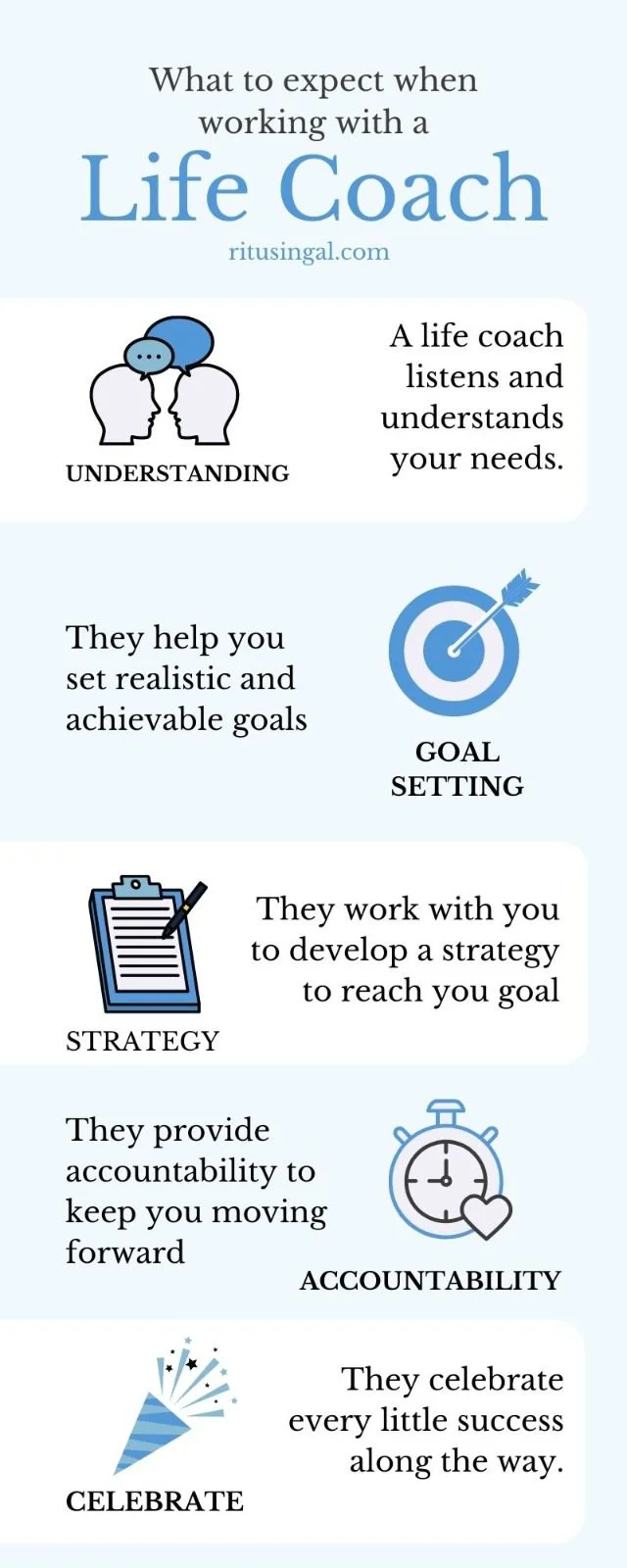
Life coaches should eye upgrading their skills through empirical skills and certification courses. Every person is unique and even his problem. You cannot impose radical solutions like handling a dose of paracetamol on every fever patient.
Examine the case closely before passing implications. An open-eyed demeanour means examining the client’s hand movements, facial expressions, lines of wrinkles, and even speech. Is the client brought in force or is he uncomfortable before relatives and unknown persons?
Can You Become a Life Coach?
Getting the position of a life coach is no easy deal. It is a profession and includes the same amount of time and endeavour in pursuing one. You should be ambitious, passionate, and dedicated towards your professional goals.
Yes, you can become a life coach if you have acquired a good certified degree and engage your professional skills in actually solving a problem.
As said, bookish knowledge can’t be trusted unless you have practised them in practice. You cannot run a horse after reading a book. Similarly, you cannot solve a real-life problem by reciting the answers from your books.
Steps to Attain a Life Coach Degree as a Profession
- Know Your Niche
Life coaching is vast because people and their problems are vast. So for clarity, life coaching subjects have been classified into headings. You can choose your domain and specialise in any of them.
These domains will help you know your target audience. It reduces the transition from one problem to another. Hence focussing, studying, and researching on a specialised class of customers.
Some of them are currently asked domains are:
- Pre-marriage, Marriage relationships and Divorce
- Family Planning
- Business and entrepreneurship
- Employment choice
- Job transitions
- Balance in work and profession
- Health
- Spirituality
- Academic issues
- Enter a professional training program
Alleviating mankind from problems of daily life needs you to be trained holistically. It is a big responsibility for a single person. During the time of specialised training, one has to learn from his/her seniors and prospective coaches who are already in the field training.
The teachers can impart psychological training and teach the activities to be conducted during a session. One learns how to successfully conduct psychological assessments to learn about the client’s mental thinking stamina.
Lastly, it is ethics that must be kept in mind. One cannot breach the distance that has to be maintained between a coach and a client.
An aspiring life coach should aim for getting accreditation from industry associations as they help you get better employment opportunities. The duration of life coach training is between 18-24 months. The fees are variable.
- Obtain the Certification
Getting a credential for portraying your soft skills is a must to go a long way. People will come to you by seeing the amount of work you have done, the experience gained, and most importantly the institute from where you achieved your degree.
Try to go for certificate courses from the International Coach Federation and the International Association of Coaching. There you have to fulfil 400-500 hours of training with 25+ clients. The membership fee starts from 169$.
- Set up your business profile
Life coaching is as well as a business as it is imparting support to humans. There are chargeable legal proceedings that you have to pay for to protect your business and give it a legal name. The process of setting up a business profile may vary from state to state. The charges can be less 300$ including attributing a business name, licence, and website.
- Start the Work
People in need often fall into the trap of fake life coaching. So as a responsible life coach, you should go for true ad-making. Your promises should not be overwhelming but statistical. There should be a helpline where clients can easily contact you. Objectify your advertisements by placing them on targeted populations.
Attending webinars and public get together will make you stand close to the public attention. Your niche starts operating smoothly, once you start the work and set positive examples of excellence. The preaching then gets diversified.
Your customers will spread the word for you. So all it matters is the quality of your services. Urge your clients to write testimonials on your website and public page. This brings the feeling of openness.
Last but not the least, if you are a life coach or seeking help from a life coach, don’t stop. You can easily find one by checking on useful websites related to your query. We hope we have solved most of your queries through this article. It is meant to make life coaching easier and accessible for all.
Stress is a normal psychological and physical reaction to the demands of day to day living, including the workplace. A bit of stress is, in fact, good for you in that it drives you towards better job or professional performance e.g. before an office presentation, the little stress one feels actually helps them work harder and do better. So far, so good but coping with multiple daily life challenges like long commutes, traffic jams, targets, deadlines, social events and managing a family can often test our coping abilities.
Biologically, our brain is designed to guard us using an alarm system during a threat. In a threatening situation, our body gets a brain signal to release hormones, which ramp up our heart rate and blood pressure, which leads to the typical “fight-or-flight” response. Our body gets the fuel to deal with the situation using more oxygen, more energy and the physical and mental “high”. And once the threat is gone, our bodies ought to return to a normal state. But the hassles of modern living never let some people’s alarm systems shut off. This unhealthy state of stress can harm both our mind and body in the long term.
Among common stressors, workplace stress occupies the top slot. A recent survey indicates that more than half of all employees in India feel stressed during at least 60 percent of the week. Workplace stress can have significant health consequences ranging from benign (more colds and flus) to serious (heart disease, metabolic syndrome). Stress in the modern workplace is a harsh reality. Period. We have to learn to live with it. But while stress at the workplace is common, having a low-stress job is difficult, if not impossible. Therefore, a much more realistic approach is to evolve effective coping strategies to reduce the stress you face.
Stress Management Training
Stress management training can help us re-calibrate our alarm system to help us adapt and achieve resilience. Without such resilience, we may always be on a high alert and with time, this long-standing stress can lead to health problems. Therefore, waiting until stress actually damages your health, relationships and the quality of life isn’t a sensible thing to do. You can do a lot to drive away the pressures and lead a much more peaceful and tension-free life by practicing stress management techniques.
Experts in mental health counselling opine that among common stressors, job-related pressures, relationship issues or financial troubles are relatively easy to single out. But the seemingly small and innocuous things like waiting in a long line or rushing for a meeting can also raise the stress you feel. To boot, even apparently positive events like tying the nuptial knot or shifting to a new home can be sources of stress. In fact, any change in life – be it positive or negative- can be a potential source of stress.
It’s important to remember that stress will never vanish from our life. Thus, stress management needs to become part of our day to day living. By identifying the stressors in our life and practicing relaxation, we can certainly hope to counter its ill-effects and improve our coping mechanisms. Of course, you don’t have to deal with all by yourself as you can seek help from family and friends.
Importance of Stress Management Training
 Constantly elevated levels of stress endanger our entire physical and mental well-being. It upsets our emotional equilibrium and physical health, interferes with our thinking and functioning and impairs our ability to enjoy life. On the face of it, it appears as if there’s nothing you can do about it. Hold on! You have a lot more control than you think.
Stress management training can help you get rid of stress and become happier, healthier, and more productive. The ultimate goal behind this a balanced life in which you have enough time for work, relationships and fun and you can build the resilience to meet challenges. But there isn’t a universal solution here and you’ll have to experiment to find what works best in your case.
Common sources of work-related stress
In stress management counseling, there are some common threads binding together major problems related to stress. The persistent stress due to these factors takes a toll on your health and well-being. Certain things tend to go together with work-related stress e.g.
- Poor remuneration/salaries
- Excess workload
- Lack of opportunities for advancement
- Un-engaging or un-challenging work
- Lack of social support system
- lack of control over job-related decisions
- Conflicting demands or lack of clarity about job expectations
- Effects of uncontrolled stress
A stressful work environment can contribute to headache, sleep disturbances, short temper, poor concentration problems, anxiety, insomnia, high blood pressure, and weak immune system. It can also contribute to depression, obesity, and heart disease. To add to it, people with excessive stress often deal with it in unhealthy ways – overeating, eating unhealthy, smoking or drugs and alcohol.
Look for warning signs
The mother of all stress management techniques – identifying your own stressors. If you feel overwhelmed at work, you can lose confidence and can become irritable or withdrawn, which makes you less productive and makes the work seem less rewarding. If you ignore the warning signs of work stress, they can lead to bigger problems.
The warning signs of stress are:
Excessive stress at work
Anxiety, irritability or depression
Apathy, loss of interest
Sleep-related problems
Feeling of fatigue
Concentration problems
Muscle tension or headache
Social withdrawal
Loss of interest in sex drive
Alcohol or drugs
Common causes of excessive stress
Fear of being sacked
More overtime due to staff cuts
Performance pressure to meet expectations, but without increasing job satisfaction
The pressure to work at an optimum level, always
Stress Management Techniques At The Workplace

If you are finding it hard to cope with work stress, you may give the following a try:
Begin it right
After rushing send kids to school, dealing with traffic, and downing coffee for a healthy breakfast, many people are already stressed by the time they reach their workplace. This situation makes them more prone to feeling stress at the workplace in the day.
Have a stressful morning can affect significantly the workplace stress you feel. When you start your day in a planned manner, have healthy meals and a positive attitude, the stress related to your job rolls off your back so quickly.
Balanced schedule
In stress management counseling, I always advise workers to analyze their schedule, responsibilities and daily tasks. All work and no play is a recipe for burnout. Find a balance between work and family, social activities and me time, responsibilities and downtime.
Avoid overburden
Too often, we underestimate how long something will take. If you have too much on your plate, distinguish between “shoulds” and “musts.” Place tasks that are not really necessary at the bottom or yank them off altogether.
If you commute, leave earlier in the morning. Mere 10-15 minutes can be the difference between rushing to your desk and having time to ease into the day.
Regular breaks
Take short breaks for a walk or to sit back and clear your head. Also, get away from your desk or work for lunch.
De-stress by improving emotional intelligence
Experts on mental health counselling believe that even if you work in a stressful environment, you can maintain self-control and self-confidence by practicing emotional intelligence. Emotional intelligence is the ability to manage and use your emotions constructively. In matters of satisfaction and success at work, emotional intelligence is as important as intellectual ability. Emotional intelligence means communicating with others in a way that draws others to you, overcomes differences, repairs bruised feelings, and reduces tensions.
It has four main components:
Self-awareness: To recognize your emotions and their effects
Self-management: To control your emotions and behavior and to adapt to changing circumstances.
Social awareness: To understand and respond to others’ emotions and feel socially comfortable.
Relationship management: To inspire, influence and connect with others and manage conflicts.
Tracking stressors
- Mental health counselling experts advise keeping a journal to identify situations creating the most stress and how you respond. Record your thoughts, feelings, and information about the environment, the physical setting, and how you reacted.
- Did you raise your voice? Get a snack? Go for a walk? It can help you find patterns, triggers and your reactions.
- Developing healthy responses
- Instead of fighting stress with fast food/alcohol, make healthy choices.
- Exercise is a great stress-buster as is Yoga. In fact, any physical activity is beneficial.
- Make time for hobbies and other favourite activities – novels, concerts, games. Do set aside time for the things that bring you pleasure.
One of the most effective Stress Management Techniques, physical activity is a big stress reliever as it releases the feel-good endorphins and can also be a valuable distraction from daily worries.
Regular exercise for 30 minutes or more gives you the most benefit but it’s alright to build up your fitness level over time. Even small activities can add up to a lot over the course of a day. Get up and get going.
- Dance to music.
- Take your dog out for a walk.
- Walk down or cycle to the nearby store for vegetables/ groceries.
- Avoid the elevator. Use the stairs.
- Park your car at a far away location and walk the rest of the way.
- Pair up with an exercise buddy to encourage each other.
- Play ping-pong or other activity-based video game with your children.
While any physical activity would help you burn away stress, rhythmic activities like walking, running, swimming, dancing, cycling, and aerobics are especially effective. Choose something enjoyable so that you stick with it.
While exercising, pay conscious attention to your bodily and emotional sensations and focus on coordinating your breathing with the bodily movements. The mindfulness element helps you break the negative cycle that comes with excessive stress.
- Be Clear
A common variable responsible for burnout is unclear requirements for employees. If you aren’t aware of what is expected of you, or if the requirements keep changing without notice, you may feel extremely stressed.
Thus if you do not know whether what you do is enough, talk to your immediate supervisor. You can talk about job expectations and discuss strategies to meet them to relieve stress!
We should be clear about not confusing hard work with overwork at the cost of relationships and health. Every job holder has felt some work-related stress. In the short-term, you may be pressured to meet a deadline or meet a challenging obligation. But it is when work stress becomes chronic that it gets overwhelming and harms physical and emotional health.
Sadly, long-term stress is quite common. In fact, the workplace is consistently cited as a significant stressor by most workers. Of course, you can’t always avoid tension on the job. Yet you can take steps to manage work-related stress.
- Stay Away
Interpersonal conflict can take a toll on your health, physical and emotional. Though in many situations, conflict among co-workers is difficult to avoid, it’s a good idea to avoid it at work as much as possible.
The Takeaways: Say no to gossip, personal religious and political opinions, and “colourful” office humor. If possible, avoid people known for not working well with others. But if you are caught in conflict, handle it properly.
- Stay Organized
You may be disorganized, but planning can greatly decrease work-related stress. Being organized means less rush to avoid being late and less hustling to get out at the end of the day.

Being organized also means avoiding clutter and being more efficient.
Be Comfortable
A surprising workplace stressor is physical discomfort, related to where you perform your daily work (e.g. desk). Sitting in an uncomfortable chair for some time may not trouble you much, but if spend a lifetime in that chair, the sore back may make you more reactive to stress.
Things as small as noise can distract and cause low-level frustration. By all means, try to have a quiet, comfortable, and calming workplace.
- Multitasking? What’s That?
There was a time, not so long back, when multitasking was touted as a fantastic way to maximize one’s efficiency and get the most done in a day. However, moiré and more research has convincingly proved just the opposite i.e. if people put a phone to their ear and do calculations at the same time, their speed and accuracy often suffer.
A certain “frazzled” feeling comes from splitting your focus, which doesn’t work for most people. So instead of throwing your lot with multitasking, try other cognitive strategies like chunking to stay on top of your game.
- Walk at Lunch
The ill effects of a sedentary lifestyle are too well-known for a recall here. We can combat the effects of work stress with some exercise during the lunch break. You might try short exercise breaks throughout the day to lift your mood and get into better shape.
- Perfectly Imperfect
Being a high achiever makes you feel good and excel, but perfectionism can be problematic for you and others. You cannot do everything perfectly, all the time in a busy, fast-paced job. A good strategy is doing your best and feeling good about your efforts.
- Music on the Drive Home
Listening to music has many benefits and is effective in relieving work-related stress. Listening to a peppy song while making breakfast can help you feel better prepared for the day. Combating the stress of a long day with your favorite music on the drive home can help you wind down.
- Connecting and Reaching Out
Spending good face time with others who makes you feel safe and understood is a calming experience. Face-to-face interaction triggers hormones to neutralize the body’s “fight-or-flight” response, which is a natural stress reliever (and staves off depression and anxiety). So connect regularly face to face with family and friends.
The people you talk to may not “fix” a problem but they can be good listeners. Do not think of yourself as being weak or being a burden as your loved ones will feel flattered by the trust you repose in them. Nurturing a close friend’s network can enhance your resilience to stressors.
- Connect with colleagues. B. Help out others.
- Share lunch/ tea with a friend. D. Ask a loved one to check in on you regularly.
- Accompany someone to a theatre /exhibition/concert.
- Call or email a forgotten friend.
- Go for a walk H. Schedule a weekly dinner date.
- Meet new people by attending a class or joining a club.
- Confide in a teacher/mentor/ elder one.
- Balancing, Having Fun
Take out some “me” time to reduce the stress in life. Do not get caught up in the hustle and bustle of life so much that you forget your own needs. Nurturing yourself is a necessity, not a luxury and you are worth it! With regular fun time, you handle the stresses in a better way.
- Take out leisure time, rest and relaxation in your daily schedule. Don’t let other obligations encroach on this time as you deserve a break to recharge your discharged batteries.
- Watch the stars, play the piano or go biking- any leisure activity of choice. Always keep your sense of humour intact, including laughing at yourself. Being able to laughing at oneself is a mark of emotional maturity. Even otherwise, laughter therapy helps you fight stress.
- Try yoga, meditation, and deep breathing to trigger the relaxation response, the opposite of “the fight or flight” response. Your stress level will decline, making you calm and focused.
- Enough quality sleep is important to effective stress management. Limiting caffeine intake late in the day and minimize computer and television use, at night.
- Fix boundaries. Do not remain available 24 hours a day. Make a rule of not checking email at home in the evening and not answering the phone during dinner. Creating clear boundaries can reduce the work-life conflict and the stress that comes with it.
- Take time to recharge. To avert the negative effects of stress and burnout, take some time out to replenish and return to pre-stress levels. This recovery warrants “switching off” from work with periods when you are not working nor thinking about it. So it’s critical to disconnect from time to time as per your needs and preferences.
- Don’t let your vacation go waste. Take time off to relax and unwind to return to work reinvigorated. If not possible, turn off your smartphone and focus on non-work activities for a while.
- Learn relaxation- meditation, deep breathing exercises, and mindfulness (in which you observe your current experiences and thoughts without judging them) can help melt away stress. Take a few minutes daily for breathing, walking, or enjoying a meal. The skill of focusing on a single activity without distraction will get stronger with practice and you can apply it to many aspects of life.
- Talk to your supervisor. Since employee health is linked to workplace productivity, your boss has an incentive to create a work environment to promote employee well-being. Have an open conversation with your supervisor to come up with an effective plan to manage the stressors you’ve identified, so that you can give your best on the job. While the plan may help you improve your skills in time management, other elements might include identifying employer-sponsored wellness resources you can use, clarifying job expectations, getting necessary support from colleagues, enriching your job to include more challenging tasks or changing your physical workspace to reduce strain.
- Get support. Getting help from friends and family can improve your stress management. Your employer may provide stress management resources including online information, counseling, and referral to mental health professionals. If you continue to feel overwhelmed, you may talk to a psychologist, who can help you better manage stress and change unhealthy behaviors.