OUR BLOGS

Problems That Women Entrepreneurs Face In 2021

Newspapers, journals, and other publications simply report on the number of women who run their own businesses. In 2017, approximately 51% of women in the United States were employed, hiring nearly 9 million people and producing $1.7 trillion in revenue. These figures, however, only tell part of the tale. Women’s entrepreneurship is about much more than this.

They’ve battled all of the issues that women entrepreneurs face for a long time to get to where they are now. A similar upward trend can be seen in entrepreneurship, where women-owned businesses and firms are gaining tremendous visibility and growth.

However, when it comes to women, things are far from perfect, and the same is true for women in the company. Despite having the requisite aptitude, stamina, determination, and creativity for the company, women have faced numerous personal and professional obstacles that have held them back and continue to hold them back. 

  • Women entrepreneurs are confronted with several problems from the start of the business. 
  • The traditions, practices, socio-cultural values, ethics, and motherships subordinated to linguistic and male husbands, physically poor, challenging workplaces, the feeling of vulnerability cannot be harsh.
  • Women have to suffer even more in rural areas. The resistance from men is tough. They are regarded as assistants.

 “Shaakh Se Jo Toot Jaye Hum Vo Pattian Nahi, Toofano Se Kaho Vo Apni Aukat Mein Rahe”

Who is a woman entrepreneur?

A woman entrepreneur can be described as a woman or a group of women who works to improve the economic situation. At the end of the day, a woman entrepreneur is described as a woman or a group of women who start a business and run it successfully.

Women’s entrepreneurship visionary, according to the Indian government, is described as a venture owned and controlled by a woman, as well as an activity claimed or controlled by a woman to grow and improve income generation.

I have seen marriages getting broken just because the wife earns more than the husband. I have also seen the females fighting hard to survive as all they did their entire life was to depend on their husbands. The times have changed and now I tell everyone to stand on their feet and lead a life that is independent. 

Major problems that women entrepreneurs face in today’s times

Women Entrepreneurs

Let me tell you some of the obstacles that the women entrepreneurs face:

  • Financial problems

Money is to a business what food is to a human body, and it is essential to every company, large or small. On the other hand, women suffer in this regard because they lack access to extra funds, familial land and, in some cases, receive no material or financial support from their own families.

Women are also having trouble obtaining external funding because they are viewed as low risk-takers who would not achieve the desired performance for their company. To overcome this, women should take advantage of government-sponsored programmes for women, SMEs, and the like. 

When my husband passed away I was like a blank cheque. I have always handled my home but now people were looking at me for professional reasons also. I had a lot of things to take care of and had a battle to win out there. Despite all those things today I am struggling and giving a tough fight to my competitors. 

  • A huge competition

Women continue to struggle for a footing in the world of men, and business is no different. In any event, a woman tries to make it big without proper financial assistance and organisational equipment to support her in advertising and marketing, promotions and towing. There is a massive rivalry between current and coming companies.

Furthermore, it is difficult to handle a stand-alone product that captures people’s eyes in the market, potentially leading to the failure or liquidation of companies operated by women. There is only one way to compete for your business – remain lean, place forces to weaknesses, chase big customers aggressively. 

  • Lack of education

It is a massive obstacle to women because it can be a basis for success or failure in any area of life. Almost 60% of women in India, which has long been one of our country’s most significant socioeconomic challenges, are estimated to be illiterate.

lack of education

Because of the lack of education and even basic knowledge, women are far from events worldwide, especially technological interference, increasing and decreasing markets and any type of business knowledge. There is also a significant barrier to women and one of the top issues for women businessmen: their lack of education and sufficient visibility.

This is because the women are not taught properly. Its the lack of getting connected with the outer world in the way like the males do. 

  • Male domination

Yes, women entrepreneurs with determination and vigour make a wave of the industry. Despite their right mindset and ability to work, women continue to be considered less than men. Male chauvinism in India is still prevalent, not only in rural but also in urban environments.

Women have always had different social and cultural standards than men’s. Though women now do household and professional tasks with aplomb, thanks to our patriarchal culture, they are perceivable as having husbands’ position and being beyond him.

Almost 47 percent of the women working in the sector are nonetheless prejudicial to the male way of doing things. Women can outfit themselves with such armour to counter the crisis, and they can do so not only in their working environment but also for life. Cultivate confidence and be strong so that a man or people will listen to you, in general. Staying optimistic attracts more people, and becoming an aggressive lifelong student will help you stay on top.

  • Limited access

Networks provide entrepreneurs with vital knowledge. Networks help businesses learn more and create significant links for additional resources and business development. It is challenging for women to find the connections they need when they start a firm and seek business growth advice. Networks are a haven for entrepreneurs, in particular, to learn about the rules of the game. They are a significant source of new business contacts.

  • Lack of role models

Even with experience in the industry, you may never have begun a company before and therefore lack the business and financial knowledge listed above. For new business owners, role models and mentors are indispensable. The role of women entrepreneurs will help women develop their skills and trust, and solid network connections are available.

  • It is challenging to find skilled persons who will meet this need for women entrepreneurs without solid networks and connections.
  • Leaning on more seasoned business owners is particularly beneficial for women who have just started their business journey.

I had a client who was extremely talented and had the calibre to do something extraordinary with her skills. One day we were just sitting and talking and I told her why not to start her own venture. She gave me a blunt look and I was shocked. She had such great out of the box ideas but just because there was no role model she was wasting her talent. 

I told her to look up to women like Michelle Obama. Being the first lady of the United States, she never stepped back from her own identity. Even the daughter of Barack Obama used to work in Mc. Donald during her summer break.  This is the type of will and determination that one must have in their life. 

  • Training

Women entrepreneurs need to be trained to operate and run a company successfully. Women who are still reluctant to undertake the business challenge should be educated.

  • Machinery and technology selection

Women need support in machinery and technology selection. Assistance in technical fields must be given to them for the business unit to succeed.

  • Investing

One of the most significant issues that women entrepreneurs face is money. Both family and government institutions should be generous in assisting them financially.

I had a client who had a very good idea of inventing something out of the box. She had all her plans ready but was not working on them. I asked her what was wrong and the reason she told me was surprising. Her husband was not allowing her to move forward as the family was not ready to support her idea financially. 

I told her to bring her husband the next day and with my support and counselling today she is a well known personality and her husband is standing with her like a rock. 

  • Responsibilities

Many women have children, husbands, and other commitments in addition to becoming entrepreneurs or working professionals. Personal and professional obligations can force a woman to choose between her company and her family. Her family expects her to be a mother and a wife, while the company expects her to be a leader and demonstrate dedication. It is also more daunting for those who do not have social support because they must bear the entire burden alone. Some women can strike a balance between these two aspects of their lives, while others are completely overwhelmed.

  • Business environment

Less developed business networks and social and traditional constraints that limit women’s involvement in business are among the obstacles that women face. Women are barred from owning businesses because of their religious beliefs. In certain countries, women may be forced to work with a male partner who will conduct business, negotiate, and represent the company. Despite these obstacles, the business world is increasingly tolerant of women’s abilities and efforts.

  • Gender inequality

Less developed business networks and the balance of social and traditional constraints that limit women’s involvement in business are among the obstacles that women face. Women are barred from owning businesses because of their religious beliefs. 

In certain countries, women may be forced to work with a male partner who will conduct business, negotiate, and represent the company. Despite these obstacles, the business world is increasingly tolerant of women’s abilities and efforts.

  1. Underestimation

It is difficult to believe, but women are still treated differently in our society. When compared to men doing similar jobs, women are paid less.

As a married woman, a housewife, and a mother, many women face challenges due to a lack of trust, expertise, and other factors and I also did the same.

Despite these difficulties, she accomplished her goals and set a precedent for all other female entrepreneurs out there, demonstrating that even though there are thousands of obstacles in your path attempting to destroy you and hinder you, all you have to do is battle them and continue on your path to success.

How life coaching helps women Entrepreneurs to cope with the above problems?

So, why does Bill Gates, a multimillionaire, say that everybody wants a coach? Coaching is a valuable tool for personal, technical, and business growth, but not everybody has access to one. 

Thousands of high-performing and super-successful people all over the world have achieved their goals without the assistance of a coach.

Role of a business coach for Women Entrepreneurs

Women entrepreneurs seeking business coaching are searching for ways to integrate tactics and resources that can help them simplify their business models and free up time. 

  • One of the most important areas where female business coaches can help them is in finding and developing their ideal clients in a lucrative niche. 
  • Without ideal premium clients who are willing to invest in themselves, there is no market. Anything less is a rollercoaster of anxiety.
  • Women entrepreneurs want to make a difference, leave a lasting legacy, and do work that inspires them. 
  • These high-achieving businesswomen seek to make more money and have a greater effect by working fewer hours so that they have more leisure, longevity, better health, and a higher standard of life. What’s the point if not? Is that correct?

Conclusion

To assist them in achieving the financial and personal independence that they crave. Is it possible for us to do it on our own? Of course, why not collaborate with someone who can assist you with getting there faster? That you can’t read the bottle label when you’re inside the bottle, not that they do the job for you.

Owning your business success as a woman inspires you to work harder and accomplish more. It motivates those around you. I, Ritu Singal has paved the way for more women to join corporate boardrooms. Confidence is a necessary component of success and development. When a woman takes the lead, others tend to follow. 

Newspapers, journals, and other publications simply report on the number of women who run their own businesses. In 2017, approximately […]

Indian Parenting: Common Mistakes and Solutions

When it comes to parenting, I feel Indian parents are the most responsible parents. They take care of their child throughout their lives. If we see western societies, we often see how parents make their child independent after a certain age, and they both enjoy their own individual lives.


It is a good way of making kids independent and strong. However, the essence of staging in a family with your parents is something you’ll find only in India. Indian parents are always concerned about their child’s well-being, no matter how old they grow. They help their kids in all aspects of life. 


Many times children urge parents to be more modern and learn from other parenting styles. But, as they leave their homes, they start realizing the value of their home and family.


Being a life coach, I have given many people parenting counseling. Most people come with their own set of problems. However, I always see a sense of concern in every client. Either the parent is concerned over their child’s behavior, or a child is unhappy with the parenting style of his parents. 


A few days back, a family came to attend a counseling session with me. The parents had a 16-year-old boy. They thought that their son has gone out of their hands and that he does not obey anything they say. Being a teenager, the concerns of parents were riding high. They did not want their child to fall prey to wrongdoings at such a young age.


The health of the father had started declining because of the irresponsible behavior of the son. His concern and fears for his son started reflecting in his health. The child was, however, following the same pattern of avoiding his parents and their instructions.


As they started taking parent counseling services by me, I realized the problem behind all this was the generation gap. The parents were still following the orthodox methods of parenting where they wanted their son to study all day, perform well at school, avoid social gatherings, and all such activities. They would always keep a check on him, and the child started feeling suffocated.  


The father always shouted at him, thinking about the method of handling stubborn kids. This method of the father had made his son least bothered about anything. 


When I counseled the father and asked him to be polite and a bit more open to his son’s lifestyle, he agreed. Soon his father would adjust and amplify his son’s actions. He would not scold him or be harsh on him. Even if the som made some mistake, he chose to talk to him and sort matters politely. 


In the next session, I asked their son how things have been with his dad lately, he said, “Suspiciously well!” He was surprised to notice his dad was no more shouting at him. When the son started seeing this difference in his father’s behavior, he too started adjusting and obeying his parents. As he saw his father putting in efforts, he thought of putting his part in the action and making this right.


Gradually they all started adjusting to each other’s way of living. The son started performing well. In the third session, when I asked his dad how his health is, he said on a scale of 1-10, my health has reached 5, from 3 in just two sessions. They were very satisfied and happy with the counseling.


This incident made me think that most parents give the best of parenting when their kids are young, but as the kids grow up, they start getting away from their parents. The healthy parent-child relation should last forever and not just for a phase. I know each one of us tries hard to be the best parent to our child, and I know we give our best in the process.


10 Parent and Child Relationship Problems

Indian parents always strive to give the best to their children. They work hard to provide their children with sources and skills that their parents could not provide them. However, in this urge to be the best parents, they make many mistakes.


There are many flaws in Indian parenting that make their child distant and ignorant. Although parents do not deliberately do things wrong, they just find their wrong methods to be right, when they are not.

Child Relationship Problems

I have counseled many parents, and I have seen many flaws in every parenting style. There is no perfect style or parenting method to follow, but there are a few mistakes that can be avoided.


  • Over-Protecting your Child

There is no doubt that Indian parents are the most protective parents. Being a parent, it is natural to be concerned and caring about your child. All parents become possessive and concerned about their child. However, soon this concern changes into a loop. A loop where you are always around your child to make sure they do not do anything wrong. Helicopter parents raise very unstable and indecisive kids. When you become over-protective, you start fighting battles for your child. There’s nothing wrong with protecting them, but those battles are meant for them. If you’ll always be there to protect them, they will not learn anything in life. You basically solve their problems, make their decisions, and keep them near your eyes. However, when children grow up and move to different places for education or work, they have no idea what to do. Since you’ve been protecting them all these years, they go out and look for someone who can help them now. Over-protecting your child will make them weak. If you want your child to become independent and confident, you need to let them live their life on their terms.


  • Pampering and Giving-in to Tantrums

It has been a common practice in Indian parenting to pamper a child until they get spoilt. I have seen many parents who are ready to fulfill the very vague demands of their children out of love. I remember one of my friends had a 12-year-old son. We were at a party and were greeting each other. She introduced me to her son. The child seemed a bit arrogant and didn’t wish. So, I went ahead and said, “Hello Beta! How are you?” 


He did not respond and went away. His mother laughed and said he’s a bit shy. The child came back after a few minutes and started shouting and crying. 


When his mother asked what’s wrong, he said he wanted a mobile phone because everyone has one. It was insane for such a young child to demand such a thing, but his mother agreed to make him quiet. I thought it was just to avoid a scene. However, when we met next month, the child was carrying a mobile. I asked his mother, “Isn’t he too young to have his mobile?”


The mother very casually said, it’s not a problem, he’s our only child, and he can have what he wants. Today, parents give in to their child’s tantrums to avoid seeing them suffer. But, it spoils them, and they do not learn how to control their emotions. For a child to learn the difference between what is right and wrong, they have to decline certain luxuries.


  • Extra Screen Time

When we were young, we would go out to play with friends in the evening. As a child, it was the best part of the day. We would breathe in the fresh air, socialize, and learn new things every day. I guess all parents have played sports and games during their young age. Not only was it a great pass-time, but also, taught many life lessons. However, today, when I see children stick to the screen, it breaks my heart. Parents often give their children mobile phones, so they can play games and not disturb their parents. In fact, I have seen so many mothers who would switch on the TV while feeding their children. Parents need to understand that these screens are burning very crucial playful years of their children. It is also the prime reason why most children have poor eyesight from a very young age. Today, times are tough due to the pandemic, however, many things can be done to replace screens. You can do art and craft together, play board games, dance together, or just sit on the terrace. Such small activities will make your child healthy, both physically and mentally. It will also form a strong parent and child relationship. 


  • Stop Comparing Your Children

“ Sharma Ji ka beta came first in class!”

How many times have you heard your parents saying this? I think every Indian parent has this habit of comparing their child’s success to someone else. They are hardly concerned about the efforts that the child has put in, but more concerned about not winning the competition. I believe it is the biggest flaw of Indian parenting. The habit of always comparing and demotivating their child has created a very ill feeling in every child’s mind. I remember once my daughter came home after getting her results. She came and started telling me the marks of other children, and then told her marks. I asked her what I do with the marks of her friends? I immediately asked her if she gave her best or if she thinks there is scope for improvement. She said she was satisfied with her marks because she had prepared this much only.

Comparing Your Children

However, she promised to put more effort next time and improve her result. You see, it is this simple to understand and appreciate your child’s performance without bringing other kids into the scene. Every child has some strengths and weaknesses. As a parent, if you’re able to find your child’s strength, then nourish the strength without reminding them of their weaknesses. Your child might be great in English, but not good in Maths. However, the Maths topper might struggle with English. There is no point in comparing children.


  • Insulting Children Publically

I have seen many parents who feel proud of scolding and insulting their children in public. Yes, many parents think that embarrassing their child in front of others will not make him repeat his mistake. Let me ask you, how do you feel when your boss insults you in front of all employees? Do you feel motivated or insulted?


When your child does something wrong, ask them to stop politely in public. You can go home and talk to them about how you felt about their actions outside. However, if you’ll insult a child in public, one of the two things will happen. Either you’ll break his confidence, and he won’t be able to attend social gatherings with fear, or you’ll make your child hateful and vengeful towards you. Your child will never learn a lesson from public embarrassment. You should talk to them personally to avoid making them hate you. I have seen many children filled with inferiority complexes because of such harsh behavior of their parents. Such children seek their parent’s approval even before answering a basic question. 


  • Teaching them to win

The movie, ‘Chhichhore’ beautifully portrayed how Indian parents always teach their children to win. From a very young age, a child is motivated to come first in studies, sports, or extra-curricular activities. Hardly any parent says, ‘Just give your best and enjoy.’ All parents say, ‘ Prepare hard and win the competition.’


Well, there’s no harm in winning or motivating your child to be the best, but what if they don’t win? Most parents throughout their lives teach their children to win, and never lose. But is it possible for someone to always win in life? No, it isn’t! 

No matter how hard you try, you can never always win. However, when you teach your children that their only target should be to win, they do not know what to do when they lose. They feel they have failed and their life has no purpose. They do not understand how to tackle failure and take some critical steps. Failure is inevitable, and you need to teach your child to learn how to feel and manage the emotion of pain. I always ask parents to let their child whatever they want and however they want. If they win, they win will be theirs, and if they lose, the loss will be theirs. In both cases, they’ll deal with their emotions and grow. In the urge to win, children forget to enjoy the journey. Motivate your child to win, but also teach them to be comfortable with failure.


  • Lack of Communication

Indian parents are far off from their children in terms of communication. As I had discussed earlier, most parenting problems arise because of the communication gap between parents and children. Most parents create an atmosphere where children are not allowed to openly talk about their feelings and emotions. Being a counselor, many parents and children come to me for coaching. Most children say that they are unable to express themselves to their parents. What happens is that a generation gap is created between the child and the parent. It gets really difficult to break this barrier. This gap keeps on increasing with time. When children become adults, they do not find the necessity of overcoming this gap. When they feel unheard in their home, they start finding someone outside with whom they can talk openly. If Indian parents could create an atmosphere of open communication, then most of the parent-child relationship problems will vanish. 


  • Parents Never Apologize

I think it is not only about parents but for everyone. People today are never ready to either accept or apologize for their mistakes. People would rather put fake blame on someone else than accept that they did something wrong. However, it is one factor of wrong parenting that has made us the way we are today. You see, our parents never apologized to us even when they were wrong. They would commit a mistake but cover it up with something else. It made us feel that parents are older and they don’t have to feel sorry. So, when we became parents we did the same with our children. We thought as parents we are not supposed to say sorry, and we are continuing this tradition. However, it is high time that we accept our mistakes and say sorry despite being a parent or older than children. A mistake is a mistake, and it needs an apology. If parents accept their mistake, they do not become small but earn even more respect for their children.  


  • Taking Decisions for Their Children

As I said, Indian parents are quite keen on making decisions for their children. It starts with taking minor decisions to make even life-changing decisions for their children. If we see in other countries, parents let their children be independent when it comes to life and decision making. However, Indian parents never feel their child is old enough or ready to make his or her own life decisions. Some parents interfere so much in their children’s lives that their children start feeling suffocated. I have counseled many children with mental health problems because their parents forced them to take engineering. I have seen so many marriages break because children married only because of parental pressure. Sometimes, even unknowingly parents make decisions for their children claiming it to be best for them. However, not all decisions taken by parents are always right. Indian parents need to trust their child and parenting. They should know they have raised a child who is capable of shaping his or her own life.


  • Do Not Try to understand their child

Being a life coach, I have counseled many parents and children. There’s nothing new in seeing parents say that their children do not understand them. It is also not new to see children complain that their parents do not understand them. Well, most of the time, parents think of themselves as superior. Since they are older, they often think they’re more experienced and acknowledged. It is why they hardly try to put the effort into understanding their child’s point of view. Whenever a problem arises, a child prefers to hide things from their parents. It is because they think that their parents won’t understand them. I always tell children how their parents are their biggest well-wishers, and they need to trust them. But, I also tell parents to form a bond where a child comes first to you with their problems instead of hiding them from you. 


Final Thoughts


No parent is perfect, and no course makes you better than other parents. The only thing that matters in parenting is how well you understand your child and how safe they feel around you. Parenting never ends, and so it is never too late to improve mistakes. If you’ve been following any of these parenting problems, check them and change them to ensure a healthy parent and child relationship.

When it comes to parenting, I feel Indian parents are the most responsible parents. They take care of their child […]

Transformation Through Collective Consciousness

Throughout our day, we go through many different emotions. Do you ever wonder if what you feel in a day is reflected in other people also? Do you wonder if how your mood has anything to do with what millions of others feel?


You’d hardly given it a thought. However, your mood is somehow contributing to a larger collective mood. Do you know how?


Well, social media, the Internet, and the daily News cycle offer real-time insight into what is the nation’s mood. Let us take a simple and recent example. Around the same time last year, the world went under lockdown. All the nations were completely closed leaving people helpless.


What did we all do at our homes? We continuously checked the news to stay updated about the changes. Now, even though we could have been happy for the lockdown in the first place because it was the first time we got so much time to spend with our families, we weren’t really glad.


Do you know why? It was because we regularly checked our news feed. As we checked the news, we saw the cases rising, and how the healthcare and all sectors were suffering, we were meant to feel sad.


How could we be happy when people in the world were suffering. They might not be our friends or relatives, but we somehow felt their pain. I hope it gives you an idea about how your feelings on a given day have something to do with what millions of others are feeling or doing.


Moods that Fluctuate

Today, we have access to the entire world through our phones. Gone is the time when we could only collect information about the issues of our own country. People today know worldwide affairs and stand to help fellow people in other parts of the world.


All our moods, from collective happiness, kindness, calmness, vitality, and even alertness are somehow connected to something bigger. When you live in a community, whatever happens to the people around you, somehow reflects on your being. In fact, most of the problems around us are generated by us. 


Let us take another example to understand how our thoughts lead to problems on a global level. For instance, stress and aggression are building in the collective consciousness. In simple words, the entire community might be feeling stressed due to their own personal reasons.


As tension builds in the collective consciousness, social incoherence among individuals agitate which leads to sufferings in society. A very famous yogi once said, “ All occurrences or acts of violence, conflicts, crises, or negativity and problems are the direct outcomes of the build-up of stress in the collective consciousness.” Simply said, when the level of stress becomes too acute, it will erupt like a volcano. These eruptions bring crime, violence, social disorders, calamities, or even wars.


What is Collective Consciousness?


When we all suffer collectively, we all need a collective immunity to protect ourselves. Strengthening our collective immune system is the call of the hour. 


‘Collective consciousness’ has been referred to as the overall social atmosphere where we live in. It arises from the thoughts and behaviors of each individual member of society.


When the world suffers, we need a more harmonious atmosphere. It might not be in the hands of an individual to create a tranquil world. What we need is greater civility, cordiality and soul searching. If all nations’ collective consciousness remains stressed and tense, nothing can stop the suffering.


How our beliefs align with the beliefs of other people in society is a result of collective consciousness.


Many people keep a mindset where they are often quoted saying, “ I cannot bring a change alone.”


Well, if you’re aware of what collective consciousness is, then you’ll know how an individual can change the entire world. When you start seeing yourself as a part of society and not as an individual, then your transformation journey begins. Collective consciousness is all about understanding how a society works. 


While every human has his own individual consciousness, we also share solidarity with one another. The French theorist and sociologist Emile Durkheim suggested how we work together in many ways and how our collective consciousness is what allows it to happen.


How collective consciousness brings transformations?


Collective consciousness has brought many changes in the world. Although, today we’re more inclined towards science, and we trust the scientific results more. We tend to forget that science is a very new concept, as compared to the existence of the world.


There was no science to carry mankind in ancient times. What people believed was yogic culture. It was yoga and meditation that led mankind from ancient times. Have you ever wondered why there were no calamities or crimes in ancient times?


In the older times, people did not have any advancements and led a simple life. They would spend their days amidst the beauty of nature and would do their routine tasks. It was an era where the first humans were yet discovering many things. 


There was no competition, no greed for materialistic things, and no desire to interfere in the lives of other people. The only thing the ancient people were concerned about was ‘self-consciousness.’ They would spend days meditating on the banks of rivers to do some soul searching. They would rather stay happy with themselves. Now, when all the people were meditating, they were self-conscious. It created an aura where there was peace. The tranquility and simple-living were a result of collective consciousness.


Collective consciousness has shown many transformation results in history. But, before we move towards them, let us take a glance at how humans can come together to solve many crises.


For those who believe an individual cannot bring change, think about the protests and rallies that had been organized in history.


Let’s not forget ‘The Salt March’ organized by Mahatma Gandhi. It all began with a single person and led the entire nation to follow. When Indians were prohibited from collecting or selling salt and minerals were taxed, a collective feeling of agitation arose. It was the courage of Mahatma Gandhi and his style of peaceful protests that the entire nation rallied 241 miles across western India. 


When people come together, transformations do occur. All we need is a collective consciousness towards better mankind. 


Examples of Transformations Through Collective Consciousness 


To further understand the idea of collective consciousness, let us look into some real-time examples that work on this concept to bring about massive changes.


  • Let Us Observe Ants


Let us see how collective consciousness works in mother nature. When we look around us, nature offers some of the best examples of this concept. One renowned and universally-accepted example of collective consciousness in nature is that of ants. When you observe ants carefully, you will find that they always live together in colonies. Think to yourself, have you ever seen an ant living on her own in a separate house?


No, because they believe in living in groups and contributing their share in the colony. However, if you remove and relocate a part of their colony they’ll still perform the same tasks that they were doing before. You might think it’s just a coincidence, but I suggest you try it on your own. Drop a food crumb that is large enough for a single ant to carry. Look for an ant that is far from the group and drop the crumb near her. You will immediately see other ants coming to the rescue. Now, you may do it in their colonies as well. 


What do you think brings these ants together? Is it the smell of food or telepathy? Well, it is a simple glimpse of collective consciousness in action.


  • A Positive Mindset


For another example of collective consciousness let us study the power of positive thinking. One of the laws of attraction states that every moment of every day, each of us adds to and affects the balance of the collective. In simple words, each day our individuality brings a broader change in the group. We all know how we attract what we think, so a negative mind will attract negativity. Negative vibes lead to negative energy, and something negative would definitely happen to you that day. On the contrary, a simple act of kindness will make you happy and positive the entire day. Now, if you’ll stay positive, attract positive energy, and do positive things, people around you would too observe positivity around you. We often say, “I don’t talk to that person, he’s too negative.” 


You see, your vibes and thoughts are reflected through your words and caught by other people. In the same way, positivity spreads around collectively and influences people to believe that whatever happens, happens for the best.


  • Predictions that Scare Us


You would have quite often observed how many people have a collective feeling about a particular incident. Sometimes, we make predictions and we do not even realize how they come true. You must have heard people saying, ‘I had a very strong feeling this was about to happen.’


Similarly in sports, it is quite often predicted who’d win the match and how those predictions turn true. Many true incidents have been reported by people worldwide about how they had a strong feeling about impending situations and how they came true later. For instance, a famous psychic had predicted the emergence of a life-threatening pandemic in 2020, and it did come true.


Now, you must be wondering if these people want bad things to happen or work towards changing their prophecies to reality. No, no one wants people to die or suffer. It is attributed to a collective consciousness or a strong sixth sense that is shared among people. 


  • Healing from A Disease


You must have heard about this one before, a positive mindset is going to heal before a negative mindset. When we get sick, we often stuff so much negativity in our heads. We think, ‘ Why am I the only one sick?’ ‘ Will I ever get fine?’ and whatnot. We can truly heal and overcome illnesses by changing our minds. You might think your medicines will work wonders in healing you, but trust me, you cannot heal unless your mind wants to heal. Healing first begins from your mind and then from medications. It might sound foolish, but many people recover with a positive mindset and no medications. While being ill, we can either manifest illness or perfect health. For instance, you are sitting in a room of 20 people. These people have to choose a leader for themselves. Now 18 out of 20 men and women believe that you can be the best leader. The channel ‘collective consciousness’ through their bodies and put it into you. Now, you might not even be considering yourself as a candidate, but now their belief makes you believe in yourself. It is how wonderful collective consciousness is.


  • The DNA influence


It is believed that our DNA has a strong influence on the collective consciousness. We all know how genetic memory has a powerful collaborating force. Even the ancient saints believed that our DNA responds to our thoughts and actions. It simply means our thoughts can influence our DNA. But, our DNA can also be influenced by the thoughts of people around us. For instance, when large groups focus on certain effects at the same time, the results become more noticeable. If the entire world manifests peace, the outcome would be felt almost immediately. If you manifest yourself, your DNA can bring change to the people around you. Why aren’t we moving towards World Peace then? 


Collective consciousness drives reality. Faith and belief act as a unifying force to understand universal mind connectedness. Once we start practicing this concept in everyday life, we’ll start seeing ourselves as one. There won’t be any discrimination, bullying, crimes, racism, and gender inequalities because mankind is much more than this. 

Throughout our day, we go through many different emotions. Do you ever wonder if what you feel in a day […]

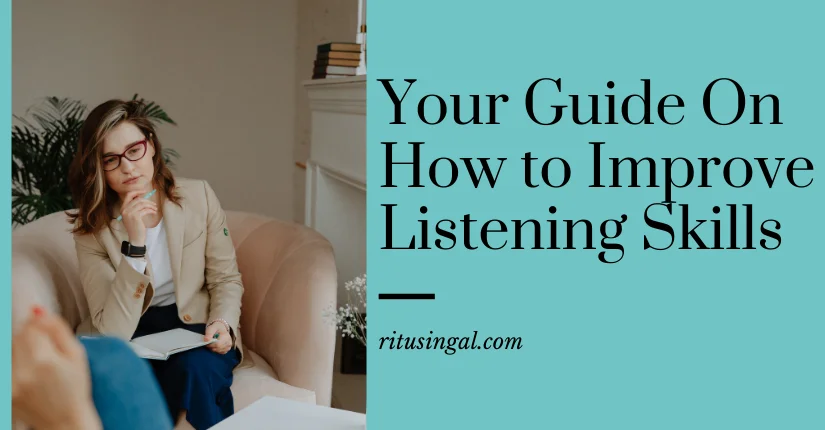
Your Guide On How to Improve Listening Skills

Learning skills are much more than just skills today. It is a critical soft skill that one must master to sustain in this competitive world. When it comes to building relationships and indulging in better communication, speaking skills alone do not help.

Most people underestimate the importance of listening skills when it comes to communication. People are restless and always ready to come up with a response. In fact, it is one of the prime reasons why people today form less valuable relationships and bonds.

Not only interpersonal or personal relationships but your work relations are equally affected when you’re not a good listener. I remember I had an employee. He was a very smart and sharp young man. Being skilled at his work, he would sometimes act overconfident. He would hardly listen to his seniors or attend meetings.

One day we were having a meeting, and I noticed his inattentiveness. I did not say anything to him at the moment but observed his action. When he was asked something, he would immediately respond, but would not listen to other people’s pointers. At the end of the meeting, I asked my secretary to not write the pointers of today’s meeting. I immediately asked that employee to write a summary of today’s presentations and discussions. He was quick to respond with, “ It isn’t my job, is it?” I said it wasn’t his job but an assignment. 

He was baffled and had no idea what all was discussed. However, being skilled and taking it as an assignment, he went to everyone to know the main points, re-watched the presentation, and worked very hard, and by the end of the day came up with the summary.

I smiled and asked him, “Will now you listen to what others say in the meetings?”

He understood my purpose in giving the assignment. From that day till now, he not just talks but also listens to everyone. 

Why are Listening Skills Important?

Listening is a highly essential component of communication. It is not something that just happens, but it is an active process in which a conscious decision is made to listen and understand the speaker’s message.

Active listening is all about patience where you don’t interrupt the speaker with questions or comments. Once I went for a lecture and saw some mischievous students creating disturbances. Their teacher was about to scold them for talking when I said I’ll handle the situation. 

Listening Skill

I asked the group of four boys a simple question, “ If a black lady marries a white man, and they give birth to a black baby, what will be the color of the baby’s teeth?”

One of them stood and confidently said, “White.” Assuming there was no way a baby’s teeth could be of any other color, all the four boys agreed to white. I smiled and said, “Do babies have teeth?” They learned their lesson and apologized immediately. I asked them to always listen actively.

What are the different types of listening skills?

You must be wondering why it is important to embrace the different styles of listening. Well, understanding the different listening styles will help you learn how to use them and build better communication skills. You might think you are a good listener because you’re straightforward. However, many types of listening skills determine if you are a good communicator or not. 

Generally, the different listening types are categorized as:

  • Evaluative listening
  • Reflective Listening

It is generally seen that people master one of these styles of listening. However, one must learn both the listening style profiles to suit different situations. It will not only make you a more effective communicator but will also prevent miscommunication.  

7 Different Types of Listening Skills

  • Discriminative Listening: Discriminative listening is the first form of listening that humans develop as babies. This type of listening is all about understanding the words of a speaker and judging the tone. The tone is used to understand the meaning and intention. In simple words, babies do not understand words. They only understand who is speaking and what mood they’re communicating. As adults, we do this type of listening when we are around people who speak different languages. When we do not understand a certain language, we rely on the tone of voice and inflection. Basically, we try to understand by relying on the mannerisms, body language, and facial expressions of the speaker to get their message.


  • Comprehensive Listening: The second type of listening skill is a comprehensive listening skill. It is a critical listening skill that people develop in their early childhood. This type of listening skill requires basic language and vocabulary. One can understand simply what is being communicated through the speaker’s words. So, the everyday listening that we do is comprehensive listening where we simply listen and understand a person by their words. In day-to-day life, we use comprehensive listening along with verbal cues to understand the messages being communicated.


  • Critical Listening: You must have heard people critically analyze a situation. It is the style of listening people use to analyze and judge some complex information. This type of listening is extremely important in the corporate sector. You cannot simply listen to what someone says. You need to analyze and simplify the complexity in their speech. For instance, if you’re solving a problem on the job or trying to decide if you agree with a proposal being floated by any of your coworkers. The word ‘critical’ here simply means evaluating information without passing a judgment.


  • Informational Listening: As the name suggests, it is the informative type of listening, people use when they are trying to learn something. Now, you must be wondering how informational listening is any different from comprehensive listening. Well, it is different because this type of listening requires a high level of concentration. One everyday example is listening to lectures in school or colleges. When we do informative listening we engage to understand new concepts and technical jargon. When we try to learn something informative or value-adding, it is vital to pay attention and use informational listening skills. Most of the time, this type of listening does not require any emotional connection and is more about critical thinking.
  • Sympathetic Listening: We can very much derive from the name what this type of listening is about. Empathetic listening is an emotionally-driven type of relationship listening. A listener processes the feelings and emotions of a speaker and tries to provide empathy, support, and understanding in return. Most people today lack the skill of sympathetic learning. People are so occupied in their own lives that they hardly dig out time to support their friends and family. It is also one of the reasons why mental health issues today are much more than what they were a few years back. This type of listening is very crucial and helps you form deeper connections with a person. It is always better to use this form of listening while helping a person who’s going through some adversity. 


  • Selective Listening: Selective listening is also known as biased listening. It is a type of listening behavior that is demonstrated when someone is just listening for information they want to hear. You must have seen this type of listening in toxic relationships. In such relationships, one person often wants to hear exactly what they want. No matter if it is the truth or fair thing to listen. Most of the time, the validity of the speaker’s opinion is not judged in this form of listening. Another example of selective listening is at workplaces. We often see that some managers or bosses manipulate people to speak and do the things they want. They’ll listen only to the part that suits their ego. In fact, many times people do not even realize that they’re using a biased listening process. It is the form of listening that can create misunderstandings and miscommunications.


  • Therapeutic Listening: The last form of listening is therapy listening. It is empathic listening most counselors and coaches use. In this type of listening, a listener tries to understand the point of view of a speaker without judging them. Generally, the listener puts themselves into the shoes of the speaker to understand their situation. It helps them share the emotions of the speaker in a far more relatable manner. This type of listening is done for therapy for mental health problems.

By understanding the different types of listening skills, one gets the knowledge of where to apply what type of listening. As I said before, listening is not a straightforward skill. It depends on your awareness and attitude.

What are the benefits of active listening?

There are many benefits of active listening. As I said earlier, most people ignore the importance of listening when it comes to communication. However, active listening is as important as replying to someone in a conversation. Some benefits of active listening include:

  • Builds Trust: One thing that I have noticed with experience is that the better listener you are, the more people would like to talk to you. The people who cultivate the habit of listening sincerely, invite more people to open up with them. It shows that you do not jump to conclusions or judgments without completely listening to the other person. When you listen attentively, the other person feels you truly care about them. We all know how hard it is to build trust in today’s time. Active listening can help you form lifelong friendships.
  • Increases Your Patience: Listening to someone without interrupting is a task of patience. It takes a lot of time to become a good listener. Regular efforts over time help you form the habit of listening patiently. However, when you learn how to stay silent and listen to what the other person has to say, you form the quality of patience in yourself. Patience is a quality that benefits a person throughout his or her life. A patient person has stronger relationships and personality.
  • Your Learning Perspective Broadens: Now, I have always been an active listener. One reason for it was my learning attitude. I always wanted to learn new things from new people. So, whenever people used to talk, I would listen to them. When you start listening to people, you realize how much you have so much to learn from everyone. You may understand a situation according to your beliefs, but when you listen to other people you broaden your perspective. 
  • You Become Approachable: How often do you think to yourself, “ Whenever you try to tell him your problem, he starts talking about his own problem” for some people? Very often, right. No one likes talking to a person who listens only to respond. We all want someone ready to listen to our adversities without stating their problems. So, when you’re a good listener, people approach you. They come to you because they love talking to you. People feel naturally more inclined to communicate with good listeners. 
  • Enhances Competence: Now, competency can be of great quality at the workplace. Any recruiter or manager would choose a capable employee over hundred other employees. If you’re a good listener, you’ll take instructions and decisions more quickly. Moreover, you’ll get more information out of the meetings and reports because you were listening actively. It will help you in completing your task efficiently and attentively. Good listening skills are highly beneficial for employees.
  • Problem Solving Becomes Easy: The root cause of the problem can only be detected if you were listening critically with concentration. When you’re attentive to what people have to say, you’ll notice flaws and solutions more quickly than others. In fact, you’ll be able to solve problems and come up with suggestions for improvement. It can again help you at your workplace where you can help your employees work better.
  • Saves Time: You must be wondering if listening to someone must be such a waste of time. But do you know active listening actually saves a lot of your time? It is because when you’re listening attentively, you understand concepts and problems. It reduces the risks of making mistakes or redoing things. It also saves time as any type of misunderstanding is also avoided.

Now that you know how important and beneficial it is to have good listening skills, we should learn how you can improve your listening skills. 

How these listening skills exercises can help in effective communication?

Listening attentively is an art. It is as arduous as giving a presentation. Many people who work at higher levels have a habit of judging someone on their way of talking and listening. You might think your communication is only judged based on how you speak and how confidently you answer. It is not completely true.

Listening Skill

While you are in a conversation, your listening style is equally important. Your body language and expressions say a lot about you and not just the words coming out of your mouth. If you are wondering how you can make a strong impression by using the right listening skills exercises, then here’s your guide to efficient listening mannerisms.

There are two main forms of listening exercises or active listening.

1. Non-verbal signs: The people who are listening should display any of these signs depending on the situation and environment.

  • Smile: A smile is the simplest and most effective listening exercise to show the other person that you’re involved in the conversation. Small smiles at a time can be used to show that you’re paying attention to what is being said. Smiling is also a gesture that says you agree with the speaker or you’re happy with what is being said. You can combine smiling with little head nods to show affirmation of listening and understanding the words. 
  • Make Eye Contact: One thing that is very arousing and engaging is making eye contact with the speaker. However, many people lack the confidence to see someone in their eyes when they talk. It is very encouraging for the speaker. However, you need to gauge how much eye contact is appropriate. Well, you don’t want to scare the speaker with constant eye contact.
  • Your posture matters: Being a life coach, I check a person’s posture. A person’s way of sitting or standing says a lot about their presence and involvement at the moment. Just like in school, how your teacher would easily recognize when the students used to get bored of the lecture. Your posture can tell a lot about the sender and receiver during interpersonal interactions. An attentive listener would lean forward or rest their head on hand. All these postures show that you’re interested in the conversation.
  • Level of Distraction: Well, in today’s time, how attentively you are listening completely depends on how less you get distracted. If you’re talking to someone and every message that pops distracts you, the speaker might not want to continue talking. Some people start looking at the clock, or playing with hair or anything that’s nearby, or start using their phones. All such actions show how you are refraining from being a part of the conversation. You must not do such exercise, and it is a major turn-off

2. Verbal signs: As the name suggests, verbal signs show your attention and involvement through words and not just actions. 

  • Positive Affirmations: One of the simplest signs of attentiveness is positive reinforcement. You can use words like ‘indeed’ or ‘true’ or ‘I agree’ to indicate that you’re paying attention. However, too much use can be annoying for the speaker.
  • Ask Questions: During school, your teacher would ask you questions in-between the lecture to check how many students were attentive listening. Only a few would answer the question, and the other students would remain mentally inactive during classes. In the same way, when you’re listening to someone who’s telling you something new, you should ask relevant questions or make statements to clarify doubts. It helps the listener reinforce that you have an interest in what the speaker is saying.
  • Try To Remember: If you’re listening to someone with attention, you’ll remember what they say. You can use names or places mentioned in the conversations to prove to the speaker that you were listening to all this time. Remembering details encourages the speaker to continue.

Final Words

I cannot emphasize enough the importance of active listening in our day-to-day lives. From friendships, relations, bonds, and the workplace, everything revolves around how you communicate. So, next time do not just focus on speaking well, but also on listening actively.

Our listening skills coaching and communication skills coaching are designed to cover all aspects of personality development. You can consult today to improve your skills.

Healthy Mind can do wonders

Mental health has been the talk of the town lately. Even when people know the importance and necessity of having good mental health, it is still ignored by most.


Being a life coach, I’m visited by numerous clients, some young, some old, but all come with bad mental health. They often complain about how they remain stressed and anxious most of the day.


I won’t deny but today’s lifestyle has a big role to play in this decline in mental health. We are living in a very fast-paced world. We’re all in a hurry to overtake and reach someplace unknown. 


Do you know where we’re heading to? Do you know what you’re rushing for? Because if you know, that’s great. But, while most of you don’t even know what you’re stressing for, you’re doing nothing but torturing yourself.

Take a moment of solace in life. Find yourself and acknowledge what’s there around you. 


Almost every one of us has created chaos in our mental health due to stress. I’m visited by young children who are just in their 20’s and are tired of life. I even meet people in their 30’s who don’t want to work and feel like going away also ever.

It amazes me to see how people are still young but too busy to embrace the amazing gift of life. 


Mental health is as important as our physical health. We can work out each day, socialize, eat healthily, but if we’re not content mentally, nothing’s going to work. People often think they have a perfect lifestyle, yet they get sick often or do not find happiness.


It is because everything starts in your mind. If you do everything well, but think negatively most of the day, then that negativity will show up in your lifestyle and health.  


How stress impacts your mental health?

One of the most crucial factors that I believe disrupt anyone’s good mental health is the habit of continuously stressing about things. Many people do not even for a second stop their minds from stressing.


I remember one of my clients said, “ I am so habitual of stressing over things that when I have nothing to stress about, I think about one specific thing that I should stress about.” 


People today think that stressing is a part of life but feel anxious when they have nothing to stress about. 


Once there was a psychology teacher. She was walking around the stage before starting the lecture. She stood in the middle of the auditorium to start a lecture on stress management.


She took a glass of water which was half-filled. As she raised the glass of water, students started discussing how she would ask the typical ‘glass empty or glass full’ question.


However, with a smile on her face, she asked, ‘How heavy is the glass of water that I’m holding?’


Everyone started wild guesses. Students shouted answers from some ounces to few pounds. 


The teacher, however, replied, ‘ From the perspective that I see, the absolute weight of the glass doesn’t matter.’ Everyone was baffled and wondered what she was trying to explain.


She further said, “ The weight of the glass depends on how long I hold the glass. If I hold it for a minute or a few seconds, it’ll weigh nothing. But, if I hold it for an hour straight, its weight will make my arm ache. Moreover, if I hold the glass a day straight, my arm might cramp up, or it might start feeling numb or paralyzed, and I’ll have to drop the glass to the floor.


You see, in each case, the weight of the glass doesn’t change, but the longer I hold it, the heavier it feels to me.”


Everyone instantly agreed to her point. She continued saying, “ Our stresses and worries in life are exactly like this glass of water. It does not affect us the second it develops in our minds. We can think about our worries for a while, and nothing will happen. If we think about them a bit longer, our heads might start aching a bit. But, if you stress the entire day or keep those worries all day long, you’ll start feeling numb and zoned out.


The only way you can get over this numbness is by dropping your stresses. The professor taught a life-changing lesson with a simple life example. 


Now that you know what stress does to you and your mental health, it’s time we learn to create good mental health.


How to improve mental health?

There are many ways of improving mental health. However, the primary thing is to maintain a mindset to change. I have seen in so many people that they lack the motivation to improve themselves.


One of the main reasons for this is that most people do not even accept that there’s anything wrong with them. People either do not acknowledge their stressed condition or believe it is a part of life.


As I already said, many people have made stress and anxiety a lifestyle. They feel uncertain when they aren’t anxious. It is very adversely affecting their mental health.


Let us first learn some easy ways in which you can improve your mental health with no extra effort.


5 ways for a good mental mental

  • Physical Exercise

You might not even realize how beneficial physical exercise is for your mental health. We all know the many benefits of exercising and how it improves our physical condition and helps fight diseases. But, many people do not know how exercise also improves your mental health.


If you already do some physical exercise, that’s great. But, if you don’t, then even a regular walk can help. In fact, many doctors ask depression patients to include physical activity in their routine. It might not be the cure but can help to a great extent. 


Moreover, physical activity reduces the urge to drink alcohol or other substance abuse. Just five minutes of aerobic activity can stimulate anti-anxiety effects. 


I personally feel regular exercise also helps in improving self-esteem. When you work out or play a sport, you feel more confident and less bad about yourself. 


Now, the first thing you need to do is include any physical activity in your routine. A few minutes of your busy day are enough to keep you going.


  • Healthy Eating Habits


There is an old saying, ‘What you eat is what you become.’ I have always followed this psychology. A person’s eating habits and diet play a crucial role in their development. 


The type of food we eat, we inculcate its quality. For instance, eating very heavy and spicy junk food makes you more anguish and arrogant. On the contrary, eating simple and light food like basic ‘Daal and Rice’ makes our mind simple and clear. 


Your nutritional choices should be right as they have an impact on your mental health. Poor health and unhealthy eating play a significant role in the increasing mental health problems. 


Today, children live away from their parents and mostly rely on outside food, packaged food, or frozen foods. It has been proven in research that such foods do not provide adequate nutrition. They even contain more saturated fats and sugars that can affect the proper functioning of the brain. 


Always remember, what you put on your plate becomes the raw material for our brains. A simple connection can be seen in our sleeping habits. Some food items prevent us from getting adequate sleep that further affects our mental health. 


Similarly, our moods and behaviors throughout the day depending on the food we eat. Vitamin deficiencies are also a common cause of depression. They can also cause mood swings, anxiety, and agitation. 


Switching to healthy eating is the easiest and the most difficult thing to improve mental health. You should include healthy foods like fresh fruits and vegetables. Include more proteins and fatty acids like nuts, seeds, and eggs. 


You should prefer eating simple homecooked food and preferably fresh food instead of packaged foods.  


  • Learn to value yourself


One thing that I’ve seen mostly in younger people is that they do not value themselves. People will treat you badly always. But, what’s the point if even you are harsh on yourself? 


If you want to improve your mental health, you need to be kind to yourself. People today burn out their bodies while hustling. Bullying is yet another reason why people do not value themselves. 


Most people disrupt their mental health by trying to please society. Social media and movies have set a different standard of beauty and fitness. When normal people are unable to attain or reach those standards, they start hating their bodies and looks.

Many young girls come and complain about how they do not feel confident in their skin because society has a different beauty standard. Such thoughts might seem small initially, but soon they eat up minds and affect our mental health badly. 

If you want to improve your mental health, then treat yourself with kindness, love, and respect. You should avoid self-criticism and criticism from society. You can do this by taking out time for the things you love. Make time for your hobbies and favorite crafts. You may even learn new skills like dance, playing an instrument, baking, or anything that makes you more confident in your skill.


  • Give up alcohol and other abuses


If we see today’s scenario, people work for five days, get super-tired and go to parties and clubs on weekends. Isn’t it?


It has become the latest culture of partying late at night and drinking heavily on weekends to release the stress and tensions of the past week. But is it the right way?


Let us consider that alcohol or any other substance abuse might make you feel better and stress-free for some time, but what after that?


People today rely on such temporary stress relievers only to worsen their conditions. It is not the solution to your problems. Your mental health needs attention and care and definitely not this type of care.


It has been proved again and again that alcohol and other abuses enhance the effects and cause mental health issues like depression and anxiety. I know cutting it from life all of a sudden is not possible. But, you can start reducing from today till the day you completely remove such pleasures from your lives.


  • Stress Management


The most common cause of mental health problems is stress. The simple six-letter word can twirl around your mind and make it paralyzed. Now, as I always say, stress is a part of life, and you cannot remove the stress around you. 


You might feel stressed at the office, at home, or among friends. You might not be able to control the conditions that create stress, but you can always learn to manage stress in the right ways. Stress management is the most important key to improving mental health. Learning how to effectively cope with stress can ease our minds and soul. 


I always divide stress into two categories. 


(i) Healthy stress: Healthy stress is like stressing about meeting a deadline or giving an exam. These stresses help you perform and give your best.


(ii) Unhealthy stress: Unhealthy stresses include stressing about the future or the stress of someone doing better than you. Such stresses do nothing but decline your mental health. 


So, if you take healthy and short-term stress, it’s not something to worry about. However, chronic stress can start affecting your overall health. You might get headaches, migraines, loss of appetite, or sleep. 


Some other problems caused by stress are lack of concentration, confusion, anxiety, mood swings, and many more. To manage stress, you first need to recognize the source of your stress. 


Most of the time, stress comes from within us. We interpret things like a specific conversation, a review, a reaction and become stressed. We further worsen the situation by negative self-talk, pessimism, and over-analysis of situations. So, you need to stop and analyze where your stress is originating from. 


Quick Tips to Manage Stress

  • Meditation: The easiest and the quickest way of managing stress is mindfulness. If you include just 10 minutes of meditation in your day, you’ll remain active for the entire day. Meditation helps in awareness and positivity.


  • Realistic Goals: One of the common causes of stress is unachieved goals. Most people remain stressed to attain their goals. It is better to set easy and realistic goals that can be achieved without burning out your mind.  


  • Talk It Out: Most of the time, we keep stressing about things inside our heads without discussing our fears with someone else. We feel we shouldn’t be disturbing others with our problems. But, the more we internally stress about certain things, the more we get trapped. It is always better to talk to someone and discuss your fears with them. If you’re too scared to discuss with a loved one, you can always take the help of a counselor.


  • Maintain a healthy lifestyle: I cannot emphasize more how important your daily habits are. Our routine makes us or breaks us. You should always maintain a healthy living to remove stress. Take enough sleep and let your body relax when it wants.


  • Check Your Company


Let us be honest, we all know how deep the impact the people we surround ourselves with have on us. People around you, your family, friends, neighbors, colleagues, or others, all play some role in your mental health. 


It is mostly due to external factors that our health or peace is affected. For instance, you might say, “My co-worker did this thing wrong, and I had to suffer.”


Now, your co-worker did something wrong, but how does it make you suffer? You are the one making yourself suffer. It is your reaction to the situation that will decide your fate.


However, a person’s mental health is affected by the people around them. If you’re surrounded by people who bully you, constantly mock you, or try to bring you down, your mental health will deteriorate. 

Indulging with people who back-bitch, gossip, and create any sort of negative vibes will eventually fill negativity in your head as well. It is always better to leave a room where healthy discussions are not carried.

You should keep supportive people close to you. Be it, friends or family, surround yourself with people who bring positivity and happiness to your life. 


  • Get Help from a Coach


You cannot form good mental health in a few days. It takes time and mindful practices to do so. However, it isn’t something unachievable. If you find it hard to find peace in your mind, then you can always take help.

Most people avoid help unless the situation gets worse. It is always better to seek help at the initial stages to prevent further problems. You can consult a life coach, counselors, or a psychologist. 

Mental health has been the talk of the town lately. Even when people know the importance and necessity of having […]

Social Icons

Facebook

Twitter

Instagram

Youtube

Linkedin

Book Your Session

Scroll to Top

Request a Callback