
OUR BLOGS

Transformation Through Collective Consciousness

Transformation Through Collective Consciousness

Throughout our day, we go through many different emotions. Do you ever wonder if what you feel in a day is reflected in other people also? Do you wonder if how your mood has anything to do with what millions of others feel?


You’d hardly given it a thought. However, your mood is somehow contributing to a larger collective mood. Do you know how?


Well, social media, the Internet, and the daily News cycle offer real-time insight into what is the nation’s mood. Let us take a simple and recent example. Around the same time last year, the world went under lockdown. All the nations were completely closed leaving people helpless.


What did we all do at our homes? We continuously checked the news to stay updated about the changes. Now, even though we could have been happy for the lockdown in the first place because it was the first time we got so much time to spend with our families, we weren’t really glad.


Do you know why? It was because we regularly checked our news feed. As we checked the news, we saw the cases rising, and how the healthcare and all sectors were suffering, we were meant to feel sad.


How could we be happy when people in the world were suffering. They might not be our friends or relatives, but we somehow felt their pain. I hope it gives you an idea about how your feelings on a given day have something to do with what millions of others are feeling or doing.


Moods that Fluctuate

Today, we have access to the entire world through our phones. Gone is the time when we could only collect information about the issues of our own country. People today know worldwide affairs and stand to help fellow people in other parts of the world.


All our moods, from collective happiness, kindness, calmness, vitality, and even alertness are somehow connected to something bigger. When you live in a community, whatever happens to the people around you, somehow reflects on your being. In fact, most of the problems around us are generated by us. 


Let us take another example to understand how our thoughts lead to problems on a global level. For instance, stress and aggression are building in the collective consciousness. In simple words, the entire community might be feeling stressed due to their own personal reasons.


As tension builds in the collective consciousness, social incoherence among individuals agitate which leads to sufferings in society. A very famous yogi once said, “ All occurrences or acts of violence, conflicts, crises, or negativity and problems are the direct outcomes of the build-up of stress in the collective consciousness.” Simply said, when the level of stress becomes too acute, it will erupt like a volcano. These eruptions bring crime, violence, social disorders, calamities, or even wars.


What is Collective Consciousness?


When we all suffer collectively, we all need a collective immunity to protect ourselves. Strengthening our collective immune system is the call of the hour. 


‘Collective consciousness’ has been referred to as the overall social atmosphere where we live in. It arises from the thoughts and behaviors of each individual member of society.


When the world suffers, we need a more harmonious atmosphere. It might not be in the hands of an individual to create a tranquil world. What we need is greater civility, cordiality and soul searching. If all nations’ collective consciousness remains stressed and tense, nothing can stop the suffering.


How our beliefs align with the beliefs of other people in society is a result of collective consciousness.


Many people keep a mindset where they are often quoted saying, “ I cannot bring a change alone.”


Well, if you’re aware of what collective consciousness is, then you’ll know how an individual can change the entire world. When you start seeing yourself as a part of society and not as an individual, then your transformation journey begins. Collective consciousness is all about understanding how a society works. 


While every human has his own individual consciousness, we also share solidarity with one another. The French theorist and sociologist Emile Durkheim suggested how we work together in many ways and how our collective consciousness is what allows it to happen.


How collective consciousness brings transformations?


Collective consciousness has brought many changes in the world. Although, today we’re more inclined towards science, and we trust the scientific results more. We tend to forget that science is a very new concept, as compared to the existence of the world.


There was no science to carry mankind in ancient times. What people believed was yogic culture. It was yoga and meditation that led mankind from ancient times. Have you ever wondered why there were no calamities or crimes in ancient times?


In the older times, people did not have any advancements and led a simple life. They would spend their days amidst the beauty of nature and would do their routine tasks. It was an era where the first humans were yet discovering many things. 


There was no competition, no greed for materialistic things, and no desire to interfere in the lives of other people. The only thing the ancient people were concerned about was ‘self-consciousness.’ They would spend days meditating on the banks of rivers to do some soul searching. They would rather stay happy with themselves. Now, when all the people were meditating, they were self-conscious. It created an aura where there was peace. The tranquility and simple-living were a result of collective consciousness.


Collective consciousness has shown many transformation results in history. But, before we move towards them, let us take a glance at how humans can come together to solve many crises.


For those who believe an individual cannot bring change, think about the protests and rallies that had been organized in history.


Let’s not forget ‘The Salt March’ organized by Mahatma Gandhi. It all began with a single person and led the entire nation to follow. When Indians were prohibited from collecting or selling salt and minerals were taxed, a collective feeling of agitation arose. It was the courage of Mahatma Gandhi and his style of peaceful protests that the entire nation rallied 241 miles across western India. 


When people come together, transformations do occur. All we need is a collective consciousness towards better mankind. 


Examples of Transformations Through Collective Consciousness 


To further understand the idea of collective consciousness, let us look into some real-time examples that work on this concept to bring about massive changes.


  • Let Us Observe Ants


Let us see how collective consciousness works in mother nature. When we look around us, nature offers some of the best examples of this concept. One renowned and universally-accepted example of collective consciousness in nature is that of ants. When you observe ants carefully, you will find that they always live together in colonies. Think to yourself, have you ever seen an ant living on her own in a separate house?


No, because they believe in living in groups and contributing their share in the colony. However, if you remove and relocate a part of their colony they’ll still perform the same tasks that they were doing before. You might think it’s just a coincidence, but I suggest you try it on your own. Drop a food crumb that is large enough for a single ant to carry. Look for an ant that is far from the group and drop the crumb near her. You will immediately see other ants coming to the rescue. Now, you may do it in their colonies as well. 


What do you think brings these ants together? Is it the smell of food or telepathy? Well, it is a simple glimpse of collective consciousness in action.


  • A Positive Mindset


For another example of collective consciousness let us study the power of positive thinking. One of the laws of attraction states that every moment of every day, each of us adds to and affects the balance of the collective. In simple words, each day our individuality brings a broader change in the group. We all know how we attract what we think, so a negative mind will attract negativity. Negative vibes lead to negative energy, and something negative would definitely happen to you that day. On the contrary, a simple act of kindness will make you happy and positive the entire day. Now, if you’ll stay positive, attract positive energy, and do positive things, people around you would too observe positivity around you. We often say, “I don’t talk to that person, he’s too negative.” 


You see, your vibes and thoughts are reflected through your words and caught by other people. In the same way, positivity spreads around collectively and influences people to believe that whatever happens, happens for the best.


  • Predictions that Scare Us


You would have quite often observed how many people have a collective feeling about a particular incident. Sometimes, we make predictions and we do not even realize how they come true. You must have heard people saying, ‘I had a very strong feeling this was about to happen.’


Similarly in sports, it is quite often predicted who’d win the match and how those predictions turn true. Many true incidents have been reported by people worldwide about how they had a strong feeling about impending situations and how they came true later. For instance, a famous psychic had predicted the emergence of a life-threatening pandemic in 2020, and it did come true.


Now, you must be wondering if these people want bad things to happen or work towards changing their prophecies to reality. No, no one wants people to die or suffer. It is attributed to a collective consciousness or a strong sixth sense that is shared among people. 


  • Healing from A Disease


You must have heard about this one before, a positive mindset is going to heal before a negative mindset. When we get sick, we often stuff so much negativity in our heads. We think, ‘ Why am I the only one sick?’ ‘ Will I ever get fine?’ and whatnot. We can truly heal and overcome illnesses by changing our minds. You might think your medicines will work wonders in healing you, but trust me, you cannot heal unless your mind wants to heal. Healing first begins from your mind and then from medications. It might sound foolish, but many people recover with a positive mindset and no medications. While being ill, we can either manifest illness or perfect health. For instance, you are sitting in a room of 20 people. These people have to choose a leader for themselves. Now 18 out of 20 men and women believe that you can be the best leader. The channel ‘collective consciousness’ through their bodies and put it into you. Now, you might not even be considering yourself as a candidate, but now their belief makes you believe in yourself. It is how wonderful collective consciousness is.


  • The DNA influence


It is believed that our DNA has a strong influence on the collective consciousness. We all know how genetic memory has a powerful collaborating force. Even the ancient saints believed that our DNA responds to our thoughts and actions. It simply means our thoughts can influence our DNA. But, our DNA can also be influenced by the thoughts of people around us. For instance, when large groups focus on certain effects at the same time, the results become more noticeable. If the entire world manifests peace, the outcome would be felt almost immediately. If you manifest yourself, your DNA can bring change to the people around you. Why aren’t we moving towards World Peace then? 


Collective consciousness drives reality. Faith and belief act as a unifying force to understand universal mind connectedness. Once we start practicing this concept in everyday life, we’ll start seeing ourselves as one. There won’t be any discrimination, bullying, crimes, racism, and gender inequalities because mankind is much more than this. 
Throughout our day, we go through many different emotions. Do you ever wonder if what you feel in a day […]

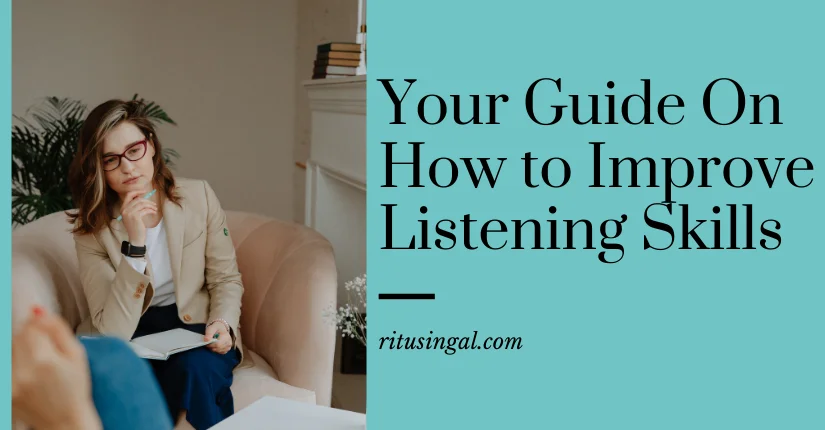
Your Guide On How to Improve Listening Skills

Your Guide On How to Improve Listening Skills

Learning skills are much more than just skills today. It is a critical soft skill that one must master to sustain in this competitive world. When it comes to building relationships and indulging in better communication, speaking skills alone do not help.

Most people underestimate the importance of listening skills when it comes to communication. People are restless and always ready to come up with a response. In fact, it is one of the prime reasons why people today form less valuable relationships and bonds.

Not only interpersonal or personal relationships but your work relations are equally affected when you’re not a good listener. I remember I had an employee. He was a very smart and sharp young man. Being skilled at his work, he would sometimes act overconfident. He would hardly listen to his seniors or attend meetings.

One day we were having a meeting, and I noticed his inattentiveness. I did not say anything to him at the moment but observed his action. When he was asked something, he would immediately respond, but would not listen to other people’s pointers. At the end of the meeting, I asked my secretary to not write the pointers of today’s meeting. I immediately asked that employee to write a summary of today’s presentations and discussions. He was quick to respond with, “ It isn’t my job, is it?” I said it wasn’t his job but an assignment. 

He was baffled and had no idea what all was discussed. However, being skilled and taking it as an assignment, he went to everyone to know the main points, re-watched the presentation, and worked very hard, and by the end of the day came up with the summary.

I smiled and asked him, “Will now you listen to what others say in the meetings?”

He understood my purpose in giving the assignment. From that day till now, he not just talks but also listens to everyone. 

Why are Listening Skills Important?

Listening is a highly essential component of communication. It is not something that just happens, but it is an active process in which a conscious decision is made to listen and understand the speaker’s message.

Active listening is all about patience where you don’t interrupt the speaker with questions or comments. Once I went for a lecture and saw some mischievous students creating disturbances. Their teacher was about to scold them for talking when I said I’ll handle the situation. 

Listening Skill

I asked the group of four boys a simple question, “ If a black lady marries a white man, and they give birth to a black baby, what will be the color of the baby’s teeth?”

One of them stood and confidently said, “White.” Assuming there was no way a baby’s teeth could be of any other color, all the four boys agreed to white. I smiled and said, “Do babies have teeth?” They learned their lesson and apologized immediately. I asked them to always listen actively.

What are the different types of listening skills?

You must be wondering why it is important to embrace the different styles of listening. Well, understanding the different listening styles will help you learn how to use them and build better communication skills. You might think you are a good listener because you’re straightforward. However, many types of listening skills determine if you are a good communicator or not. 

Generally, the different listening types are categorized as:

  • Evaluative listening
  • Reflective Listening

It is generally seen that people master one of these styles of listening. However, one must learn both the listening style profiles to suit different situations. It will not only make you a more effective communicator but will also prevent miscommunication.  

7 Different Types of Listening Skills

  • Discriminative Listening: Discriminative listening is the first form of listening that humans develop as babies. This type of listening is all about understanding the words of a speaker and judging the tone. The tone is used to understand the meaning and intention. In simple words, babies do not understand words. They only understand who is speaking and what mood they’re communicating. As adults, we do this type of listening when we are around people who speak different languages. When we do not understand a certain language, we rely on the tone of voice and inflection. Basically, we try to understand by relying on the mannerisms, body language, and facial expressions of the speaker to get their message.


  • Comprehensive Listening: The second type of listening skill is a comprehensive listening skill. It is a critical listening skill that people develop in their early childhood. This type of listening skill requires basic language and vocabulary. One can understand simply what is being communicated through the speaker’s words. So, the everyday listening that we do is comprehensive listening where we simply listen and understand a person by their words. In day-to-day life, we use comprehensive listening along with verbal cues to understand the messages being communicated.


  • Critical Listening: You must have heard people critically analyze a situation. It is the style of listening people use to analyze and judge some complex information. This type of listening is extremely important in the corporate sector. You cannot simply listen to what someone says. You need to analyze and simplify the complexity in their speech. For instance, if you’re solving a problem on the job or trying to decide if you agree with a proposal being floated by any of your coworkers. The word ‘critical’ here simply means evaluating information without passing a judgment.


  • Informational Listening: As the name suggests, it is the informative type of listening, people use when they are trying to learn something. Now, you must be wondering how informational listening is any different from comprehensive listening. Well, it is different because this type of listening requires a high level of concentration. One everyday example is listening to lectures in school or colleges. When we do informative listening we engage to understand new concepts and technical jargon. When we try to learn something informative or value-adding, it is vital to pay attention and use informational listening skills. Most of the time, this type of listening does not require any emotional connection and is more about critical thinking.
  • Sympathetic Listening: We can very much derive from the name what this type of listening is about. Empathetic listening is an emotionally-driven type of relationship listening. A listener processes the feelings and emotions of a speaker and tries to provide empathy, support, and understanding in return. Most people today lack the skill of sympathetic learning. People are so occupied in their own lives that they hardly dig out time to support their friends and family. It is also one of the reasons why mental health issues today are much more than what they were a few years back. This type of listening is very crucial and helps you form deeper connections with a person. It is always better to use this form of listening while helping a person who’s going through some adversity. 


  • Selective Listening: Selective listening is also known as biased listening. It is a type of listening behavior that is demonstrated when someone is just listening for information they want to hear. You must have seen this type of listening in toxic relationships. In such relationships, one person often wants to hear exactly what they want. No matter if it is the truth or fair thing to listen. Most of the time, the validity of the speaker’s opinion is not judged in this form of listening. Another example of selective listening is at workplaces. We often see that some managers or bosses manipulate people to speak and do the things they want. They’ll listen only to the part that suits their ego. In fact, many times people do not even realize that they’re using a biased listening process. It is the form of listening that can create misunderstandings and miscommunications.


  • Therapeutic Listening: The last form of listening is therapy listening. It is empathic listening most counselors and coaches use. In this type of listening, a listener tries to understand the point of view of a speaker without judging them. Generally, the listener puts themselves into the shoes of the speaker to understand their situation. It helps them share the emotions of the speaker in a far more relatable manner. This type of listening is done for therapy for mental health problems.

By understanding the different types of listening skills, one gets the knowledge of where to apply what type of listening. As I said before, listening is not a straightforward skill. It depends on your awareness and attitude.

What are the benefits of active listening?

There are many benefits of active listening. As I said earlier, most people ignore the importance of listening when it comes to communication. However, active listening is as important as replying to someone in a conversation. Some benefits of active listening include:

  • Builds Trust: One thing that I have noticed with experience is that the better listener you are, the more people would like to talk to you. The people who cultivate the habit of listening sincerely, invite more people to open up with them. It shows that you do not jump to conclusions or judgments without completely listening to the other person. When you listen attentively, the other person feels you truly care about them. We all know how hard it is to build trust in today’s time. Active listening can help you form lifelong friendships.
  • Increases Your Patience: Listening to someone without interrupting is a task of patience. It takes a lot of time to become a good listener. Regular efforts over time help you form the habit of listening patiently. However, when you learn how to stay silent and listen to what the other person has to say, you form the quality of patience in yourself. Patience is a quality that benefits a person throughout his or her life. A patient person has stronger relationships and personality.
  • Your Learning Perspective Broadens: Now, I have always been an active listener. One reason for it was my learning attitude. I always wanted to learn new things from new people. So, whenever people used to talk, I would listen to them. When you start listening to people, you realize how much you have so much to learn from everyone. You may understand a situation according to your beliefs, but when you listen to other people you broaden your perspective. 
  • You Become Approachable: How often do you think to yourself, “ Whenever you try to tell him your problem, he starts talking about his own problem” for some people? Very often, right. No one likes talking to a person who listens only to respond. We all want someone ready to listen to our adversities without stating their problems. So, when you’re a good listener, people approach you. They come to you because they love talking to you. People feel naturally more inclined to communicate with good listeners. 
  • Enhances Competence: Now, competency can be of great quality at the workplace. Any recruiter or manager would choose a capable employee over hundred other employees. If you’re a good listener, you’ll take instructions and decisions more quickly. Moreover, you’ll get more information out of the meetings and reports because you were listening actively. It will help you in completing your task efficiently and attentively. Good listening skills are highly beneficial for employees.
  • Problem Solving Becomes Easy: The root cause of the problem can only be detected if you were listening critically with concentration. When you’re attentive to what people have to say, you’ll notice flaws and solutions more quickly than others. In fact, you’ll be able to solve problems and come up with suggestions for improvement. It can again help you at your workplace where you can help your employees work better.
  • Saves Time: You must be wondering if listening to someone must be such a waste of time. But do you know active listening actually saves a lot of your time? It is because when you’re listening attentively, you understand concepts and problems. It reduces the risks of making mistakes or redoing things. It also saves time as any type of misunderstanding is also avoided.

Now that you know how important and beneficial it is to have good listening skills, we should learn how you can improve your listening skills. 

How these listening skills exercises can help in effective communication?

Listening attentively is an art. It is as arduous as giving a presentation. Many people who work at higher levels have a habit of judging someone on their way of talking and listening. You might think your communication is only judged based on how you speak and how confidently you answer. It is not completely true.

Listening Skill

While you are in a conversation, your listening style is equally important. Your body language and expressions say a lot about you and not just the words coming out of your mouth. If you are wondering how you can make a strong impression by using the right listening skills exercises, then here’s your guide to efficient listening mannerisms.

There are two main forms of listening exercises or active listening.

1. Non-verbal signs: The people who are listening should display any of these signs depending on the situation and environment.

  • Smile: A smile is the simplest and most effective listening exercise to show the other person that you’re involved in the conversation. Small smiles at a time can be used to show that you’re paying attention to what is being said. Smiling is also a gesture that says you agree with the speaker or you’re happy with what is being said. You can combine smiling with little head nods to show affirmation of listening and understanding the words. 
  • Make Eye Contact: One thing that is very arousing and engaging is making eye contact with the speaker. However, many people lack the confidence to see someone in their eyes when they talk. It is very encouraging for the speaker. However, you need to gauge how much eye contact is appropriate. Well, you don’t want to scare the speaker with constant eye contact.
  • Your posture matters: Being a life coach, I check a person’s posture. A person’s way of sitting or standing says a lot about their presence and involvement at the moment. Just like in school, how your teacher would easily recognize when the students used to get bored of the lecture. Your posture can tell a lot about the sender and receiver during interpersonal interactions. An attentive listener would lean forward or rest their head on hand. All these postures show that you’re interested in the conversation.
  • Level of Distraction: Well, in today’s time, how attentively you are listening completely depends on how less you get distracted. If you’re talking to someone and every message that pops distracts you, the speaker might not want to continue talking. Some people start looking at the clock, or playing with hair or anything that’s nearby, or start using their phones. All such actions show how you are refraining from being a part of the conversation. You must not do such exercise, and it is a major turn-off

2. Verbal signs: As the name suggests, verbal signs show your attention and involvement through words and not just actions. 

  • Positive Affirmations: One of the simplest signs of attentiveness is positive reinforcement. You can use words like ‘indeed’ or ‘true’ or ‘I agree’ to indicate that you’re paying attention. However, too much use can be annoying for the speaker.
  • Ask Questions: During school, your teacher would ask you questions in-between the lecture to check how many students were attentive listening. Only a few would answer the question, and the other students would remain mentally inactive during classes. In the same way, when you’re listening to someone who’s telling you something new, you should ask relevant questions or make statements to clarify doubts. It helps the listener reinforce that you have an interest in what the speaker is saying.
  • Try To Remember: If you’re listening to someone with attention, you’ll remember what they say. You can use names or places mentioned in the conversations to prove to the speaker that you were listening to all this time. Remembering details encourages the speaker to continue.

Final Words

I cannot emphasize enough the importance of active listening in our day-to-day lives. From friendships, relations, bonds, and the workplace, everything revolves around how you communicate. So, next time do not just focus on speaking well, but also on listening actively.

Our listening skills coaching and communication skills coaching are designed to cover all aspects of personality development. You can consult today to improve your skills.

Healthy Mind can do wonders

Healthy Mind can do wonders

Mental health has been the talk of the town lately. Even when people know the importance and necessity of having good mental health, it is still ignored by most.


Being a life coach, I’m visited by numerous clients, some young, some old, but all come with bad mental health. They often complain about how they remain stressed and anxious most of the day.


I won’t deny but today’s lifestyle has a big role to play in this decline in mental health. We are living in a very fast-paced world. We’re all in a hurry to overtake and reach someplace unknown. 


Do you know where we’re heading to? Do you know what you’re rushing for? Because if you know, that’s great. But, while most of you don’t even know what you’re stressing for, you’re doing nothing but torturing yourself.

Take a moment of solace in life. Find yourself and acknowledge what’s there around you. 


Almost every one of us has created chaos in our mental health due to stress. I’m visited by young children who are just in their 20’s and are tired of life. I even meet people in their 30’s who don’t want to work and feel like going away also ever.

It amazes me to see how people are still young but too busy to embrace the amazing gift of life. 


Mental health is as important as our physical health. We can work out each day, socialize, eat healthily, but if we’re not content mentally, nothing’s going to work. People often think they have a perfect lifestyle, yet they get sick often or do not find happiness.


It is because everything starts in your mind. If you do everything well, but think negatively most of the day, then that negativity will show up in your lifestyle and health.  


How stress impacts your mental health?

One of the most crucial factors that I believe disrupt anyone’s good mental health is the habit of continuously stressing about things. Many people do not even for a second stop their minds from stressing.


I remember one of my clients said, “ I am so habitual of stressing over things that when I have nothing to stress about, I think about one specific thing that I should stress about.” 


People today think that stressing is a part of life but feel anxious when they have nothing to stress about. 


Once there was a psychology teacher. She was walking around the stage before starting the lecture. She stood in the middle of the auditorium to start a lecture on stress management.


She took a glass of water which was half-filled. As she raised the glass of water, students started discussing how she would ask the typical ‘glass empty or glass full’ question.


However, with a smile on her face, she asked, ‘How heavy is the glass of water that I’m holding?’


Everyone started wild guesses. Students shouted answers from some ounces to few pounds. 


The teacher, however, replied, ‘ From the perspective that I see, the absolute weight of the glass doesn’t matter.’ Everyone was baffled and wondered what she was trying to explain.


She further said, “ The weight of the glass depends on how long I hold the glass. If I hold it for a minute or a few seconds, it’ll weigh nothing. But, if I hold it for an hour straight, its weight will make my arm ache. Moreover, if I hold the glass a day straight, my arm might cramp up, or it might start feeling numb or paralyzed, and I’ll have to drop the glass to the floor.


You see, in each case, the weight of the glass doesn’t change, but the longer I hold it, the heavier it feels to me.”


Everyone instantly agreed to her point. She continued saying, “ Our stresses and worries in life are exactly like this glass of water. It does not affect us the second it develops in our minds. We can think about our worries for a while, and nothing will happen. If we think about them a bit longer, our heads might start aching a bit. But, if you stress the entire day or keep those worries all day long, you’ll start feeling numb and zoned out.


The only way you can get over this numbness is by dropping your stresses. The professor taught a life-changing lesson with a simple life example. 


Now that you know what stress does to you and your mental health, it’s time we learn to create good mental health.


How to improve mental health?

There are many ways of improving mental health. However, the primary thing is to maintain a mindset to change. I have seen in so many people that they lack the motivation to improve themselves.


One of the main reasons for this is that most people do not even accept that there’s anything wrong with them. People either do not acknowledge their stressed condition or believe it is a part of life.


As I already said, many people have made stress and anxiety a lifestyle. They feel uncertain when they aren’t anxious. It is very adversely affecting their mental health.


Let us first learn some easy ways in which you can improve your mental health with no extra effort.


5 ways for a good mental mental

  • Physical Exercise

You might not even realize how beneficial physical exercise is for your mental health. We all know the many benefits of exercising and how it improves our physical condition and helps fight diseases. But, many people do not know how exercise also improves your mental health.


If you already do some physical exercise, that’s great. But, if you don’t, then even a regular walk can help. In fact, many doctors ask depression patients to include physical activity in their routine. It might not be the cure but can help to a great extent. 


Moreover, physical activity reduces the urge to drink alcohol or other substance abuse. Just five minutes of aerobic activity can stimulate anti-anxiety effects. 


I personally feel regular exercise also helps in improving self-esteem. When you work out or play a sport, you feel more confident and less bad about yourself. 


Now, the first thing you need to do is include any physical activity in your routine. A few minutes of your busy day are enough to keep you going.


  • Healthy Eating Habits


There is an old saying, ‘What you eat is what you become.’ I have always followed this psychology. A person’s eating habits and diet play a crucial role in their development. 


The type of food we eat, we inculcate its quality. For instance, eating very heavy and spicy junk food makes you more anguish and arrogant. On the contrary, eating simple and light food like basic ‘Daal and Rice’ makes our mind simple and clear. 


Your nutritional choices should be right as they have an impact on your mental health. Poor health and unhealthy eating play a significant role in the increasing mental health problems. 


Today, children live away from their parents and mostly rely on outside food, packaged food, or frozen foods. It has been proven in research that such foods do not provide adequate nutrition. They even contain more saturated fats and sugars that can affect the proper functioning of the brain. 


Always remember, what you put on your plate becomes the raw material for our brains. A simple connection can be seen in our sleeping habits. Some food items prevent us from getting adequate sleep that further affects our mental health. 


Similarly, our moods and behaviors throughout the day depending on the food we eat. Vitamin deficiencies are also a common cause of depression. They can also cause mood swings, anxiety, and agitation. 


Switching to healthy eating is the easiest and the most difficult thing to improve mental health. You should include healthy foods like fresh fruits and vegetables. Include more proteins and fatty acids like nuts, seeds, and eggs. 


You should prefer eating simple homecooked food and preferably fresh food instead of packaged foods.  


  • Learn to value yourself


One thing that I’ve seen mostly in younger people is that they do not value themselves. People will treat you badly always. But, what’s the point if even you are harsh on yourself? 


If you want to improve your mental health, you need to be kind to yourself. People today burn out their bodies while hustling. Bullying is yet another reason why people do not value themselves. 


Most people disrupt their mental health by trying to please society. Social media and movies have set a different standard of beauty and fitness. When normal people are unable to attain or reach those standards, they start hating their bodies and looks.

Many young girls come and complain about how they do not feel confident in their skin because society has a different beauty standard. Such thoughts might seem small initially, but soon they eat up minds and affect our mental health badly. 

If you want to improve your mental health, then treat yourself with kindness, love, and respect. You should avoid self-criticism and criticism from society. You can do this by taking out time for the things you love. Make time for your hobbies and favorite crafts. You may even learn new skills like dance, playing an instrument, baking, or anything that makes you more confident in your skill.


  • Give up alcohol and other abuses


If we see today’s scenario, people work for five days, get super-tired and go to parties and clubs on weekends. Isn’t it?


It has become the latest culture of partying late at night and drinking heavily on weekends to release the stress and tensions of the past week. But is it the right way?


Let us consider that alcohol or any other substance abuse might make you feel better and stress-free for some time, but what after that?


People today rely on such temporary stress relievers only to worsen their conditions. It is not the solution to your problems. Your mental health needs attention and care and definitely not this type of care.


It has been proved again and again that alcohol and other abuses enhance the effects and cause mental health issues like depression and anxiety. I know cutting it from life all of a sudden is not possible. But, you can start reducing from today till the day you completely remove such pleasures from your lives.


  • Stress Management


The most common cause of mental health problems is stress. The simple six-letter word can twirl around your mind and make it paralyzed. Now, as I always say, stress is a part of life, and you cannot remove the stress around you. 


You might feel stressed at the office, at home, or among friends. You might not be able to control the conditions that create stress, but you can always learn to manage stress in the right ways. Stress management is the most important key to improving mental health. Learning how to effectively cope with stress can ease our minds and soul. 


I always divide stress into two categories. 


(i) Healthy stress: Healthy stress is like stressing about meeting a deadline or giving an exam. These stresses help you perform and give your best.


(ii) Unhealthy stress: Unhealthy stresses include stressing about the future or the stress of someone doing better than you. Such stresses do nothing but decline your mental health. 


So, if you take healthy and short-term stress, it’s not something to worry about. However, chronic stress can start affecting your overall health. You might get headaches, migraines, loss of appetite, or sleep. 


Some other problems caused by stress are lack of concentration, confusion, anxiety, mood swings, and many more. To manage stress, you first need to recognize the source of your stress. 


Most of the time, stress comes from within us. We interpret things like a specific conversation, a review, a reaction and become stressed. We further worsen the situation by negative self-talk, pessimism, and over-analysis of situations. So, you need to stop and analyze where your stress is originating from. 


Quick Tips to Manage Stress

  • Meditation: The easiest and the quickest way of managing stress is mindfulness. If you include just 10 minutes of meditation in your day, you’ll remain active for the entire day. Meditation helps in awareness and positivity.


  • Realistic Goals: One of the common causes of stress is unachieved goals. Most people remain stressed to attain their goals. It is better to set easy and realistic goals that can be achieved without burning out your mind.  


  • Talk It Out: Most of the time, we keep stressing about things inside our heads without discussing our fears with someone else. We feel we shouldn’t be disturbing others with our problems. But, the more we internally stress about certain things, the more we get trapped. It is always better to talk to someone and discuss your fears with them. If you’re too scared to discuss with a loved one, you can always take the help of a counselor.


  • Maintain a healthy lifestyle: I cannot emphasize more how important your daily habits are. Our routine makes us or breaks us. You should always maintain a healthy living to remove stress. Take enough sleep and let your body relax when it wants.


  • Check Your Company


Let us be honest, we all know how deep the impact the people we surround ourselves with have on us. People around you, your family, friends, neighbors, colleagues, or others, all play some role in your mental health. 


It is mostly due to external factors that our health or peace is affected. For instance, you might say, “My co-worker did this thing wrong, and I had to suffer.”


Now, your co-worker did something wrong, but how does it make you suffer? You are the one making yourself suffer. It is your reaction to the situation that will decide your fate.


However, a person’s mental health is affected by the people around them. If you’re surrounded by people who bully you, constantly mock you, or try to bring you down, your mental health will deteriorate. 

Indulging with people who back-bitch, gossip, and create any sort of negative vibes will eventually fill negativity in your head as well. It is always better to leave a room where healthy discussions are not carried.

You should keep supportive people close to you. Be it, friends or family, surround yourself with people who bring positivity and happiness to your life. 


  • Get Help from a Coach


You cannot form good mental health in a few days. It takes time and mindful practices to do so. However, it isn’t something unachievable. If you find it hard to find peace in your mind, then you can always take help.

Most people avoid help unless the situation gets worse. It is always better to seek help at the initial stages to prevent further problems. You can consult a life coach, counselors, or a psychologist. 

Mental health has been the talk of the town lately. Even when people know the importance and necessity of having […]

Raising Them Right The Correct Ways For Parenting

Raising Them Right The Correct Ways For Parenting

It’s no secret that being a parent is amongst the most inspiring roles in the world. From doing a study on various parenting styles to trying out diverse parenting hacks, we always go above and beyond to make sure we nurture happy and successful children. But no matter what style we choose to use, at the end of the day, it still boils down to the kind of relationship every parent has with their children. The stronger the parent-child relationship, the better the upbringing.

Parents contribute to their children’s education and career growth before establishing their family life and achieving their goals. Parents should instill in their children strong moral values, civic duty, and discipline. There are many ways for children to be diverted and lead them down the wrong path in today’s world. As a result, parents must play the dual role of parent and friend to help their children cope in today’s world for a healthy parent-child relationship.

The Journey From A Couple To Being Responsible Parents

Parenting is something that comes naturally to most people. It’s not something you should learn. While the idea of good parenting classes can be useful to many parents, it is not necessary to make them mandatory.

I’ve trained and counselled many parents as a life coach through my parenting therapy programme.

Parenting lessons, without a doubt, can be a life-changing experience for both the parent and the child.

One of my clients was a single mother who came to see me because she felt she couldn’t handle her son on her own no matter what she did.

As we began her therapy, I became aware of the problem that was obstructing her parenting. Her son would still point the finger at her for having an unfinished family.

She’d try to persuade him by making false claims that would make him happy. I asked her to tell her son the truth next time as soon as I learned about it. I even asked her to say nice things about the father because I didn’t want the child to develop some kind of hate towards him.

After being accused again a few days later, she sat down with her son and told him the whole truth about how his father was a womanizer. Staying with him was extremely difficult, but she had no other choice.

Her son not only recognized her difficulty but also assured her, “Mama, I will always be with you.”

She was overjoyed when she came to see me the next day. Parents aren’t all bad; it’s just that their parenting strategies aren’t always efficient.

I could understand her apprehensions and difficulties. Parenting workshops, on the other hand, will only support parents who believe their parenting might be better.

I’ve seen a lot of parents who aren’t great at parenting but aren’t willing to admit it or work on it.

What Is Wrong With Indian Parents? Do They Raise Their Kids Well

There are many things, but I’ll try to list the most important ones first in the parent and child relationship:

Overprotective: If children do not learn to play rough and tumble and pick themselves up, they may grow up to be the same way. Enable them to experience life. And then there’s death. And politely respond to their concerns about the mysteries of life and death. Enable them to take the school bus instead of being chauffeured to school if such a facility exists. A school bus ride is about relationships, discipline, and caring for others; it’s a chance to connect, catch up on activities, schedule the day with friends, and share. Allow them to be themselves on the playground. Act with it if they have an accident. Instead of running in if there is no blood, forget it!

Overindulgence seems to be on the rise: They will never respect anything, even marriages if you continue to appeal to their every whim and fancy. Never offer a reward without justification. That’s incredible!

Boundaries: This is something that children must learn at a young age, and it must also be applied at a young age. It’s too late if you wait until their teenagers. After that, there is nothing you can do.

Heritage: We overlook heritage because we don’t think enough about it ourselves. What distinguishes you as an Indian? What is the age of this civilization? What is the company’s fundamental philosophy? What are spirituality and yoga, where does it intersect with Abrahamic religions, and how does it differ? What exactly is faith? Why should we devote time to yoga and meditation as a holistic system for body and mind training? Begin as soon as possible. Again, by the time they reach adolescence, they are unconcerned.

Family: What does it mean to be a part of a family? Who are our forefathers and mothers, and where did they originate? What are our cultural rituals, holidays, and highlights? Is there a tradition of famous people in the family? Are there any crooks who have been sentenced to prison? Above all, spend time with your family. Make sure you set aside time each day, and a longer period each week, to simply have fun with your mates. Share meals with one another. Before you begin, wait until everyone is seated at the table.

Understanding The Bond And Cherishing It Every Moment Of Parent-Child Relationship

Many parents wonder what advice they can use to become better parents or help their children become more independent and prosperous.

Every parent just wants the best for their child. Parents will often adapt and change in order to provide their children with the comforts and luxuries they deserve. However, as children grow older, they often become resentful of their parents.

As soon as the children reach maturity, they want to avoid their parents, even refusing to go out with them or to value them.

As time progresses in today’s digital environment, everything can change at a quicker pace than it has in the past 15 to 20 years. From the onset, our children become more technologically savvy. They’re more centred and tech-savvy.

We’ve all seen our little children treat their parent’s smartphones as though they were a toy in their hands. They are intelligent, but they are also children who could click on something, and I mean anything. However, this does not imply that you would exclude them from using cell phones or computers.

Every day, a large number of parents come to me with similar concerns. Once, a couple came to see me for help. They came from a lower-middle-class community.

They only had one son and had spent all of their money on his schooling. They gave the child everything he wanted as he grew older. He went on to become an engineer and landed a decent job with a well-known multinational corporation.

However, as soon as he left his house to begin his new career, he became preoccupied with his own affairs. The parents assumed it was due to a heavy workload or the transition to a new place, but the child was simply oblivious to his parents.

Days will pass without him calling or answering his parents’ phone calls. He loved his time at home with his friends so much that he considered his parents to be a burden.

He will not, in truth, assist them financially. The parents, who had already spent all of their savings on their only child, were now in a financially precarious situation. He would ignore his parents’ phone calls when they asked for money.

Because of his son’s intolerant nature, his father began to suffer from depression. They came to see me at this time.

It’s heartbreaking to see children behaving in such a disrespectful and rude manner against their parents. They sometimes forget that they are the ones who gave them life and inspired them.

The Golden Rules To Raise Your Child To A Great Human Being

Most parents believe that it is their fault as parents that their children develop such a mentality. This isn’t real. The majority of the time, children pick up on certain habits from the people in their life.

Parent Child Relation

Parenting is a journey that lasts a lifetime with the parent and child relationship. One would assume that as their children grow older, they will be relieved, but parenting never ends. You don’t have to be perfect, and neither do your kids.

Even though there are no set rules or tips that can help you raise a child who is happy, successful, polite, and competent, let me share a few that can. It’s never about reaching excellence in parenting; it’s about striving for improvement every day.

  • Be the role model of your child

Parents will still be the first role model for children. Make sure you are the person you want your child to be because you know he or she will follow in your footsteps. Your child will love and care for you when he grows older if he sees you loving and caring for your parents. In parenting, telling me what to do isn’t enough; show your child what they should do. Show your child that you care and that you care for them, and they will reciprocate.

  • Show empathy

Many parents feel that being tough on their children makes them better parents. They continually exert control over their kids, telling them how to act and what they should do. This type of parenting is extremely harmful to the infant. You should show your child affection. In reality, loving your child will not cause them to become spoiled. However, you should not overprotect them or purchase them material products. If you have doubts then get in touch with me and I, Ritu Singal will help you with the right solutions. 

  • Be a protector

You should be a safe haven for your kids. If they are in some sort of trouble or have a serious problem, the first thing that should come to mind is, “I should tell my parents.” Most adolescents, on the other hand, exhibit the opposite behaviour. If they are in trouble, children find ways to hide from their parents. Make it clear to your child that you are there for them. They would seek comfort from someone else if you are not helpful. It’s one of the key reasons why, when they get older, children become more naive and dismissive of their parents.

  • Let your child take his decisions

One major issue I see in many families, especially Indian families, is that parents make decisions for their children. It prevents the child from gaining competence. Allow your child to make their own life choices as they mature. They will begin to depend on you if you make all of their life’s important decisions. An infant, on the other hand, will ultimately feel distant from a controlling parent. The more self-reliant your child is, the more effective they will be.

These are four easy-to-follow parenting tips that will help your child become successful, happy, and competent. They will treat you and other people with respect.

What part do parenting classes play in your life?

It will assist you in learning the fundamentals: Many young couples are unaware of the fundamentals of parenting. There’s nothing wrong with it; everybody struggles at first. However, you should still participate in parenting courses to develop your experience and skills as a mom. It’s nothing to be embarrassed about.

Assist you in better understanding your child: Because of the generation gap, most issues begin in parent-child relationships. Most of the time, parents use their old tactics and strategies, and children feel misunderstood. You’ll be able to close the generation gap and strengthen your relationship with your child by taking parenting lessons.

Understand the child’s psychology: I’ve seen parents who only see it from their own perspective many times. In their relationship with their children, it creates a lot of misunderstanding and hate. Parenting courses will assist you in comprehending a child’s psychology. You’ll be able to understand how and why they respond in specific circumstances.

Assists you in being a successful parent: The sole aim of parenting classes is to assist any parent who believes they are failing to fulfil their responsibilities as a parent. You will gain a greater understanding of how to deal with various circumstances. And if you believe you are an excellent parent, it will assist you in improving your skills.

Aids in the learning of lessons: Boeing is one of the largest aerospace companies in the world. However, two major accidents occurred in 2019 and 2018. It resulted in the deaths of 346 people. The only explanation was that the sensors were not working properly. You know, if a small sensor can have such a major effect on a huge aircraft, imagine how small items we miss can affect us. You can never be able to fix the tiny sensors that aren’t working between you and your child if you neglect them today. The future of the child, the happiness of the family, and everything else are on the table. If you are willing to learn, taking parenting lessons  will benefit you.

Final words

Parenting courses contain only positive aspects with no negative aspects. However, we should leave it up to the parents to determine whether or not their children want such classes. Such courses would be of no use to parents who already believe they are fine.

I would endorse classes that take a free-range parenting approach, but I’m sure some people would be appalled. Although religion would be an important part of raising children in someone else’s home, I would not bring it into the mix. Parenting can be approached in a variety of ways. Any parenting method that teaches children life skills while still keeping them fed, safe, and happy (without using corporal punishment) has the potential to be a good parenting method, in my view. We should not use this as an opportunity to impose our views on other parents.

In the art of parenting, there is no such thing as “one size fits all.” Parents must adapt and develop with their children on a regular basis. Children must be dealt with in accordance with their personalities. There is no one-size-fits-all approach to parenting. Parents play many roles in their children’s lives. A lifelong bond of affection, caring, comfort, and reverence will hold the relationships intact and is also important for the children’s overall growth. If you feel that you need help, feel free to get in touch with me, and I, Ritu Singal, will help you in creating the strongest bond with your child. 

It’s no secret that being a parent is amongst the most inspiring roles in the world. From doing a study […]

Reasons You Need a Business Mentor for Entrepreneurial Success

Reasons You Need a Business Mentor for Entrepreneurial Success

Have you ever seen an Olympic winner without a mentor? Can you think of achieving great success without a mentor to guide you. Thinking about success without a mentor is just like a plane flying without a radar. 

Friends and relatives, online gurus, magazines, and even informal acquaintances can provide you with a constant stream of business news, industry trends, and prospects. Analysts, advisors, staff, and healthy networking sources in the industry will share their professional expertise with you about specific circumstances and needs you may face. On the other hand, only a business coach will genuinely share insights with you on an ongoing basis in a way that has a real, constructive effect on the long-term success of your company.

We should also strive to improve our skills, learn new knowledge, and test ourselves daily in our professional and personal lives. This naturally necessitates a level of commitment, and life can always get in the way of our attempts to better ourselves.

One way to keep on track is to get a coach – someone who can help lead, educate, and teach you about a challenge or against a target.

Business mentoring can accelerate our personal growth, professional advancement, and overall trust. As a result, it’s shocking that only 37% of professionals have one, particularly given how many influential people admire and suggest mentorship.

There was this company running in a haphazard manner with 300 employees. The management was tired of losses and was planning to shut everything down as the employees did not understand the goals. What they lacked was the guidance of an expert to help them carry on with the work in an efficient manner. One day a newly recruited manager took a meeting and guided them in his own way. He explained to them what had to be done and also warned them about the repercussions if the work is not improved. The employees got what they needed: MENTOR and since then the business has not seen back. 

This is the beauty of having a guru or a mentor who can hold you like a little sapling and turn you into a flowering tree. 

Who Is A Business Mentor?

A business coach is someone who has more entrepreneurial business experience than you and who acts as a reliable confidante for you over a long period, generally for free.

If you think this is a bit too amazing to be true? First and foremost, becoming a business mentor to a budding entrepreneur is an excellent opportunity for them to give back to their communities and society at large. Their advice and support will tangibly benefit their mentees. Many business mentors may help people improve their teaching, management, strategy, or consulting skills. A genuine mentorship partnership also benefits both parties: the mentor will learn about new concepts, plans, and approaches from you, and you will benefit from their eternal experience.

My followers are aware of my story of assuming control of a failing company after my husband committed suicide. I was nothing more than a housewife. First and foremost, I had to instil trust and admiration in the squad.

I made all of my choices and solved challenges by remembering the following things.

  • The CEO should consider the company’s community and staff development.
  • The CEO should commend the team members but still correct them.
  • The CEO should set a precedent for those to follow.
  • The CEO should try to improve the structure and atmosphere so that the same error does not occur again.
  • The CEO should solicit everyone’s input so that everyone is responsible for the decision.
  • The CEO should treat everyone with respect and think without prejudice.

I believe It is not enough to consider the start-up to make it monopolistic. It doesn’t matter if you have ten rivals; if your product is right, your quality is good, and your pricing is competitive. Many people could be working on the same theories, but only 1–2–3 succeed. Amazon, Flipkart, Microsoft’s Zoom and Team viewer, Ola, and Uber are only a few examples.

So please don’t waste your time and resources on the idea of monopoly formation. Yes, being unique, artistic, and inventive is a plus. It would be fantastic if you are the first one. Still, in the end, it’s the goods and services that matter. Otherwise, new people will copy your product, improve it, and go on to the next step.

How Can Business Mentors Help You?

When you start your own company, you won’t have a manager to look to for guidance or direction, and you may not even have any staff yet. You don’t have to be alone even though you’re flying solo. When things get rough, everybody wants a reliable board, a second opinion, and even just moral support (and they will).

  • They Are Always There For You

The most apparent advantage of having a business mentor is that you will learn about their past experiences and failures. Your coach doesn’t have to have experience with your field, but it helps if they do, so you can maximise your chances to exploit essential partnerships. They don’t have to be up to date with the new developments or technology; you can get that information from other places. Your mentor’s job is to share lessons learned from their own experiences with you with the expectation that you can pick them up quickly and easily.


Problem-solving skills


I recall one of my colleagues visited me. We were having a pleasant conversation over a cup of tea when her friend casually mentioned a business proposal she had in mind.

She told me how much she enjoyed painting fabrics and how much she wished to do it for a living.

“Why do you want to work with someone else if you have the talent? Why don’t you become a solopreneur?” I inquired.

“Some days I think about it,” She responded, “but some days I feel I need the right guidance.”

I instinctively recognised what was preventing her from realising her ambitions. Her concern was that she wouldn’t be able to handle the workload.

“Can we begin the counselling from tomorrow,” She said cheerfully, 

I agreed to it and she was cheerfully present at my office the other morning. 

My client has owned two factories since that time, employing nearly a hundred artisans. A professional, entrepreneurial counselling service helped her realise her dream of bringing her designs to life.

  • Your Mentor Offers You A Long Term Relationship 

Your tutor has no hidden agenda and is not trying to sell you anything. This, along with their other strengths and expertise, provides a factual basis for faith. The confidence will become deeper over time as the relationship grows. Additionally, as they grow more acquainted with you and your company, your time with them becomes more effective.

If you can see, the benefits of finding a business mentor can be substantial, although the downside is minimal. By having a good coach, you have nothing to lose and anything to win. Any business owner should have at least one.

I’ve spent a lot of time assisting people in discovering and developing their skills. I believe that if a person is inclined in the right direction from the start, he or she can attain any level of success.

The Main Benefits Of Business Mentoring

If you have skills or skill void, mentoring might be a good option for you. E.g., you might have a brilliant business plan but need some help turning it into a profitable enterprise.

A tutor can provide you with a variety of advantages, including:

  • Advice on growing and expanding your company
  • Assistance in making tough choices
  • Ideas for new goods or services or business-related operating advice gleaned from a realistic experience.
  • Access to a network of other people’s contacts

A business mentor will also assist you in the following areas:

  • Build important market abilities
  • Enhance your problem-solving skills
  • Study on gaining trust

Business Mentoring For Personal Development

  • Increased Trust

People who have advisors have more confidence in themselves, whether it’s the opportunity to exchange thoughts in discussions or speak up for themselves in a difficult situation. Mentors gain trust as their mentee’s performance reaffirms their talents, resulting in a rise of self-assurance.

I recall counselling one such Chandigarh client who had lost his employment due to the pandemic and lockout. The company paid him for a while, but as the lockdown became longer, the company had to fire some workers.

Each of them was him. He became helpless and desperate as the family’s only breadwinner. He considered seeking assistance from my firm.

I instinctively recognised the source of his dilemma when he came to see us. I didn’t waste much time and instantly asked him to start a company.

The client was perplexed because he believed he had no strategy and had no idea how he would cope. As the session progressed, it became clear that the client was passionate about cooking. He explained that cooking is his passion and that when doing so, he forgets about his problems.

This is where start-up consultancy comes in handy. He discovered his happiness and interests with the help of my counselling service.

With this, he established a boutique culinary at his home and began delivering cooked food via home deliveries during the lockdown. Due to the corona pandemic, he took all of the necessary precautions.

  • Higher Self-Awareness

Setting targets for someone you admire necessitates a thorough examination of your talents, flaws, and principles. As a result, those who receive mentoring are more self-aware than those who do not – and self-awareness is crucial for career advancement.

  • Exposure Of Innovative Ways Of Thought

The mentoring process exposes new thoughts and revelatory ways of thinking or problem solving to both the mentee and the mentor. This will have a long-term positive impact on all partners, fostering creativity.

  • Giving And Getting Input

We might all like feedback to improve, but we still don’t ask for it often enough. Similarly, administrators around the globe fail to give truthful and meaningful reviews. Mentoring assists individuals with developing a positive relationship through guidance.

Benefits Of Business Mentoring For Career Development

  • Promotions

Those who earn mentoring are five times more likely to be rewarded than those who do not.

  • Work Fulfilment

Achieving your objectives helps you feel happy and competitive. Job satisfaction inevitably rises as mentors assist mentees in attaining their career goals. On the other hand, mentors see their work as more rewarding and therefore have greater job satisfaction and fulfilment than others who do not.

  • Personal Network

Those who have mentors profit from expanding their network beyond their coworkers. A mentor will expose you to various inspiring and influential individuals who could have a future influence on your career.

Benefits Of Business Mentoring For Mental Health

  • Supporting Isolation

People who are suffering from mental illnesses often feel alone and have extreme fear about their future and skills. Mentoring is a way of supporting mental health challenges in the workplace with both the counsellor and the student.

  • Increased Self-Confidence 

It can positively affect mental health, particularly if mentees feel encouraged in their decisions and career direction. Mentors gain increased self-esteem and trust due to assisting others in achieving their aspirations, which leads to better mental health.

Benefits For Business Mentoring For Business

An effective mentoring program fosters a philosophy of learning, nurturing, and development in the workplace. This will spread across the company, resulting in teams of fulfilled and comfortable employees at work.

Mentoring greatly aids minority participation at the executive level, and many organisations use mentoring to increase gender and racial diversity in leadership positions. 

  • Sharing Of Information

Mentoring is a low-cost and convenient way for senior workers to pass on their business and company experience to younger employees.

  • Employee Satisfaction And Engagement

Since mentees and advisors are more satisfied and happy at work than most staff, mentoring has a positive impact on employee retention and engagement.

Many people, especially millennials, who have come to expect mentoring and growth opportunities from businesses, find mentoring services to be an appealing job perk.

That concludes the discussion. Since mentoring has so many opportunities for everyone concerned, if you don’t have a mentor yet, talk to your employer about projects they should implement.

How Can Business Mentoring Positively Strengthen Your Company?

Business Mentoring in the workplace is a standard method for companies to bring new employees into the company seamlessly. However, these actions can and should be much more than a mechanism for onboarding.

Vital business mentoring services promote recruits and help foster a responsive, welcoming atmosphere that encourages all employees to share their ideas for improving the organisation.

In a recent study, 93 percent of staff surveyed said target setting is key to their job success, but for some professionals, such meetings with managers never happen.

Mentoring offers an atmosphere for forward-thinking management where finance and accounting experts can stimulate ideas and exchange experience and a dedication to creating a profitable business.

You must start these relationships on a firm footing and meet daily for them to be satisfying. Here are five pointers for a successful mentoring program in the workplace.

  • Match Mentors With The Mentees

Often companies make the mistake of allowing new hires to shadow veteran workers in the expectation can pass vital information automatically. This sort of “follow Joe around” structure, on the other hand, is usually ineffective in the onboarding phase and does not count as a mentoring partnership — mainly if the mentor and mentee aren’t a good fit.

You’ll need data to make a fair match. Creating a questionnaire that questions potential staff about their job goals, leadership preferences, and what they want in a mentor or mentee is one way to gather knowledge. Then, based on their reactions, pair them up. 

  • Build a robust mentoring program

Make mentoring a priority in the company’s culture. Promote it during the hiring process, begin pairing recruits with mentors during orientation, and ensure that the pairs are given the resources they need to excel. This necessitates extensive preparation, internal marketing, instruction, and follow-up. Ensure that top-level executives promote the initiative, stress its relevance, and are active participants.

Formal employee mentorship programs require buy-in from both upper management and rank-and-file employees to be effective. Start with a company-wide conference or a departmental retreat. Maintain direct, quick, and upbeat contact. Be sure that everyone is aware of the situation.

  • Establish roles and responsibilities

Mentoring services and partnerships differ from one entity to the next and from one individual to the next. However, all parties must recognise that the terms “mentor” and “supervisor” are not interchangeable. Mentors provide advice and encouragement rather than assigning work or telling mentees how to do their jobs.

Encourage the tutor and protégé to keep in touch after they’ve been partnered up to help their partnership evolve. Email or phone check-ins are great, but face-to-face meetings are essential. Some mentors and mentees meet for coffee every week, while others meet for lunch once or twice a month. Mentoring must be mutually beneficial for both sides.

  • Engage In Goal Setting

When staff members have common priorities that help the company achieve its strategic targets, it benefits the company. Workers who see a bright future in a business and feel encouraged in their career pursuits are more likely to continue to work.

Below are some ideas mentors can use to assist in target setting:

  • Ensure that opportunities for training and learning are available.
  • Provide constructive criticism and praise for intense work.
  • Assist mentees in aligning their priorities with the company’s corporate objectives.

Why me, Ritu Singal A business mentor/ business coach?

Mentoring partnerships are beneficial to more than just mentees. Team members who actively participate in directing and coaching others can hone their leadership skills and demonstrate their willingness to take on more responsibilities to senior management. One of the essential advantages of mentoring partnerships, according to mentors, is the joy of serving people — paying it forward.

Furthermore, learning is reciprocal. For example, tech-savvy millennials may show boomer mentors how to use social media effectively, while mentoring is more about knowledge transfer than age. When you do not see the light at the end of the tunnel, give me a call, and I, Ritu Singal, will be your path shower. 

There is a book called the monk who sold his ferrari, there is a scenario that the monk is trying to fill tea in a cup that is already full but the tea is overflowing. The same is the case with your life, when you come to me with an open mind I can help you in a better way out. 

Business counselling is like taking help from a person who has already gone through a lot and gained experiences from the ups and downs of life. I have gone through a lot and brought my empire to the international level from minus 60 crores. I can help you out in any sector from personal to judicial to business or property related issues. I can guide you because I have gone through all this in my life and faced it personally. 

Have you ever seen an Olympic winner without a mentor? Can you think of achieving great success without a mentor […]

Social Icons

Facebook

Twitter

Instagram

Youtube

Linkedin

Book Your Session

Scroll to Top

Request a Callback