OUR BLOGS

How to write a job-winning resume?

How to write a job-winning resume?

Does your resume keep getting rejected? It happens to a lot of people. You see them pitching their resumes to a huge pile of companies and yet, they don’t get the job. So what’s the deal?

A lot of people have the same resume, but it doesn’t even cut the mustard. Why? They try to make it different so that it seems more appealing to a potential employer. I’m not saying that the resume is completely useless. There are many resumes out there that would be great for that position you’re applying for. The question is, do you have the right one?

To make yours stand out from the rest, you need to tweak it a little bit. Don’t go crazy with the formatting. Just try to follow the basic resume writing guidelines, and you’ll be fine. 

Being an entrepreneur, I am always hiring new employees. My hunt for finding the right person depends on a lot of things. I check some specific points in people’s resumes to make sure they are a perfect fit. I have shared many quick tips and tricks to follow to write a job-winning resume.

Most recruiters want to see a detailed summary of your qualifications, as well as a list of skills you have. They want to know your biggest challenges, strengths, and areas of specialization. It will show them what makes you stand out from the crowd. Do you get lots of phone calls from outside the country? Make this part of your resume.

Do you like to tell a story in your resume? Let your story show up in your resume. What do you have to offer an employer? How can you highlight something that would interest them? All of these things should be on your resume. Do you have any special skills or talents that are underrepresented at your current company? Your past achievements will tell an employer how you’re progressing. Show them what you’ve learned from your past and how you can help a future employer. Include any awards you might have received or certifications that make you an outstanding candidate. You can take consultation by career coach who can guide you through a job search, interviews, resumes, promotions, and everything in between.

Does your resume keep getting rejected? Here’s how to fix it!

When a reader gets a resume they have to simply glance through it to figure out what you’re trying to say. If there are a lot of details on your resume, it may get lost in the clutter. If you have plenty of skills and experience, this will stand out.

Do your research!

It’s always a good idea to find out what others are saying about you and your career before you send out your resume. Searching for this information online will give you plenty of hints and tips. Don’t forget to answer any questions that you might have when you get your resume back!

Do you ever wonder why certain questions keep coming up when you’re applying for a job? Sometimes a question will come up, which is a hint that you’re not that fit for the job. The interviewer will ask you these questions as a way to determine if you have the right fit for their company. Most often than not, they’ll give you a negative response, and that will set you back.

First, take time to think about the questions that you’re answering incorrectly. Then, correct these errors! For example, if you’re thinking about an answer like “I would choose to” instead of just “I will.” If you know what you’re answering wrong, take a minute to write down the mistake and then start re-reading your speech.

Lastly, don’t let the rejection keep you from continuing your search for a great job. Keep looking for jobs, and keep sending your resume out! Employers don’t usually reject a resume right away, so don’t give up until you have received one interview. 

Don’t give up! It may take a few times before you are finally recognized, but at the same time, it doesn’t have to stop you. Keep writing, and keep asking for interviews. 

5 common reasons why a resume gets rejected: 

You should take note that it is very common to get your resume rejected, but you should not get frustrated at it. Below are some of the reasons why your resume gets rejected.

  • The first and the most common reason why a resume gets rejected is that the employer does not have any related experiences in your field. It is one of the hardest things to do. But this is something that is not impossible to do. You will still be able to get a job. In fact, if you are prepared enough and if you have the right answer for the employers then you will have a better chance to get the job.
  • Another common reason why your resume might get rejected is that you have not included information that the employer was looking for. This information is required when you are applying for the job. Some of the crucial details required when you are applying for the job include your address, contact numbers, and work experience.
  • Another reason can be because of irrelevant information. Some of the other reasons include that the employer found some things in your resume that they did not like. 
  • Some of the common reasons why people have their resumes rejected include irrelevant information, grammar and spelling errors, and incorrect punctuations and sentence structure. All these things affect your chances of being accepted. These things should be corrected by any professional editing services before you send the resume. If you do not check your resume, the employer will get a template filled in for you.
  • Another common reason why your resume fails to get a job is that it contains wrong information. For example, if you are applying for a sales job, and you have listed on your resume that you have been certified in coaching salespeople, the employer will think that you are qualified for the job. However, this certification is not on your resume. So, when the interviewer asks you about it during the interview, you will not be able to convince him that you are qualified for the post. Make sure that your resume lists all the facts related to your expertise and education, and this should be sufficient reason for the employer to consider you for the job.

4 Amazing Resume Writing Tips

Here are some tips to fix your resume to minimize the possibility of getting rejected: 

  • Differentiate Yourself

When you are looking for the best way to distinguish yourself from the rest of the job seekers out there, what can you do to make sure that your resume stands out and gets you noticed? Of course, one way to do this is to show your expertise. In other words, when you have differentiated yourself from the rest of the pack by pointing out your specific skills, experience, education, and other attributes that make you an expert in your particular field, it will immediately set you apart from other candidates who might be vying for the same position. 

One way to do this is to fix your resume to emphasize these differentiating factors in the most effective way. Another way is to emphasize your unique selling point(s) or personal branding that directly relates to your skills and expertise.

There are many experts in the business of resumes who have written extensively about this matter and have dozens of tips and tricks to help you separate yourself from the rest of the pack. Of course, you don’t need to follow these people’s advice exactly to make yourself stand out from the crowd. What you need to do instead is to take out the aspects that may be doing you no favors and highlight the positives. In other words, instead of going for a major sales page and putting everything you think is important in there, try toning it down, and focusing on your strong points-this will certainly be more appealing to your prospective employer.

  • Use Relevant Keywords

When you are writing a resume, it is important to use relevant keywords in it. However, some people make the mistake of putting irrelevant keywords in their resumes. It will affect the way the recruiter reads it and will likely make him/her think that your resume is not that impressive. In order to get the recruiter’s attention, make sure that the keywords that you will be using in your resume are related to the job profile or the company that you are applying for. Make sure also that they are present in your resume in a meaningful way.

One important thing about keywords is that they must be placed in a place where they will be seen by the employer. You can do this by using them in the header or footer of your resume, in the first few sentences of your resume, and even in the summary or “about” section. The keywords you choose should be relevant to the company or the job profile.

In conclusion, you need to use relevant keywords in your resume if you want to stand out from the rest of the applicants. By using relevant keywords in your resume, you will be able to make yourself stand out from the rest of the pack – in the eyes of the employer. Your resume will be more interesting and professional.

  • Express Your Personal Brand and Unique Value

Expressing your Personal Brand and Unique Value by incorporating an objective statement in your resume can help you express your personal brand and what you bring to a prospective employer. To really show your potential for success in different types of careers, you should show your personality and strengths that the employer is sure to find attractive. The first step to doing this is to write down a short description about you that explains to the potential employer what makes you different from everyone else applying for the same position. Here are some sample things to include in your resume: your career achievements, what makes you so proud, what makes you stand out from the crowd, and what makes you different from other applicants.

Expressing your unique brand and value will help you set yourself apart from the rest of the applicants. It will build your credibility as well as demonstrate to the potential employer that you have a unique way of looking at problems and developing solutions that will make them better in the future. When it comes to resumes, there are many different fonts, colors, and styles to choose from. You must pick up on the type of resume that you want to present to the prospective employer. Your resume will be the first impression that they will get of you so make sure that it stands out and that it is reflective of who you are.

Expressing your brand and unique value to a potential employer is a great way to separate yourself from the competition. The first impression that your resume will make is with the potential employer, and you must take the time to make an outstanding first impression. A poorly written resume can cost you job opportunities, and it can cost you the chance to obtain that dream job. If you are truly committed to building a powerful brand, then hiring a resume writer or professional resume editing service will be a smart investment.

  • Always Tailor Your Resume

It is a basic yet important fact that people who are searching for jobs or are already employed must always remember. It is not only important to have a well-written resume, but it is also crucial to tailor the resume to suit the requirements of various companies. Tailoring the resume simply means – must make the resume as detailed and must mention all achievements, strengths, skills, and personal interests, and remember to keep track of correct information as per the job application that would apply to any company. It is one of the most critical aspects of resume writing, where a professional resume can make or break the job, especially in today’s highly competitive scenario. Therefore, people are advised to always tailor their resumes according to the company profile.

For instance, there are many times when a person applying for a specific job posting, such as “Human Resources” or “Finance” will be asked to tailor their resume to the specific job posting. If the applicant is applying for an entry-level position, then he/she must do deep research on the job posting. A good example of this is when a person applies for a casual or part-time job, then it is very important to mention all relevant experience in the resume, which includes the exact dates, names, responsibilities, titles, locations, and dates worked. These will help in highlighting specific skills that would qualify the applicant for the job and can help to land the job.

Tailoring a resume is also crucial because many times a resume may be written with errors such as irrelevant information, incorrect contact details, wrong information, outdated information, and others. These mistakes will greatly hamper the career of the individual. Such resumes will not be considered properly when compared to the other applicants who were able to get through the initial recruitment process successfully. It is where resume examples can come in very handy. When an individual gets the right kind of assistance, then one can save a lot of time by avoiding common mistakes and making sure that the information provided is true, honest, and up-to-date.

Conclusion

If you know the basics of the process involved, then it is very easy for you to fix the resume, especially when you have had a taste of success in the field. One of the first things that the person who rejected your resume will do is to go through all of the skills and experience that you have listed on your resume.

A lot of people are confused when they’re told to keep refinishing their resumes. They get discouraged and lose hope, thinking that nothing good will ever stand out on a job-hunting horizon. While this might be true for some people who have written a stellar curriculum vitae and whose resumes are nowhere near the top of the pile, it’s definitely not the rule for everyone. Keep refining your resume and keep applying. The time you spend honing and refining it will pay off sooner or later.

The company wants to hire someone who fits into the company. If you have an eye for detail and can provide a polished resume that highlights your skills, you will probably be hired right away. So, keep refining your resume and keep applying. Good luck!


Does your resume keep getting rejected? It happens to a lot of people. You see them pitching their resumes to […]

Set Your Small Business Up For Success In the Long Run

Set Your Small Business Up For Success In the Long Run

Your Small Business has to be on top of its game to be successful. When operating a small business, sometimes it’s easy to let the technical side of things slip as you concentrate on delivering your product. Yet remaining on top of matters is key to ensuring long-term success and continued growth. Sometimes you can take some external help, but if you use a well-designed, implemented business plan, you’ll soon be back at what you enjoy providing- great customer service to your clients. Let’s take a look at what goes into a well-strategized business plan.

You’ve got to ask yourself – what do I want from my business? What services or products do I need to provide? Are there any other resources that I might need to tap into? All of these things need to be thought through very carefully and need to be planned for accordingly. That means having a clear vision and mission statement for your business from the outset.

Once you have a clear vision of what you want to achieve, you need to be sure you’re meeting your objectives. In this way, you have a head start on reaching your goals and have a solid foundation upon which to build your business. It is all-important because without building a strong foundation, you run the risk of slipping into irrelevancy. Let’s take a look at a few examples of how you can set your Small Business up for success:

Building a Great Customer Relations Program

Customer satisfaction is vital for the success of any business. A person is a potential customer, and therefore you want to make sure you are providing them with everything they’d expect from your company. A great customer satisfaction program needs to provide a variety of services and features, all of which are designed to ensure customer satisfaction. This way you get repeaedt customers and win over new ones. Make your customers happy. The last thing you want to do is provide a lousy product, lousy service, or a substandard level of support for your customer – they’ll go elsewhere. The aim of your marketing materials and the products and services you offer needs to be customer-pleasing in every aspect.

Advertising and Marketing Your Small Business

 The cost of running a small business can be quite high, so you need to set your small business up for success with advertising and marketing. The most successful businesses often advertise online as well as offline, with most newspapers now offering online advertising as well. If you’re not familiar with advertising or marketing, however, you’ll need to hire a professional who can help you get the word out about your small business. Don’t try to save money by doing it yourself – it will be more expensive than you might think.

Set Up a Bank Account and Other Accounts For Success

Running a business can be very difficult financially, especially if you have no experience. That’s why it’s important to set up a bank account and other accounts for success. Some small businesses fail because they don’t have any money to advertise and market, so having a bank account is important to your success as a small business. Also, having multiple accounts gives you the power to do whatever you need to do to grow your business.

Why is a Business Plan important?

You may not know this but if you want to successfully set up a business of your own then you must write a business plan. The main reason for this is because without having one your business is like a ship that has gone out to sea with no GPS and no way to know where you are heading. In your business planning you can consider corporate counselling service by corporate counselor, which help you to take wise decision for you business.

So how can you set your small business up for success? Well, there are several ways that you can go about doing this, but I think in general the best way of doing this is to get together with a few people who have an interest in business and then start putting together a game plan. Having a business plan together will show the investors that you are serious about setting up a business and that you have everything that they need to understand just what your business will be about. Without having this all they will see is a bunch of vague statements and ideas that they will more than likely take as being completely irrelevant to them when they make their investment decisions. By having a business plan, they will see that you have put thought into all of your decisions, and this is usually good evidence that you indeed know what you are doing.

Of course, before you can successfully set up a small business you will first need to get your idea or concept ready so that you can then go about building it. You may even want to talk with some of the investors that you have been talking to and see what advice or input they have on things that you need to do to get your idea ready to present to a potential investor. This way you can be assured that your idea is sound and is going to be a viable business venture for you to take advantage of. That way you can set up your small business for success. 

10 tips for growing a successful business

  • Analyze your competition

    In any competitive business environment, the first thing you need to do is to analyze your competition to grow a successful business. You can analyze your competitors by looking at their websites and seeing what services or products they offer. A lot of businesses that grow a successful business start by offering services or products that are not available from other companies, and by watching their competition closely they can figure out what services or products their competitors are providing and can start to offer these services or products in their own company and grow from there. In fact, I would go so far as to say that if your business has room for growth, analyzing your competition is absolutely critical to growth!


  • Understand the risk and rewards

    One of the most difficult things to do as a new business owner is figuring out exactly how much risk you should be taking and how much reward you should be expecting. It sounds like an equation that is straight out of the paper textbooks, but it isn’t that complicated. All you have to do is figure out how much of your business will be worth when compared to how much you invest. It is known as the ROI, or return on investment.


  • Promote your business

    If you want to grow your business, one of the best things that you can do is to find creative ways to promote it. Some businesses are not highly advertised, and it is why it is so important to make sure that you are always thinking of new ways to advertise your business. In today’s competitive business world, it is so important to make sure that you have the best possible resources available to promote your business.


  • Productivity

    Productivity is the key to growing a successful business, and this starts with having a productive mindset. Having a productive mindset means thinking rationally, identifying the problem, finding the most cost-effective way to achieve your goal, eliminating non-productive elements of your life, setting goals, and then working your way through to reach your goal. Productivity is the result of all these elements working together harmoniously. The way you frame the situation, and your goal will determine how productive you are. For example, if you have a negative view of your job, how will you ever be productive at it? Read How to increase productivity at work?


  • Customer and employee satisfaction

    In today’s competitive business world, it’s not enough just to be good at what you do – you have to be the best, too. One way to do that is to study your competitors closely, understand their services, products, and goals, and then work hard to provide your customers with a high level of quality. In the process, you’ll also build a healthy customer base, keep your employees content, and learn more about yourself than you ever thought possible.


  • Be Consistent

    Being consistent in your business and personal life is going to be one of the biggest keys to growing a successful business. Consistency is the building block to success, whether it is in your business or in your personal life. When you are consistent with yourself and what you are doing, the results that you experience will also be consistent. When you are consistent, it’s not hard to develop habits that you can use to grow your business and make your life more consistent as well.


  • Learn from your mistakes

    Learning from your mistakes is the greatest way to grow a successful business. It doesn’t mean that you are going to be perfect from day one or that you will never make a mistake. It just means that if you are willing to learn from your mistakes, learn from the experiences and mistakes of others, and continue to apply yourself to your business, you can achieve great success in life.


  • Align with the right people

    Trying to grow your successful business without the help of other people might not be a good idea at all. But when you let other people get involved with your business, they will most likely be there to help you grow it into a successful business. If you want to grow a successful business fast, you might want to think about trying to align with the right people to grow your successful business fast. 

Small Business

  • Offer benefits for staff

    If you run a small business, and you are not offering benefits to your staff, it may be time to consider doing so. When a person’s good name and hard work are not respected, it will reflect on the company as a whole, and staff will tend to view the company as a failure. A business that does not treat its staff well can not succeed for long, and eventually, that success will transfer over to the owner or management. It may be the best decision you ever make to offer benefits for staff to grow a successful business.


  • Listen to others

    You may have heard, “Listening is the key”, well if you want to be successful you have to learn to value other people’s opinions and ideas and learn to respect them. If you want to learn how to grow a successful business you have to be open to others’ insights and learn how to incorporate them into your business practices so that your business grows and develops into a successful and profitable venture.


  • Make your social media impact

    Social media is quickly becoming one of the most popular ways for businesses to market themselves. There are thousands of small and large businesses across North America and Europe that have found social media to be a powerful tool for marketing and sales. With so many businesses making the move to engage on this platform you must know how to make your social media impact to grow a successful business.

Conclusion 

The importance of growing your business and how it affects others can be the difference between success and failure. The most important thing that you should remember when considering how to grow your business is that there are no quick fixes or overnight results. Building a business takes hard work, determination, creativity, and patience. If you are determined to grow your business then these tips can bring the desired results. 

Sibling Rivalry: ‘What To Do?’ and ‘What Not To Do?’

Sibling Rivalry: ‘What To Do?’ and ‘What Not To Do?’

Sibling rivalry is often a battle between two kids of a similar nature. Whether blood-based or not, sibling rivalry can develop into a nasty game of sibling chess where each sibling plots the downfall of the other. It is important to remember that our families are perhaps the most important part of our lives. Without our families, we would not have true freedom, security, and respect.

Often, fighting siblings can stem from arguments over who has “more,” or “better.” Sibling rivalry also often stems from envy or feelings of inadequacy over someone one another is attracted to. Our kids’ feelings about their siblings usually originate in their early years. This is when they learn who is their favorite, how much they mean to the other person, and so on. When the kids see that one sibling wants more or better, they may try to get their sibling a little attention or reassurance to compete with them.

One way to help lessen the conflicts in your family is for parents to be honest about how they feel about certain issues. Having parents that express honestly their feelings can help the children understand how they should feel and how they should react when they disagree with their parents. In fact, sometimes it’s better if parents don’t speak up about any problems but instead allow the problem to simmer and build until it reaches a point where it can be discussed face to face with the child and his/her siblings.

What causes sibling rivalry?

Being a life coach and mother to two daughters, I have observed the root cause of sibling rivalry. It isn’t something that roots later in the lives of siblings, but it is something that is there from the beginning. As soon as a new baby is born, the older sibling believes that he or she is their rival. Being too young, they do not feel love or affection, but angst against them because younger ones get more attention. He thinks to himself that all his parents’ love was for him and now the attention gets divided.

As the older sibling grows, he starts feeling that he is the one getting scolded and lectured. Often parents ask the older sibling to behave and be nice because he is the mature one. The child starts believing no one loves him now and only the younger sibling is being loved. 

It is the responsibility of the parents from the very start to ensure that older siblings do not feel unloved. In most cases, the older siblings are more rebellious as compared to the young ones. They feel the new baby has come as a rival and everything that was his is now getting divided. Parents need to maintain a balance of love and anger between the two. When my daughters were young, I would take care of this. If I would scold one of the siblings, I would also scold the other one. Similarly, when I used to appreciate one sibling, I appreciated the other one as well. 

Parents also need to remember that a healthy sibling relationship is something that needs to be nurtured and protected at all costs. There are many instances when sibling rivalry can lead to all kinds of trouble. For example, kids can start to fight over toys or games, siblings can tease each other, and parents can get into arguments or fights with their kids about these kinds of things. So, if you think that you are having some of these problems in your own home, do what you can to remedy them so that you can all live together in harmony.

Many times parents will benefit from having family meetings and talking to their kids about the different rules and policies that they have in the home. They can learn how to communicate with one another better and what boundaries they should set for the children. In addition, if you are having some serious sibling rivalry issues then it might be helpful to talk to a professional about dealing with some of these issues. There is no need to allow sibling rivalry to destroy your relationships and family life; there is help available!

How To Stop Sibling Rivalry?

As an adult, I know that fighting siblings is never good, and it always ends badly, but I also understand that some children get different parenting styles. Sometimes they don’t communicate with their brothers and sisters, and they don’t get along with them. So what can you do about this?

Well, you had a problem that you really couldn’t fix, but you are willing to talk about it now. That’s why in this article, I’m going to talk about the “trick” to use to talk to your kids about this and show them that it’s not such a big deal. It doesn’t have to be hard, it’s not hard at all! It just takes patience and understanding on both sides, which I know that both of you have!

The trick to how to stop sibling rivalry? It’s called communication. It is one of the hardest things for you to do, but it’s the only thing that can help. If you’re dealing with sibling fights, communication is the key. Talk to your siblings about everything that’s bothering them and what they want. Explain why you feel that way and listen to what they say.

There are many other ways that you can try to prevent sibling rivalry. Here are few tips: 

  • Create a cooperative environment 

As a parent, it is difficult to know how to create a cooperative environment to stop sibling rivalry. After all, we all want the best for our children and compete with them only when necessary. However, there are certain things parents can do to help lessen sibling competition. One of these is taking the time to properly praise the achievements of their child even if they happen to be the siblings who misbehave.

Children always try to please their parents especially when they feel they are not being treated fairly. To encourage this, parents should spend some quality time praising one child over the other.

Another way to create a non-competitive environment to stop sibling rivalry is to make sure all of your children understand why it is important to be positive with each other. Kids tend to do what they want when they are positive about an aspect of a task or situation. When children are told that they are being negative, they usually try to change the situation to become positive. It is why it is crucial to talk to your kids about this often and teach them to think positively. By teaching them to think positively, your children will also be able to act positively.

  • Plan fun family time

It’s not a good idea to talk badly about your brother or sister when you are trying to have some family bonding. We all know how difficult it can be to say “I am so sorry,” but it needs to come from a sincere heart. If you find yourself talking bad about your siblings in front of them, it may get them thinking about how much you hate them, and it will only lead to more fighting and resentment.

Plan a family reunion with your friends or invite your friends to visit your family regularly so that you can spend more quality family time together. It is a great way to stop sibling rivalry as everyone loves to be around their family especially at holiday time. Plan a variety of activities to keep everyone busy and entertained. If your children are old enough, then you may want to teach them to hand a bag of food out during dinner, or if they are younger, you may want to teach them to hide food so that they don’t touch it with their hands, which could lead to some very nasty fights.

You can also plan a day out to the local park or beach for the entire family. Everyone enjoys water sports, and if your children are old enough, you can take them surfing or water skiing. If they are too young then maybe you can teach them how to surf or waterski before your family barbecue. This is an easy way to get your family all together and enjoy a day of fun in the sun. Make sure you spend plenty of time together having fun. You may find that you spend so much time together that it becomes a new family and becomes very bonded.

  • Stay calm, quiet, and in control 

As a parent, it can be hard to keep calm when your children are fighting, arguing, or simply bickering with each other. When you feel the frustration of not being able to resolve the problem quickly and effectively, it can be tempting to try to get between them. It can result in your children pulling away and not wanting to talk to you anymore. The thing is, they don’t want to be talking to you, they want to be themselves, and when you pull the rug out from under them to speak, it usually ends up making the situation worse. So what can you do if you want to stop sibling rivalry from ruining your relationships?

First, when children are very frustrated they tend to lash out, and this usually escalates into arguing bickering and fighting. Your job as a parent is to prevent this from happening by being calm and providing mediation and compromise where needed. Children are not necessarily willing to listen to reason when they are upset, and they need some time to cool down and think things out logically. Try to remember that they were not taught to express their anger logically, so you may have to use some discretion when trying to get your children to see things differently. Remember, being calm and controlled is crucial to keep them from acting on their resentment by becoming argumentative.

Secondly, remember that expressing anger is not always healthy for the children involved. It is best to let it cool down and work through the problem accordingly rather than getting more aggressive. Don’t put too much pressure on yourself to solve the problem quickly, even if it means not giving in to your child’s demands. If you allow yourself to become impatient, you will only make things worse. Just remain calm and polite, and eventually, everything will be back to normal.

  • Celebrate individuality

You need to start learning how to understand your own self first. Identify who you are, what you like, what motivates you, your strong points, and your weak points. Once you understand these, you can then better communicate with those around you, so you don’t hurt or offend them. Once you understand yourself, you will realize that all those negative comments and comparisons you hear are coming from your siblings’ subconscious minds, not your conscious mind.

You have the power to stop these petty arguments and get back to the business of living life. Learn to believe in yourself and your family, and don’t be afraid to express it. You will be surprised by how much you enjoy communicating with your brother on his positive traits and abilities. Instead of seeing him as a burdensome nuisance try to see him as someone who is an asset to the family. Then celebrating individuality together will stop sibling rivalry.

  • Listen

Children are naturally territorial and will fight amongst themselves to prove who is best. You might notice that you do not like your siblings, although they may seem to have a great time playing together, and it is not something you talk about. It is natural for siblings to fight, but there are steps you can take to ensure it does not get out of hand and cause problems between your children.

When fighting with siblings it is all about control. If you try to talk to your child about this constantly, they will feel like they have won and will try to take over. What you should do is take a step back, and let them voice their opinions, but not necessarily about the subjects which they are fighting about, such as which toy is most suitable for them. You should also give them the freedom to express their own views, so they do not feel that they are being bullied by their siblings. You should not let them fight over anything, and any dispute between them should be settled one way or another.

If a child does not listen when they are trying to say something, then they will not be able to concentrate. Children need to listen to both sides of an argument before they decide on what they believe in or what they do not. Sometimes a children will not listen because they are stubborn, but this is not good as this can cause arguments within the home. You need to look for signs in your child that they are listening to their sibling rather than ignoring them. If they become more focused on what is being said, even if they disagree with the topic, then they are probably listening.

  • Give children problem-solving tools

Another way to deal with sibling rivalry is to give children problem-solving tools to solve the problems. Problem-solving is a useful skill for kids to learn because it allows them to take action and get what they want from a situation. It does not matter if the tool kit is physical or mental; it can be creative and valuable and teach kids how to collaborate, negotiate and solve problems. Each tool should have a purpose for specific situations.

The biggest challenge when giving children problem-solving tools is to balance that with appropriate praise and reinforcement. If all the tools are valued and acceptable, kids will feel good about themselves and will strive to use them in different situations. Problem-solving and sharing work best when kids feel like they are being heard, not ignored. Using praise and rewards together can help children internalize those values.

Problem-solving can be taught through play, modeling, games, and puzzles that are age-appropriate. Some fun ideas include having siblings problem-sit together to figure out how to solve a problem, writing the problem out on paper or a card, and having siblings brainstorm solutions by collaborating on it or drawing a solution together. In general, kids will learn how to cooperate and communicate while trying to solve a problem together. These tools help promote social skills and develop self-esteem in children.

  • Have a family meeting

A family meeting should be the main topic of discussion when children of different ages fight. It usually happens because there is not enough communication between the brothers or sisters. Children tend to perceive things from an adult perspective, and this causes sibling rivalry. Children can be taught how to resolve sibling rivalry by having a family meeting. Having this type of meeting does not necessarily mean having a sit-down family discussion, but it can also mean setting aside time to talk about any problems that exist in the family.

There are many things that parents can do to help with stopping sibling rivalry. One of the best ways to have a family meeting to stop sibling rivalry is to set aside time for everyone to communicate without any arguments or questions being asked. It is also a good idea to make sure that there is no video watching during the entire family meeting, but it can be done with discretion. Children can be taught that they should treat each other respectfully even if they are brothers and sisters.

Discussing how everything in the family works and what is expected of each member can be very helpful. The child can learn that their siblings do not always know what is going on in their families especially if they are not around as much. The child may be able to offer some insight into how their family works and what is expected of them. Sometimes just talking about certain situations can help to settle any issues that parents have with each other. Children will be able to act as a mediator between the siblings if they are allowed to do so.

Sibling rivalry is often a battle between two kids of a similar nature. Whether blood-based or not, sibling rivalry can […]

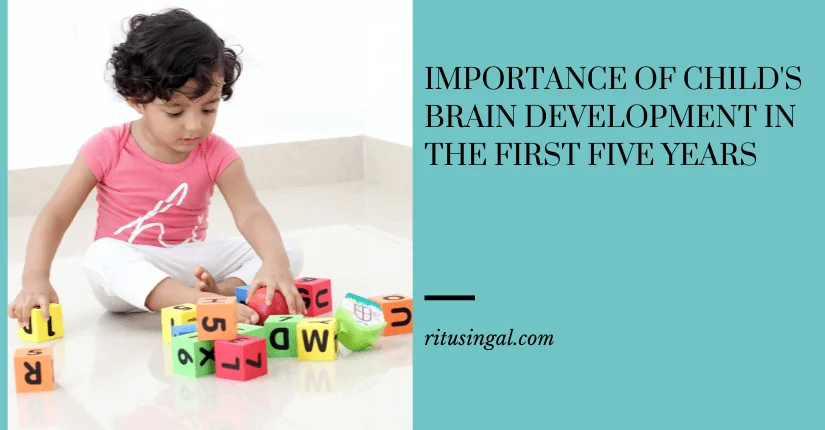
Importance of Child’s Brain Development in the First Five Years

Importance of Child's Brain Development in the First Five Years

The importance of a child’s brain development in the first five years is often under-estimated. Discoveries in the last decade have indicated that the earlier a child’s brain reaches a state of readiness for learning, the more likely it will succeed in that learning. While the five-year-old still needs a lot of stimulation, the earlier it starts to acquire those skills, the better. There is an emerging consensus among researchers on this matter. It has been documented that children who reach their developmental milestones at a later stage are better equipped to succeed in life and enjoy better educational outcomes.

Brain development in children depends on the environment that they live in and the amount of stimulation that they get throughout their day. During this time the children’s brain keeps developing and growing at an unprecedented rate. Every minute and every second is crucial to the mental growth of a child. At this age, children start getting familiar with their surroundings and develop empathy and understanding towards different people and things. It is during this time when the childrens’ intuition also increases and helps them make wise decisions regarding their life. A child’s mind develops at this age when the children can begin to develop self-confidence and a positive attitude.

However, if we compare the mental development of today’s children with our generation of children, we’ll see a major difference. Today, the development of a child is very different from what we went through when we were young. One possible reason is that their environment was essentially a very different place from the children of today. Sometime young parents are taking Counseling Services For Children to understand early childhood development stages. Childhood mental health problems are fairly common among today’s children, but the cause may have been much more severe during those times.

Looking back through the history of childhood, we see a pattern of a very crowded environment. Siblings shared a room and often went to the same schools. That was a very simple arrangement. Back then families didn’t expect their child’s brain to develop as quickly as the children of today do.

But now we are in a very different place. Children don’t have to share a room with siblings, and they don’t have to go to the same school. Many children spend the majority of their time with their grandparents or other family members. Those are the kinds of circumstances that can hinder a child’s brain development.

What does this have to do with the importance of a child’s brain development in the first five years? Well, it seems that early neglect of any area of a child’s development can have long-term consequences. Today, if you are neglectful of your child’s cognitive abilities, you may not even realize it. But it will affect the child’s future.

Parents need to be aware of this potential brain problem. We want our kids to have a normal and happy life. And it’s also important for parents to recognize when they’ve done something wrong to help ensure that they don’t neglect their child. By paying attention to the way that their child’s brain functions and by being alert for signs of brain damage, parents can help ensure that their child gets the best possible start to life and a healthy brain.

How do children’s development and learning happen? 

Kids begin to learn when they are young. Play is the most important part of a child’s development. Playing helps them learn social skills, coordinate movements, and developmental skills such as focus, memory, attention span, and self-control. They also help their brains take shape as they learn by playing games, engaging in games, and interacting with others. Children do best in an active, hands-on environment. When they play they learn the basic rules of interaction.

Learning: How child development and learning happens? 

Learning occurs when children actively engage in activities that range from basic skill learning (such as naming colors or shapes) to more complicated ones (such as counting items, following directions, or making a decision). Children learn through imitation or the act of taking in information and applying it practically. Learning takes time, and children are never too old to learn. It is why parents should be involved in their child’s learning. Playing games with them is an essential part of their learning process.

How child development and learning happens is very different from what people think. Parents and other caregivers can set up good experiences for their children, giving them a chance to learn through play. Children are social beings and love to interact with others. Playing with them, especially in the early years, helps them to grow up well adjusted and socially mature.

5 Things That Shape Child Development 

  • Healthy Eating 

Parents these days have to be careful about how they approach a discussion about healthy eating for children. Many of the popular ideas that are being promoted are not only harmful to a child’s health but are also totally unworkable. The worst part is that many of these “reinvented” plans are actually harmful for several reasons, and often the best course of action is to simply avoid them altogether. Forcing children to start eating a balanced diet when they are not ready is not only dangerous but also completely counterproductive. The best thing parents can do is make it clear that healthy eating is important, and that anything that goes beyond that is just not acceptable.

Forcing children to cut out certain foods or even eat altogether that do not agree with them is not going to improve their development in any way. It makes things worse by pushing them into unhealthy territory. By instilling healthy eating habits into children at an early age, it gives them a firm foundation to stand on as they enter school and adolescence. They will become aware of what is healthy, what is junk, and how to pick a good healthy food from a bad one. This, in turn, will help them develop the self-discipline that is required in order to maintain the weight loss and keep it off for the rest of their lives.

  • Physical Activity

The truth of the matter is physical activity is critical to the health and growth of children. It’s an undeniable fact that sitting around all day, doing nothing at all, or engaging in very few physical activities helps to set the tone for childhood and adolescence. Furthermore, sitting around all day without exercise is very harmful to the health of our children. A lot of studies have been conducted to determine the correlation between sitting and poor childhood health. The results were quite staggering.

Children who did not get enough physical activity during childhood or who were unable to participate in physical play and exercise were more likely to develop illnesses and disorders such as obesity, asthma, Type 2 diabetes, and heart disease. Physical activity can be a lifesaver for your child’s development. Playing outdoors, walking, biking, swimming, and doing aerobics are just a few examples of exercises that can help develop, keep healthy, and increase self-esteem. Children need to have regular physical activity to grow and be healthy.

While it’s true that children need daily exercise to promote a healthy lifestyle, they also need to learn about other things besides exercise. Children need to learn about their bodies, the importance of eating right, and of getting plenty of sleep. Studies have shown that a lack of sleep can lead to a decrease in physical fitness and an increase in childhood obesity. We all know that exercise is important for healthy weight gain, but now we also know that there are many health benefits to exercising daily. It’s not only good for your child’s development but is great for the health of your family.

  • Health

It is a well-known fact that health plays an important role in shaping the future of your child. Various diseases can affect a child’s growth and development and these include stunted growth, congenital heart defects, allergies, and many more. These factors can be avoided by having a healthy lifestyle that includes a balanced diet, regular exercise, stress management, and the right kind of care from the parents. Moreover, parents should take their children for regular checkups and also educate them about the dangers of health disorders. In fact, the right kind of education and precautionary measures should be taken to protect a child from all such heart and health problems. If you want your children to grow up healthy and strong, then they must undergo proper health checkups from their pediatrician at least once a year.

The pediatrician will check the general health of the child and also make necessary treatment if required. If the child’s growth is stunted or is suffering from any other physical or mental challenges, then you may also consult with the doctor to advise you on what should be done to improve the child’s condition. The doctor will also discuss various other aspects like the diet that is being followed by the child and the environment in which he lives.

  • Neighborhood and local community 

The quality of life, social capital, and the level of local investment in a neighborhood are essential factors in shaping the future of a child’s development. Research has shown that children who grow up in a stable and integrated neighborhood with both parents in it have higher educational outcomes as they move on to their high school or college level. These children also outperform those who live in isolated neighborhoods with single-parent families. Children who grow up in a neighborhood where they get good communication with at least two types of people and are surrounded by like-minded people are likely to have good social capital that is essential for their psychological development.

The size and shape of a neighborhood have also been shown to affect child development. Children who live in a small house may be lonely and feel that they do not have enough space to play or learn. It will affect their ability to make friends and learn from other children. Also, children who live in a very small and compact neighborhood, are less likely to enjoy outdoor games and activities and are at a disadvantage when it comes to achieving the top grades in school.

Child’s social circle is important when it comes to encouraging them to become successful in life. Childs’ neighbor is important not only as a source of contact, but also as a role model. Children’s neighbors can help the child to identify with others with similar interests and challenges. The neighbor should be a person the child respects and is open and honest, willing to listen to the child’s concerns and needs. By choosing the right neighbor, children are more likely to build strong relationships with these people in the future.

  • Importance of parent-child relation

The importance of the family environment and the child’s early years is well recognized and is reflected in all the programs and activities that are developing to enhance this relationship. The concept of family environment refers to the setting a child grows up in. It could be a foster home, orphanage, or any other arrangement. The major activities during the child’s early years are nursery, school, early childhood care and at different stages of life, post-Alma mater, and so on. These are crucial in shaping the person as they grow up and are an essential part of the unit’s personality.

The parent-child relationship for child development is a vital component of effective parenting. In fact, effective parenting requires that relationships between parents and children be harmonious. However, many people fail to realize that the quality of relationships between parents and their children are as crucial to child development as is parenting itself. 

A parent-child relationship for child development begins at birth. At that moment in time, the child is still dependent upon the mother for her warmth and security. The bond between the mother and child strengthens as they experience the early years of infancy and toddlerhood, as they grow up and learn to rely on their parents for love and companionship.

The parent and child must develop an honest and trusting relationship. Children can become very good at hiding their emotions if they feel they aren’t receiving support. The more you can learn about your child and the issues that they’re dealing with, the better you can support them in their efforts and encourage them in their growth. It is the best way for them to build a strong relationship with their peers and form a healthy foundation for emotional and physical development.

The last thing you want to look for when you start to establish a parent-child relationship for child development is how you relate to your own feelings. Oftentimes, parents will tell themselves that they just want to be supportive and take care of the child. However, they may be sabotaging their own development. For children, being a good listener and a good communicator are important traits. If you can learn to listen to your own fears and frustrations and help your child through the tough times, you will find that they will be much happier as they enter school and when they’re old enough to get involved with their own emotions and decisions.

Conclusion 

The process of child brain development is an extremely important developmental period in the life of children. It is during this period that they acquire the skills, knowledge, and learning abilities that will determine their future success in life. A child’s brain is capable of absorbing information fast, developing the ability to problem-solve, forming thoughts, memory, problem-solving, and learning new things quickly. All these skills are essential for a child to succeed in life. It is during this stage of brain development that the child’s IQ, school grades, and scholastic aptitude begin to increase. A child’s brain development in the first five years helps them develop a sense of self-worth, responsibility, and their own identity.

As a parent, it is important to be physically and mentally active to help your child achieve his/her full potential. It is essential to give your child a daily dose of cognitively stimulating activities. Cognitive activities help a child to increase his/her thinking abilities. Proper nutrition and care of health are essential to help your child with proper brain development.

The importance of a child’s brain development in the first five years is often under-estimated. Discoveries in the last decade […]

Top 30 Tips To Transform Your Life

30 Tips To Transform Your Life

“We are what we repeatedly do. Excellence, then, is not an act, but a habit.”     –  Will Durant

If the oft-quoted maxim is correct, it should also be true of mediocrity, its exact opposite. Extrapolating this logic means that mediocrity is born of mediocre habits and thus, the good news is that we can go change our mediocrity into excellence by changing our habits.

Transforming habits can certainly change life, but they cannot guarantee success. Warren Buffet may be fond of watching TV at home with a packet of pop corns in his hands but it, obviously, doesn’t mean that you, too, should do the same to get rich i.e. it is not a cause-and-effect link. Nasim Taleb, in his Fooled By Randomness, says that being punctual, sporting a clean shirt and using a fragrance contribute to success i.e. they are necessary but not sufficient to bring about success. So, habits don’t automatically result in outcomes. But yes, transforming habits for the better can improve the quality of our life.

Transforming your life can be challenging, but it can also be exciting and rewarding. In a way, transforming your habits can transform your life. Transforming your life requires that you go beyond the way you are currently living and create a better life by changing the way you live. You can achieve this by using thoughts, visualization, words, faith, actions, or a mix of them. You can use them to change what is happening within you and your life to get what you truly desire. Find a certified life coach or try our online coaching program for a step by step plan to create your ideal life

10 Ways of Transforming Your Habits

Here are the steps to make such transforming habits stick:

  1. Changing Mindset

Most life transformation stories are full of changing belief systems. We are our beliefs as they dictate what we do and how we operate. Changing your mindset can change the course of your life. As Wayne Dyer puts it so beautifully, “When you change the way you look at things, the things you look at change.”

A young Virat Kohli suffered from a fixed mindset and thought that he was born a certain way and therefore, he was stuck with it for life. But when he discovered self-development, he realized that he had been lying to himself as he could improve himself to become whatever he wanted to. But to make it happen, he had to change his mindset first.

Possibly, one of the most effective routes to a changed mindset is adopting healthy habits, which condition your mind for success. Research shows that the best way to create a change in life is by cultivating new routines and following them until they become habits which completely change your life.


  1. Deciding and Committing Oneself

Now you need to decide on learning how to transform your life to write your life transformation story. Did you ever commit something that didn’t hold out? The fact is that, when you commit to something, everything changes. Learning how to make commitments is about keeping them consistently, no matter what. A major reason why people fail to achieve their goals is that they lack discipline. They love the excitement of starting something new but once the going gets difficult, they retreat as they are not fully committed to transforming their life.

Masters do whatever it takes to transform their lives i.e. 100% as they dedicate their lives to it and thus, are extremely focused on achieving their dreams. Take a firm decision, rise and transform yourself with persistence, commitment, passion and hard work. If you take the right decision at the right time, your entire life can transform right before you.


  1. Does it deserve me?

Remember, you are trying to completely change your life and towards achieving this goal, only you are in a position to decide what a good habit is. Deciding whether a habit is worth it to you is central to cultivating new habits. Too often, we are often driven by a sudden whim like “I should be doing it!” But should you, really? Should you wake up an hour earlier than usual? Should I take a daily bath Should I go for a walk daily?

Waking up early may be helpful to some people. But before you take the plunge, ask yourself “Will doing so improve the quality of my life?” The reason is that we all need a certain REASON to change, something beyond and bigger than superficial reasons.

If you decide to read one book a fortnight, first ask Why? and What are my goals?

There are people in certain professions, which necessitate constant learning so that you can do your job better. Do you really need to? Answer this one and try to adopt habits that bring you closer to the things you want from life.


  1. One at a time

There are people who consistently fail to learn new habits as they try to cultivate many of them at a time. Hold back your horses if you are planning to do so. Otherwise too, we all know the situation when we do too many things at a time. We often end up with chaos and right back where we had begun. Sounds quite familiar?

But why we burden ourselves with so many things at a time is that we often over-estimate our capabilities to achieve much in a short time. It just isn’t true! Of course, you can achieve a lot over a long period -that’s true!

So, it is best to focus on one thing at a given time. Rather, make a list of all such new habits you would like to learn and then work on them in apriority order.

  1. Taking Action

Very often, many people are stuck in an analysis paralysis as they are so overwhelmed with knowledge that they are finally unable to take a decision or action. Taking action means that you need to take small and big steps to change certain aspects of your life. Just commit to doing one thing and you know, you will start moving in the desired direction.

Word of caution: Before committing to something bigger, try to achieve smaller goals to feel better about your efforts.

Don’t give up. If you fail, try again. Look at what you need to do today to get what you want. You have to start implementing the learning done so far. Anyone who wants to see positive changes in their child or other young people should consider counselling for youth.


  1. Keep it low

All life transformation stories had begun on a low note. We all would often love to achieve big things in life, without understanding them. For instance, building a successful business or career or anything remotely valuable needs consistent efforts. So before thinking of something really big, it’s better to begin small. Try to change yourself first before you try to change others. Just focus on small things in order to build a strong foundation to achieve anything meaningful.


Want to learn a song? Begin with the hook line

Would like to author a book? Write just one sentence.

Want to read a book in a fortnight? Read a few pages daily.


Once you get the hang of it, big things will follow.


  1. Check it

You wanted to do something and you did it, too. And then you forget about doing it again (after all, you had an intention of making it a habit). And then, suddenly, a few days later, you recollect what happened to the new habit of yours but you exonerate yourself.  Don’t let yourself off that conveniently!

To completely change your life, you must use checklists to remind yourself of what you were trying to achieve. We learn new habits to transform our life. So check off your habit list daily and in a few days, you’ll be wondering over how much you have changed yourself with such small changes.


  1. Achieving Results

The results of your actions can transform your life. When I discovered that I had to re-build my husband’s business and take care of our employees, I took a decision and action too, knowing well that I had to do whatever it took to realize my goals.

The results I got validated that legitimacy of our actions. Even getting a small result is still a result e.g. something as simple as putting one small thing into motion. It doesn’t have to be earning 1 core rupees dollars or becoming a Bollywood sensation overnight.

Look for small, realistically achievable results that you can celebrate. Look at what could be possible when you accomplish such small goals. This is the beginning of transformation that allows you to move to greater accomplishments.


  1. Being Consistent

You may have the best tools to completely change your life but if you don’t stick around, the change will not last long.  Being consistent can be the difference between failure and success. A lack of consistency halts your progress towards your goal altogether. But maintaining consistency is a problem as people become overly obsessed with results and forget about the process. Outcomes are, no doubt, important, but in the absence of a concrete process to guide you, accomplishing the desired outcomes is impossible.

Transformation is a lifelong process and to make it so, you need to fall in love with your journey towards it. This journey is going to be lined with highs and lows and you must be ready to face failure as it’s a part of the process. Anything worth pursuing is going to face teething troubles and you just need to plan what you are going to do in an adverse situation.


  1. Changing Your Identity

You are defined by your beliefs about yourself and you need to change your identity in order to transform your life. Shedding an old identity can mean leaving aside old belief systems. An effective way to demolish a negative self-concept to completely change your life and face your “inner” critic is to voice therapy, which can help you identify and defeat your critical inner voice. In this way, we cultivate compassion towards ourselves and reclaim our real self-concept.

Once you empower yourself, you begin to get consistent results as your own perception about yourself changes. But you need to sustain this momentum by deciding which new identity you want. Once you start actualizing this identity, your behaviour will change, thereby enabling you to achieve your goals.


Besides these steps, you may also try to incorporate theses habits in your routine life to help you towards personal transformation:

  1. Have a life vision: Why are you here? What would you like to learn? How would you like to contribute to this world?
  2. Accept certain things as a given i.e. outside your circle of control e.g. weather, long queues at the grocery store or others’ opinion about the world. Save your energy for more important things.
  3. Create a mental picture of the highest version of yourself. Imagine how you would think, feel and act in that state. Begin to act like that until it becomes second nature.
  4. Set goals and review them regularly. This is one of the top habits of highly successful people.
  5. Have a daily meditation routine so as to cleanse your mind just as you cleanse your body.
  6. Jot down the things you are thankful for. The more you appreciate your blessings, the more blessings there will be for you to appreciate. Cultivate a mindset of plenty by appreciating what you have. We are surrounded by all forms of plenty on the earth — just think of a tree in full bloom, grass in a park, or the beach.
  7. Before you hit the bed at night, tell yourself consciously: It’s good and it’s done. Tomorrow will be a new day.
  8. Always have a 5-second pause before you react to a person/situation. It will help you think through your response with love and empowerment.
  9. Be open and approach every moment as a fresh start as it’s never too late to change a perspective. It’s also never too late to be the kind of person you would like to be.
  10. Forgive yourself and others to unburden yourself. Let go of your past, it’s done.
  11. Be present in the now and learn mindfulness. The present moment is when we experience the gift of life.
  12. Question your own beliefs. Most of them were learnt in childhood and are probably not working for you. Try to create your own empowering beliefs.
  13. Aim to grow, but not to be perfect. Do not berate yourself as you falter while learning new skills.
  14. Celebrate small achievements. They build confidence and lead to greater success.
  15. Try out new things. Do not live the same year 100 times and call it life. Try out new hobbies, a new sport, city or even a new career.
  16. Take good care of yourself with nourishing food. Your body is only home for your soul on the earth.
  17. Keep company with dreamers and doers.
  18. Stop having attachment with outcomes. Redefine success as giving your personal best. Remember your full effort is your full victory.
  19. Do one thing each day out of your comfort zone. Fear is a natural ally of growth and expansion. So train yourself to feel the fear and act.
  20. Stop judging others for their behaviour and performance as everyone is doing their best in his/her context. You aren’t the boss of the Universe. Be more open, honest and vulnerable with others to let them enjoy and love the real you, and not the face you put on.

“We are what we repeatedly do. Excellence, then, is not an act, but a habit.” – Will Durant If […]

Social Icons

Facebook

Twitter

Instagram

Youtube

Linkedin

Book Your Session

Scroll to Top

Request a Callback