

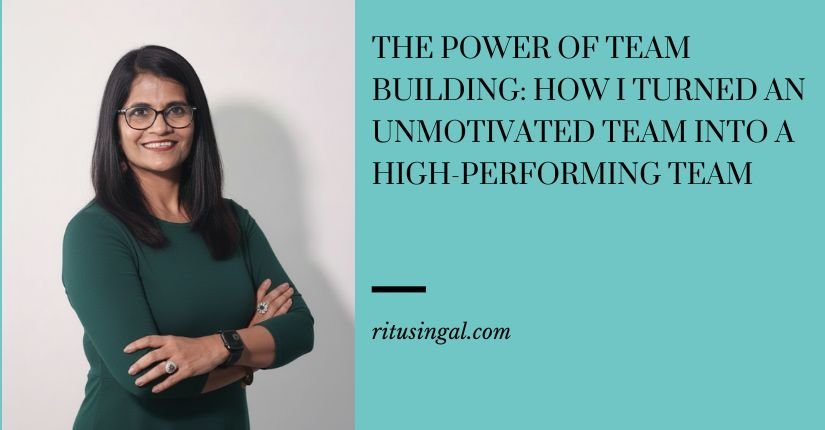
As a Life Coach, corporate trainer, and someone who has spent years working with people and organizations, I have learned that team building is not just about organizing activities or conducting motivational sessions. It is about creating belonging, changing mindsets, and helping people discover their own power.
One of the most important team-building lessons of my life came from an experience in 2017.
At that time, I was facing a serious challenge at work. I noticed that many people were not taking their responsibilities seriously. Productivity was low, people were wasting resources, and the overall work environment was becoming frustrating. I kept wondering: What should I do?
I could not simply remove everyone. The organization had to continue functioning, and I knew that replacing people would not necessarily solve the real problem.
So, instead of changing the people, I decided to change the way they looked at themselves and their work.
A Simple Aeroplane Changed My Perspective on Team Building
One day, when I was particularly परेशान and trying to figure out a solution, I gathered the team and asked them a simple question:
“Have you ever travelled in an aeroplane?”
Some people said yes.
Then I asked, “What does an aeroplane need to fly?”
The answers started coming. Someone mentioned the pilot. Someone talked about fuel. Others mentioned different components required for an aircraft to operate. Then I asked them:
“What happens if all these things are available, but they do not work together?”
The answer was obvious. The aeroplane cannot fly. That was the moment I connected the story to our workplace.
I told my team, “Our organization is also like an aeroplane. Each one of you is an important part of it. Someone may be the pilot, someone may provide the fuel, someone may manage navigation, and someone may be responsible for another essential function. But unless everyone works together, the organization cannot reach its destination.”
This simple analogy helped people see their roles differently.
They were no longer just employees performing individual tasks. They were essential parts of a larger mission.
Belonging Can Transform Employee Performance
I strongly believe that people perform differently when they feel that they belong.
When employees feel disconnected from an organization, they may simply complete their assigned duties. But when they develop a sense of ownership, belonging, and purpose, their attitude can change dramatically. I began focusing more on team-building activities and creating opportunities where everyone could interact with one another.
We organized events where blue-collar workers and other members of the organization could participate together. We created opportunities for people to communicate, share experiences, interact with different colleagues, and recognize each other’s contributions.
MUST WATCH
The objective was not simply entertainment. The objective was to build human connections. And slowly, I started seeing a difference. People began taking more ownership. They started feeling connected to the organization. Their attitude towards work improved. This experience taught me an important lesson:
A motivated team is not created by pressure alone. It is created when people feel valued, respected, connected, and responsible for a common goal.
The Elephant Story: The Biggest Barrier Can Be Our Mindset
But there was another challenge. Some people had been trying for years to change their situation, yet they had started believing that certain things were simply impossible. That reminded me of the famous elephant and chain story.
When a baby elephant is tied with a strong chain, it repeatedly tries to break free. In the beginning, it struggles because it is not strong enough. Eventually, after repeated failure, the elephant develops a belief that the chain cannot be broken.
As the elephant grows, it becomes incredibly powerful. Yet it may continue to remain tied because it has already accepted the belief:
“I cannot break this chain.”
The chain may have become weak, but the belief remains strong. This is exactly what can happen with human beings. Sometimes the biggest limitation in our professional and personal lives is not a lack of ability. It is a limiting belief.
We tell ourselves:
“I cannot do this.”
“This will never work.”
“I have already tried.”
“I am not capable.”
“People like me cannot achieve this.”
And eventually, we stop trying.
Checkout: I Decided Not to Cry: Why I Chose to Turn My Pain Into a Roadmap for Others
You Are More Powerful Than Your Past Experiences
During my team-building journey, I wanted my people to understand that their past experiences did not have to define their future. If something did not work yesterday, it does not mean it cannot work tomorrow. If one method failed, we can try another.
If one approach did not produce results, we can change our strategy. The key is to keep asking:
“What else is possible?”
This is one of the most powerful questions I use in coaching and leadership training. Instead of asking, “Why can’t I do this?” ask:
“How can I do this differently?”
That small change in language can create a completely different mindset.
Team Building Starts With Mindset
Today, when I conduct team-building training, leadership sessions, workplace counselling, or motivational programs, I remind people that every organization is ultimately made up of human beings.
Processes matter.
Technology matters.
Resources matter.
But people remain at the heart of every organization. If people feel ignored, disconnected, or powerless, even the best systems may struggle. But when people feel empowered and connected to a common purpose, extraordinary things can happen.
That is why effective team building in the workplace should go beyond games and activities. It should focus on communication, trust, collaboration, emotional connection, ownership, leadership, and a shared vision.
The Lesson I Carry Forward
My experience in 2017 taught me something that I continue to believe today: People can do much more than they think they can. Sometimes they simply need someone to help them see their own potential.
The aeroplane taught my team the importance of working together. The elephant taught them the danger of limiting beliefs. And the transformation I witnessed taught me the power of belonging. As a Life Coach, my role is not to tell people that they are weak. My role is to help them recognize the strength that already exists within them. I believe every individual has a unique role to play.
And every team has the potential to fly. The question is not whether the power exists. The real question is: Are we ready to recognize it, connect it, and use it? Because the day we stop saying “I can’t” and start asking “How can I?”, we begin to discover possibilities we never imagined.
And sometimes, that change in mindset is all it takes to turn an ordinary team into an extraordinary one.
Real transformation begins when people believe that they are capable of more.