OUR BLOGS

Breaking the barriers and fears of marriage

Marriage is a lifelong commitment to growing and loving someone together. When you love someone, you love all the versions of them,

—the person they were, the person they are, and the person they will become.

In today’s fast-paced world, where you can get a boy with the right swipe, cheating has become far too easy, and everything feels instant- instant coffee, instant home deliveries, and no need to wait for supper.

Need for validation? Just post something on Facebook, and you will receive likes in seconds. But in a rush for this instant gratification, people have forgotten that genuine relationships take time to build. Patience, forgiveness and fruit are the keys to a successful marriage, requiring both of them to work. I, Ritu Singal have often seen couples giving up on each other, without understanding marriage.

In today’s world where it’s about blaming the other person, they made me feel like this, we forget to ask the question.

How do I make the other person feel?

Do I appreciate what they have to offer?

Do I make them think nagged or do I create a safe space for them?

Am I vulnerable to them and do I make them feel valued in my life?

Understanding and practising love languages is crucial.

Examples include; physical touch, acts of service, words of affirmation and gift-giving.

  • What is the best way they feel loved?
  • Do we have moments of playfulness, fun, and teasing with each other? What are words that offend them?
  • What are actions they don’t like? What triggers them about me? What are their needs? What are words that offend them?
  • What kind of conversations do they enjoy the most?

Marriage also requires clarity on values

  • Do we have the same values?
  • Which of our values are non-negotiable?
  • What are their goals regarding family and kids?
  • How do they want to bring up the kids?
  • Do they let the inlaws have a say in things?
  • Can they support my honour?

Are they loyal? Have any past relationships didn’t showcase their loyalty?

What are my non -non-negotiables in the person I want to marry? Eg: Physically abusive, gaslighting, narcissistic personalities. If you see any of these signs, it’s better to end a relationship beforehand itself.

Most people are afraid of getting married because of the number of divorces today. However, it is important to remember that Issues were always left under the rug. Abuse was present at that time too, whether physical, verbal, spiritual or sexual. We can’t make assumptions based on societies where divorce was almost considered a taboo.

The bright side is that today we have access to premarital counselling and the stigma of going to a counsellor has reduced. People are learning how to identify their triggers in life, clarifying what they want from life and relationships. As both partners work, the wife is no longer dependent on the husband.

MUST WATCH

So what will I Ritu Singal do for you? How will I help you through my premarital counselling? First I will address your main concerns regarding the fears of marriage.

  • Then I will give you the tools to deal with challenges that come in and out of marriage.be it family stressors, finances, or household responsibilities.
  • Guide you through family planning and managing personal space.
  • Offer one-on-one or joint sessions based on your needs and concerns.

Checkout: How Mental Coaching from Life Coach Ritu Singal can Transform Your Life

The best part of pre-marriage counselling is that you get a chance to prepare for the challenges that will be coming in your marriage. You won’t be new to it and it will flourish smoothly. In joint sessions, you can explore and challenge this in a much better way!

I , Ritu Singal have had so much fun with my clients, regarding all of these topics that it became something they loved too. There was gossip shared, fun banter made, and each one of them could respect the other person.

I may work with you one-on-one for it or with your partner depending upon your needs and concerns. Then you will be allowed to speak regarding your marriage plans, and what you aspire t

Conclusion: A great marriage is not when two perfect people come together, it’s when two imperfect people come together to enjoy their indifferences. And when I finally see my clients doing this, it gives me sheer happiness.

You don’t have the fear of marriage, you have the fear of not being able to deal with the challenges in marriage. And when you have the right counsellor, hardworking mindset and tools to help you deal with those challenges, what are the odds of having a failed marriage? To know more visit our website

Marriage is a lifelong commitment to growing and loving someone together. When you love someone, you love all the versions […]

Managing Teens: The Most Challenging Part of Parenting

I, Ritu Singal, have seen it all—the dramatic changes when children become teenagers. Having brought up two daughters, I understand how the world looks at parents of teenagers who seem to be going through everything.

The Reality of Teen Years: More Than Just Rebellion

Managing a teenager is not as easy as it looks. Teenagers are often rebellious, crave space, and question everything. They are neither a kid nor an adult. This period of adolescence is marked by mood swings, confusion, and identity shifts, so it isn’t entirely their fault. We, as parents, still feel they are like our little babies, which only makes them feel worse. In truth, it creates a real disconnect that many families struggle to bridge.

Finding Potential Amidst the Chaos

While this happens, I’ve also noticed that some of the greatest minds are shaped during this period. What you say and how you handle your teenager can be the key determinant to their success later in life. My daughters, Innaya, represented the state in table tennis and other endeavors. I can proudly vouch for that. It’s been one of the best things.

In fact, she even won the best table tennis player of the year in 2019. My older daughter, Ishani, is an entrepreneur too, just like me, but of course, using her own talents. And certainly, I’ve seen the power of fostering their individual strengths.

Checkout: Overcoming Sibling Rivalry: A Guide to Rebuilding Relationships

Resilience and Inspiration: Overcoming Challenges

Despite Vikas’s (my husband’s death) 50 to 60 crore loss in Vikas’s business, which I then put back together—if you want to see how, read my book, I decided to not to cry.That journey, however, is a story for another time, a testament to resilience in itself.So thats why I am here  to share my powerful and proven tips to make the best of your parenting with aa teenager 

Tip 1: The Power of Feeling Special

The first tip: Make your child feel special. Never criticize them by saying things like, “Your friend is ahead of you,” or “You don’t study enough, you waste time.” Instead, make them feel valued—truly valued.Lets show you how abd why this is important

Understanding Steve’s Story: Adoption and Affirmation

Did you know Steve Jobs was adopted? His biological parents were unmarried, and his father, a Muslim, did not accept the relationship, so they gave him up for adoption.

As a child, when Steve’s friend told him, “That means your parents didn’t want you,” he was deeply hurt and cried. He went home and asked his adoptive parents about it. They reassured him, “We chose you because you are special.”

This belief shaped his entire life—he started doing everything with the mindset that he was special and had a purpose. So, when you make your child feel special, they will act accordingly. But if you keep deflating their confidence, how will they thrive? It’s a simple, yet powerful truth.

Tip 2: Channeling Energy Positively

The second lesson: Channel their energy positively. Steve Jobs’ teachers often complained about him. Instead of scolding or punishing him, his parents told the teachers, “He has a lot of energy; give him something creative to do.”

As a result, Steve was promoted two grades ahead, but his parents, understanding him well, insisted on just one. They recognized his potential and nurtured it instead of suppressing it with punishment. They recognized his unique needs.

MUST WATCH

Tip 3: The Importance of Role Models

Third, parents should be role models. Steve’s father was a mechanic who built furniture. He paid attention to even the unseen parts, making them just as beautiful as the visible ones. Steve learned from this that quality matters everywhere, even if no one sees it.

This philosophy later influenced Apple’s product designs—everything, even the internal circuits, had to be perfect.

Checkout: Bringing Up Parents: A Modern Guide to Parenting in the Digital Age

Tip 4: Instilling Values and Purpose

So, what are we teaching our children? If we only focus on superficial success, their character will lack depth. But if we instill values, their work will reflect it. And this reflection is vital.

Tip 5: Encouraging Lifelong Learning

Fourth, Steve Jobs constantly learned from mentors. He absorbed knowledge from everyone—whether about dressing, speaking, or technology. His hunger for learning gave him momentum. That drive is something we should encourage.

Tip 6: The Power of Environment

Lastly, environment matters. Steve surrounded himself with creative people. Instead of chasing money, he focused on innovation. If children grow up in an environment filled with gossip and negativity, what will they learn? Consider the impact of the environment.

Bridging the Gap: Understanding and Praise

If parents apply these lessons, they can nurture greatness in their children. And further, I feel parents should try to bridge the generation gap and try to understand their kids better.

Rather than constantly telling them what they did wrong, praise them for what they did right. For every correction, we must give 10 praises for what they are good at. Additionally, we should also teach children how to make their own decisions and not demotivate them when they fail. Fail 99 times, and the 100th time, you will get it right.

Thomas Edison’s mom never stopped believing in him, and so he never stopped believing in himself despite the odds thrown at him—being thrown out of school, and so on. Those small acts of faith, they build mountains.

A Final Thought: Connection and Belief

Ultimately, navigating these challenging teenage years is about connection, understanding, and unwavering belief. It’s about remembering that behind the mood swings and rebellion, there’s a unique individual waiting to blossom. And as parents, we have the privilege of helping them find their way

I, Ritu Singal, have seen it all—the dramatic changes when children become teenagers. Having brought up two daughters, I understand […]

Understanding Student Mental Health problems-A Life’s coach guide

Student mental health struggles are more common than many parents realize, yet counselling is often dismissed. As a mother of two and a life coach who has worked with countless families, I’ve seen firsthand how untreated emotional struggles lead to anxiety, procrastination, and self-doubt in children. Many parents unknowingly invalidate their child’s feelings, not realizing the long-term effects.”

Most parents wonder why a child needs counselling for mental health struggles and avoid counselling which then leads to negative habits.

As a mother, life coach, and entrepreneur, I, Ritu Singal have seen many parents dismiss children’s mental health struggles, believing that because they endured worse, their children should toughen up.

Statements like these invalidate a child’s feelings:

  • .””I’ and others have faced worse yet we turned out fine”
  • “Why don’t you be more like your sister?”
  • “Stop being so sensitive.”
  • I’m being hard on you to teach you how to handle the outside world.”
  • “What you’re going through is nothing!”

What parents don’t realize is that growing up with harsh discipline—being beaten for the smallest things—can lead to perfectionism, procrastination, and a critical inner dialogue. Some children grow up feeling exhausted all the time, assuming it’s due to age or medication when in reality, it’s a trauma response.

Many parents are traumatized themselves but don’t recognize it. Some become workaholics or alcoholics, believing their childhood did not affect them. Others struggle with constant anxiety, irritability, or a lack of motivation. Mental health issues in students are real and significant. Trauma manifests differently in everyone—some people become people-pleasers, unable to say no, while others struggle with self-doubt, anger, or emotional numbness.

“Why Should I Listen to My Child Now?”

Many parents think, “When I was young, I had to listen to my parents. Now, I have to listen to my child too because of their mental health struggles. When will someone listen to me?”

I understand where this feeling comes from. But learning loving ways to discipline your child doesn’t just make you a better parent—it also helps you heal your inner child. You’ll learn how to treat yourself with kindness and respect your boundaries in a way you never received as a child.

“Expert advice can be helpful if you’re having trouble understanding your child’s mental health.Many parents have found that having a safe, confidential space allows both them and their children to process emotions without fear of judgment.”Hence both the child and parent need counselling . The child needs d student counselling services and the parent needs parent counselling services

Recognizing When to Seek Help

Families should know the signs that indicate something is beyond normal and requires attention. In India, mental illness is often stigmatized, but in other countries, patients going through trauma or distress are assigned psychologists to help them cope effectively. Let’s break the stigma and understand mental health better.

What is Mental Illness?

Mental illness is a physical illness of the brain—just like thyroid issues affect the body, mental illness affects thinking, behaviour, energy, and emotions, making daily life difficult. As the National Institute of Mental Health states:

“No health without mental health.”

Signs to Look Out For:

  • Changes in eating habits
  • Disrupted sleep patterns
  • Withdrawing from people and activities
  • Low energy levels
  • Feelings of helplessness or hopelessness
  • Confusion, forgetfulness, irritability, or nervousness
  • Inability to complete daily tasks
  • Severe mood swings
  • Thoughts of self-harm
  • Increased drug or alcohol consumption

Each mental illness has unique symptoms, and no two experiences are the same. If you or someone you know is struggling, seek support from family, friends, or a counsellor. Overthinking only worsens unhappiness.

How to Cope with Mental Health Struggles

  • Eat healthy, balanced meals.
  • Exercise regularly (yoga, workouts).
  • Engage in activities that bring joy.
  • Develop a resilient mindset—never give up.
  • Talk to your loved ones—don’t struggle in silence.

Mental health struggles are nothing to be ashamed of. Healing takes time, but asking for help is a courageous step.

Ask for Help Before It’s Too Late

This isn’t just about famous people like Ira Khan. It’s not just about a few children or families I’ve worked with. I have seen mental illness up close—my mother suffered from severe mental illness and had to undergo electric shocks.

Why? Because back then, we didn’t understand mental health. We thought, “Oh, it’s just her nature,” or “She’s just tired.” By the time we realized what was happening, it had worsened significantly.

Mental illness is real. It is serious. And it needs to be addressed.

What Are Student Counselling Services?

Student counselling services are just like regular coaching services, but they focus on the mental and emotional well-being of students. As your life coach, I will help you understand what’s going on in your life and guide you toward overcoming mental health challenges.

“Healing takes time, but no one has to go through it alone. Mental health is just as important as physical health, and seeking support—whether for yourself or your child—is a sign of strength, not weakness. Let’s break the stigma and create a world where mental wellness is prioritized. If this resonates with you, know that support is always available.”

Let’s work together on improving our minds and our families. Asking for assistance is a step towards resilience and strength, not a sign of weakness.. Let’s build mental health resilience together. It’s never too late. Even if you a parent feel that you have some mental health issues we can talk about it. Let’s be the change we want to see in ourselves and others. Healing takes time , but you don’t have to go through it alone, support is always available.

Student mental health struggles are more common than many parents realize, yet counselling is often dismissed. As a mother of […]

Signs You Need a Mental Health Coach and Why You Should Consider Me?

Why is mental health stressed upon, a lot these days? It is because people started becoming aware of the complications one can have due to poor mental health. Let us take a look at a few factors which can affect your mental health: 

  • Basic lifestyle choices 
  • Traumatic experiences  
  • Abuse- physical, emotional, sexual 
  • Peer pressure 
  • Financial crisis 
  • Lack of emotional support 
  • Loss of loved ones 

And many more. 

These instances are not temporary but rather most of them have a long-term impact if not treated and dealt with, professionally. This is where healing as a process, like mental coaching, comes into action.

Taming your mental health might seem very difficult. I have also seen that sometimes it becomes impossible for some individuals for that but underestimating your ability to overcome the obstacles becomes way more common but that is the opposite.  

Mental coaching is a process that involves working with a trained professional to improve your mental health and overall well-being. Mental health is a crucial aspect of our lives, and it impacts our personality, behaviour, and emotional well-being.

Mental coaching is a powerful tool that helps individuals to identify and overcome their psychological barriers. It is an effective way to develop one’s personality and improve the overall quality of life. 

I, Ritu Singal, am also a mental health coach and I work closely with individuals to help them identify their goals, set realistic expectations, and develop a plan to achieve those goals. My services are designed to help individuals recognize their strengths and weaknesses and work on them to achieve their desired outcomes.

The services I offer are customized to meet the specific needs of each individual. It involves a range of techniques, including cognitive-behavioral therapy, mindfulness-based therapy, and positive psychology. 

This specific coaching that I provide helps individuals to develop a positive attitude towards life. It helps them to focus on their strengths and overcome their weaknesses. It aids individuals to identify and manage their emotions effectively.

My services have been effective in helping individuals develop resilience and cope with difficult situations in life. Mental coaching helps individuals to develop a growth mindset, which is essential for personal and professional development. 

MUST  WATCH

It also helps individuals to develop better communication skills. It helps individuals to communicate more effectively with others, which is essential for building strong relationships. Mental coaching helps individuals to develop better problem-solving skills. It helps individuals to think more creatively and come up with innovative solutions to problems. 

Mental coaching is also effective in reducing stress and anxiety. It helps individuals to learn relaxation techniques that can help them to manage their stress levels effectively. Mental coaching helps individuals to develop better sleep habits, which is crucial for maintaining good mental health. 

Mental health is a crucial aspect of our overall well-being, and it’s essential to prioritize it just as we prioritize our physical health. However, many individuals tend to neglect their mental health and ignore the signs that indicate the need for professional help.

It’s essential to understand that seeking help from a mental health professional is not a sign of weakness but rather a sign of strength and self-awareness. So, when do you know that you might want guidance from a professional?  

1. Persistent feelings of sadness or hopelessness: If you are experiencing persistent feelings of sadness, hopelessness, or helplessness, it’s essential to seek help from a mental health professional. These feelings can be a sign of depression, and a mental health professional can help you identify the underlying cause and provide effective treatment. 

2. Anxiety or panic attacks: If you are experiencing frequent anxiety or panic attacks, it’s essential to seek help from a mental health professional. These symptoms can be debilitating and can significantly impact your daily life. 

3. Substance abuse: If you are struggling with substance abuse, it’s essential to seek help from a mental health professional. Substance abuse can have severe consequences on your physical and mental health, and seeking professional help can provide effective treatment and support. 

4. Traumatic experiences: If you have experienced a traumatic event, such as physical or emotional abuse, it’s essential to seek help from a mental health professional. Traumatic experiences can have long-lasting effects on your mental health, and seeking professional help can help you cope and heal from the trauma. 

5. Relationship issues: If you are experiencing relationship issues, such as communication problems or conflicts, it’s essential to seek help from a mental health professional. A mental health professional can provide effective counseling to help you improve your communication skills and develop healthy relationships. 

Or, nothing at all! Yes, you are free to address your issues to a life coach like me if you just want to talk and even if you are not facing any extreme crisis in your life. 

In conclusion, mental coaching is a powerful tool that can help individuals to develop their personality and improve their overall quality of life. As a mental health coach, my services have helped individuals to identify their strengths and weaknesses and work on them to achieve their desired outcomes.

There is a proven track record of individuals who have developed better communication skills and personality. Taming your mental health is an effective way to reduce stress and anxiety and improve mental fitness. In consideration of that, my services are just a few taps away. Let’s connect on the other side! 

Why is mental health stressed upon, a lot these days? It is because people started becoming aware of the complications […]

The Power of Mindfulness: A Guide to Reducing Stress and Increasing Focus in 2025

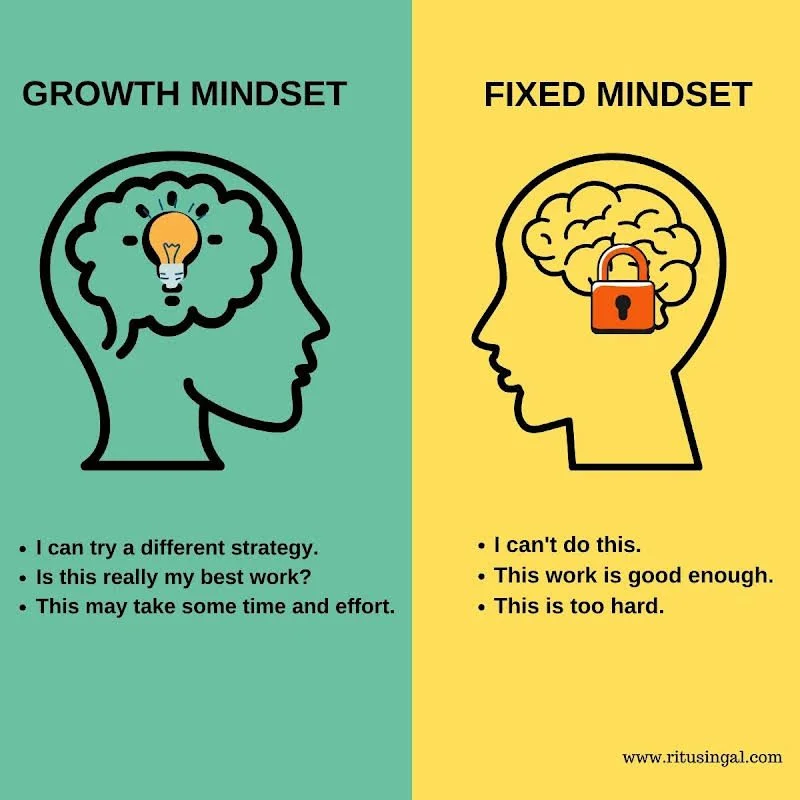
Managing stress doesn’t have to be overwhelming in 2025. Mindfulness is a powerful tool to guide us toward clarity and calm. One of the simplest ways to reduce stress is to shift from a fixed mindset to a growth mindset.

Fixed Mindset vs. Growth Mindset

A fixed mindset holds us back, often with thoughts like:

  • “I am stuck” vs. “What solutions can I try?”
  • “I can’t” vs. “I can”
  • “It’s impossible” vs. “What can I do to make it possible?”
  • “I failed” vs. “What can I learn from this?”

Making this shift can transform how we face challenges, helping us view them as opportunities for growth rather than roadblocks.

Three Affirmations That Changed My Life

  • I am blessed.
  • Today, I refuse to be defeated.
  • Persevere, persevere, and persevere.

These simple yet powerful affirmations helped me rise above the darkest moments of my life—my husband’s suicide, a financial loss of 50–60 crores, and more. They became the foundation of my strength and fueled my transformation.

Mindfulness: The Key to Inner Peace

Mindfulness is the art of being present. It connects us to our thoughts and feelings, helping us control our minds rather than letting them control us. The beauty of mindfulness lies in its simplicity—it doesn’t require tools, technology, or elaborate setups. You can practice it anywhere, anytime.

Consider these scenarios:

  • Standing in line for an important interview.
  • Preparing for a big presentation or performance.
  • Facing a challenging conversation.
  • Feeling low and unsure of yourself.

Mindfulness, when combined with self-love and compassion, can ground you and provide the clarity needed to move forward. It helps you shift your focus to the present moment, calm your mind, and build resilience.

How Attention and Presence Transform Your Mind

Mindfulness trains you to focus on what’s happening now. It encourages you to observe your breath, thoughts, and sensations without judgment. This practice fosters self-acceptance and helps you respond thoughtfully to situations rather than reacting impulsively.

As a life coach, I’ve worked with individuals struggling with anxiety, depression, PTSD, and addictions. Time and again, mindfulness has proven to be a powerful tool for overcoming these challenges. Its benefits extend beyond mental well-being, improving physical health as well. Chronic stress impacts our respiratory, digestive, and immune systems—mindfulness helps alleviate these effects by calming the body and mind.

Checkout: Managing Stress: A visionary Guide with the Help of a Psychological Counselor

Mindful Eating: Nourish Your Body and Soul

Mindfulness doesn’t stop with thoughts—it extends to how we eat. It’s not just about what you eat but how you feel when you eat.

A study involving two groups of rabbits highlighted the power of emotions. Both groups were given food with toxins, but only the group that received love, cuddles, and care survived. Their emotional state transformed their physiological response to the toxins.

Here’s how you can practice mindful eating:

  • Avoid discussing stressful topics during meals.
  • When eating alone, focus on the flavours, textures, and aromas of your food.
  • Appreciate your meals as a moment of nourishment and gratitude.

Mindful Exercises and the ACCEPTS Method

Mindfulness can also be practised through structured techniques like the ACCEPTS framework, which helps regulate emotions and manage stress effectively.

Activities

Engage in activities that require focus and concentration to redirect your mind:

  • Reading: Pick up an inspiring book, such as I Decided Not to Cry or A Story Can Change Your Life. These can energize you and provide new perspectives.
  • Journaling: Write down your feelings to gain clarity and perspective. This helps you process emotions and reflect on them later.
  • Sports or Exercise: Walking, running, or other physical activities help release stress from your body. They also trigger the release of endorphins, the “happy chemicals,” improving your mood.

Contributing

Helping someone else fosters objectivity and shifts focus from your problems. When you support others during tough times, you build a foundation of self-love and set a standard for how you should treat yourself during challenges.

Comparisons

Reflect on situations more distressing than your current one:

  • Recall a time in your past when you faced significant challenges and overcame them. Acknowledge your growth and resilience.
  • If this moment feels overwhelming, compare it to an even more difficult scenario to gain perspective and appreciate the current situation.

Emotions

Use creative and uplifting mediums to evoke positive emotions:

  • Listen to motivational music that inspires and uplifts you.
  • Watch a movie or create art that shifts your mood and brings a fresh perspective.

Pushing Away

Mentally set aside distressing thoughts:

  • Visualize placing your negative thoughts into a box, locking it securely, and throwing it into the sea. This symbolic act can help you release the weight of those emotions.
  • Use positive imagery to focus on a brighter outlook, even if only temporarily, to give your mind a break.

Thoughts

Redirect your mind to neutral or calming thoughts:

  • Play mental games, such as decoding what others might want or need in their lives. This can serve as a distraction and provide insight into human connections.

Sensations

To keep yourself rooted in the here and now, use your senses:

  • Hold something cold or warm, like an ice cube or a comforting cup of tea. Focus on how it feels, transferring your emotions into the object. Imagine the coldness neutralizing your negativity or the warmth burning away stress.

For deeper insights into my journey, grab a copy of my autobiography I Decided Not to Cry here.

Managing stress doesn’t have to be overwhelming in 2025. Mindfulness is a powerful tool to guide us toward clarity and […]

Social Icons

Facebook

Twitter

Instagram

Youtube

Linkedin

Book Your Session

Scroll to Top

Request a Callback