OUR BLOGS

I Decided Not to Cry: Why I Chose to Turn My Pain Into a Roadmap for Others

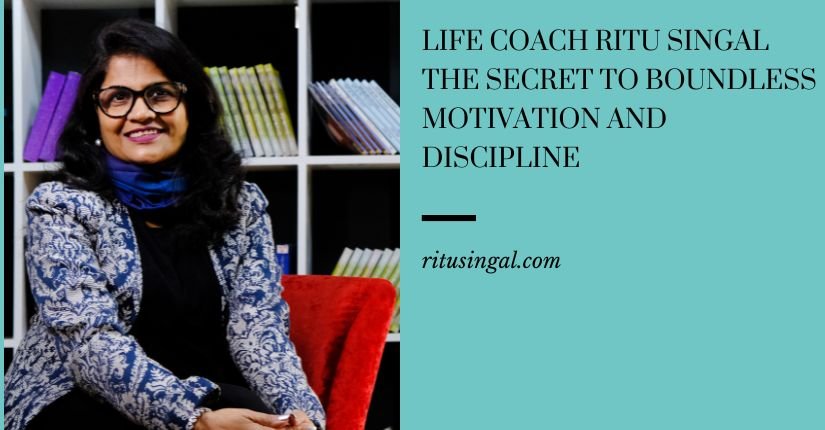
There is a moment in every person’s life where the ground beneath them simply ceases to exist. For me, that moment was in 2007. I was a housewife, a mother of two daughters, a woman who had traded her legal aspirations for the sanctity of the hearth. Then, in a single day, my world collapsed. My husband committed suicide, leaving behind not just a grieving family, but a staggering debt of 60 crore rupees and over 100 court cases.

People didn’t just look at me with pity; they looked at me with dismissal. The consensus was clear: if a seasoned businessman couldn’t handle this weight and chose to leave, how could a “mere housewife” survive it? But every morning, standing before the mirror, I gave myself a command: “I shall not be defeated. I will not give up today.”

I wrote my book, I Decided Not to Cry, because I realized that my story wasn’t just about financial recovery—it was about reclaiming a soul that had been taught to stay small.

Checkout: A glimpse of my book I Decided Not to Cry

Breaking the Silence on Extramarital Pain

One of the most difficult chapters to write—and the one I receive the most messages about—is my husband’s extramarital relationship. I chose to be brutally honest about this because there is a silent epidemic of women suffering in the shadows.

MUST WATCH


When a partner wanders, a woman’s first instinct is often to look inward and ask, “What am I lacking?” We start to over-analyze our appearance, our clothes, our behavior. We try to “fix” ourselves to win them back. I did it too. But I wrote this book to tell every woman: It is not about you. Infidelity is not a reflection of your worth; it is a reflection of the other person’s internal void. By sharing this, I wanted to strip away the shame. When we realize we aren’t the cause, we stop shrinking. We start growing.

From the Kitchen to the Boardroom: A Woman’s Rise

The transition from managing a household to managing a 60-crore debt was a battlefield. I remember attending an industrialist function in Bombay shortly after I took over the business. I was the only woman in a room full of male competitors. They looked at me as a “poor, trapped woman.”

In our patriarchal society, we trust women to raise the next generation, to save pennies for the future, and to run a home with surgical precision. Yet, we question their ability to handle “finance.” Why? A woman who can balance a household budget during a crisis is a natural economist.

I had no experience, so I made the world my mentor. I sat with my laborers and asked how to mix concrete. I went to China and worked in labs to understand leather production. I refused to look “stupid” because I knew knowledge was my only shield against those who wanted to see me fail.

The Power of “I Have Not Reached” Mindset

In my journey, I discovered a fundamental flaw in how we handle hardship. In our culture, we often deflect responsibility. We say, “He didn’t come to Delhi,” rather than, “I didn’t reach Delhi.” We blame the stars, the luck, or the people around us.

I decided to stop being a victim of my circumstances and start being the architect of my recovery. I practiced radical gratitude. Even in the darkest months, I wrote in my journal. I thanked God for the water in the tap and the air in the room. If you can be thankful for the small things, the big problems start to look like mountains you are actually equipped to climb.

Checkout: From Hardships to Diamonds: Turning Life’s Challenges into Strength

A Message to the “Higher Ones”

To anyone reading this who feels they are drowning: Stop talking to the people who only sit and pity you. I call them the “sympathizers”—those who say, “Poor thing, you are so sad.” That energy will only pull you deeper. Talk to the “higher ones”—those who challenge you, who pull you up, and who remind you of your strength.

My life is like the movie Life of Pi. I was on a small boat in a vast, storm-tossed sea with a lion (my challenges) sitting right across from me. I had to stay awake to keep the lion at bay, but that lion is also what kept me alive and alert.

Why You Must Read “I Decided Not to Cry”

I wrote I Decided Not to Cry because I want to increase your “capacity.” We often cry over small things because our internal capacity is small. When you read about the suicide, the court cases, the betrayal, and the eventual victory, your own problems will start to feel manageable.

You have the power, the mind, and the spirit to change your situation. God doesn’t give these battles to the weak; He gives them to those who can handle them and then show others the way out. I am no longer just a businesswoman or a survivor. I am a woman who chose to fight. And if I can do it, so can you.

There is a moment in every person’s life where the ground beneath them simply ceases to exist. For me, that […]

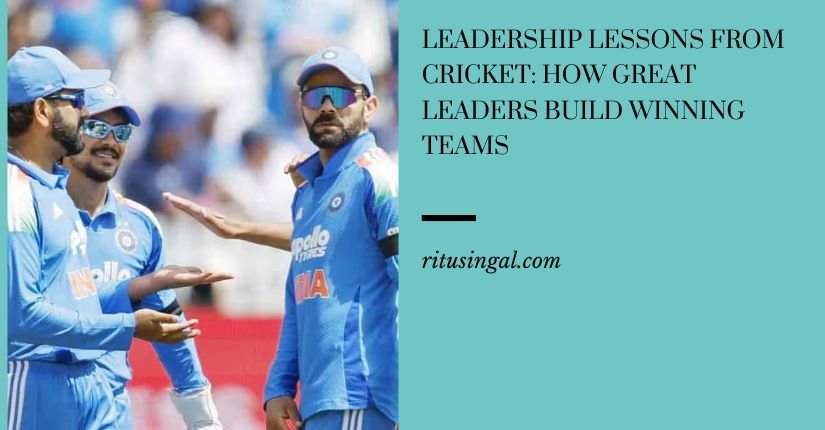
The Captain’s Mindset: Building Winning Teams from the Pitch to the Boardroom

Hello, I am Ritu Singal. Over the years, whether I am acting as a keynote speaker in India or sitting across from a corporate executive for employee counselling, one question remains constant: “How do I become the kind of leader people actually want to follow?”

Whether you are Shaqeel, a business owner, or a professional climbing the ladder in a global institute, your success isn’t defined by your individual brilliance, but by the collective heartbeat of your team. To understand this, we need to look at the greatest theatre of leadership we know: Cricket.

Leadership Skills & Winning Teams: Lessons from the 2003 World Cup | Life Coach Ritu Singal

We often talk about the glory years, but leadership is forged in the “almost” moments. Think back to 2003. India reached the finals with a team dripping with legendary talent. We had Virender Sehwag—who played with the fearlessness of Sachin Tendulkar—Saurav Ganguly, and the explosive Yuvraj Singh. The nation’s expectations were at an “Infinity War” level of intensity.

MUST WATCH 

But when we faced that daunting target of 359 runs, the pressure became a physical weight. We lost. When Ganguly was later asked what he told the team during the break, he admitted how tough the mountain was to climb.

As the best life coach for many high-performers, I see this in offices every day. You can have a “Dream Team” of experts, but if the leader cannot manage the psychology of a setback, the talent evaporates. Leadership isn’t just about strategy; it’s about the “break-time talk.” It’s about what you say when the goal feels impossible.

The Shift: From 434 Runs to 2026 Reality
Leadership quality shows slowly, like a slow-burning fuse. Take the famous match where a target of 434 runs was set. In those moments, the “internet voice committee” and the critics are always loud. But a true leader filters the noise.

I remember a story where a spouse asked a player what the secret was, and the answer was simple: Belief. They scored the runs because they decided, collectively, that the target was “easy” before they even picked up the bat.

To build a winning team, you must master these leadership skills:

Psychological Safety: Whether it’s “Saini” or “Laddu” on your team, they need to know that if they fail while swinging for a six, you have their back.

The “Next Man In” Philosophy: Ganguly’s era taught us that the captain must be ready to anchor the ship the moment a wicket falls. You aren’t just a boss; you are the safety net.

Customized Coaching: In my employee counselling sessions, I emphasize that you cannot lead everyone the same way. You don’t talk to a Sehwag the same way you talk to a Dravid.

Why Leadership is Like a “Subscription” to Excellence

I often joke that leadership is like a subscription—you have to renew it every single day. You don’t just “become” a leader and stop. You earn that title through every interaction. When the commentator asked that famous question about what was said to a partner before a big game, the answer wasn’t a complex tactical breakdown. It was about connection and trust.

In any organization, the “runs” (results) follow the “culture” (the vibe). If your team feels like they are playing a game of golf—solitary and pressured—they will crack. If they feel like they are part of a brotherhood, they will chase down 434 runs without blinking.

Checkout: Take Your Leadership Skills to the Next Level: Qualities of Effective Leaders in the 21st Century

Final Thoughts: Can You Do It?

As I always say, “Leadership is a tough thing, but you can do it well.” It requires a mix of empathy and raw grit. You have to be the person who stays calm when the “Schezwan sauce” moments of business life get too spicy to handle.

If you are ready to transform from a manager into a visionary, start by looking at your team not as “resources,” but as players in a championship final. Give them a reason to believe the target is easy, and they will give you the win.

Hello, I am Ritu Singal. Over the years, whether I am acting as a keynote speaker in India or sitting […]

Marriage, Mindsets, and Meaning A Life Coach’s Perspective on Lasting Relationships

I often observe couples expecting instant harmony in marriage. However, real growth always takes time.
When we plant a seed, we prepare soil patiently. Similarly, relationships need preparation and patience.
Two individuals come from different cultures and conditioning. Therefore, adjustment becomes essential.
Still, many couples rush decisions. Consequently, frustration replaces understanding.
I clearly see rising intolerance and inflated egos everywhere. As a result, marriages suffer deeply.

Healthy Relationships Begin with Perspective, Not Perfection

Perspective changes everything in marriage. Therefore, I encourage couples to change their viewpoint.
When you see problems too closely, they look bigger. However, from distance, they look manageable.
Likewise, focusing only on faults creates negativity. Consequently, appreciation disappears slowly.
If you scan your partner for mistakes, you will find them. That pattern damages emotional safety.
Instead, observe the overall picture. Surely, you will notice effort, intent, and goodness.

Conditioned Minds and Unrealistic Partner Expectations

Most people enter marriage with rigid conditioning. Naturally, they compare partners with family members.
They expect one person to carry multiple roles perfectly. Unfortunately, that never happens.
Marriage is a package deal. Therefore, strengths and weaknesses coexist.
If you focus on missing qualities, dissatisfaction grows. On the other hand, gratitude builds stability.
Thus, appreciate what works well. Otherwise, the half-empty mindset will dominate emotions.

MUST WATCH


Be Strict With Yourself and Gentle With Your Partner

I often notice a recurring imbalance in relationships. People justify their own mistakes easily.
However, they judge their partner harshly. This approach damages trust and respect.
When I get angry, I excuse myself quickly. Yet, I question my partner’s behavior endlessly.
Instead, reverse this habit. Be accountable for yourself first. Then, show compassion to others.
This shift alone improves communication significantly.

Judgment Based on Limited Information Harms Bonds

We often judge people based on single conversations. Unfortunately, that creates false impressions.
I once met a family that seemed negative initially. Later, I realized they were deeply decent people.
Our perceptions depend on internal filters. Therefore, judgment becomes biased.
Someone wearing blue glasses sees blue everywhere. Likewise, personal biases shape interpretations.
Thus, avoid labeling partners as right or wrong too quickly.

Different Interests Do Not Mean Wrong Choices

In many marriages, interests differ widely. One partner may value career growth deeply.
Meanwhile, the other may value leisure and social life. Both preferences are valid.
Conflict arises only when comparison starts. Each partner uses a different lens.
Instead of proving superiority, respect differences. That acceptance strengthens emotional intimacy.
Marriage thrives when individuality receives respect.

Phone Conversations and External Influences Create Distance

Modern relationships face new challenges. Excessive phone conversations influence emotions constantly.
Friends, parents, and relatives share opinions all day. Consequently, confusion increases.
Every person speaks from personal experiences. Therefore, advice often becomes emotionally charged.
Gradually, negativity builds without awareness. Eventually, relationships collapse unexpectedly.
I have seen marriages break due to repeated external influence.

Choose Guidance From the Right Source

I strongly recommend choosing guidance wisely. Talk to one mentor or a wise coach.
That ensures clarity and emotional balance. Parents, although loving, remain emotionally involved.
Friends also project their unresolved experiences. Therefore, confusion multiplies.
This applies to both men and women equally. Seek neutral guidance for long-term clarity.
Right guidance saves relationships silently.

Match Baselines, Not Just Birth Charts

Compatibility goes beyond rituals and charts. I focus on baseline alignment in counselling.
Baselines include ambition, money mindset, values, and lifestyle priorities.
If baselines mismatch severely, conflicts intensify. Love alone cannot bridge large value gaps.
For example, ambition versus peace-oriented living creates constant dissatisfaction.
Therefore, align baselines early to ensure compatibility.

Checkout: Empowering you to live your best life

Gratitude, Patience, and Love Sustain Marriage

Marriage remains a sacred bond. However, ego and fault-finding weaken it daily.
Instead, practice gratitude consistently. Appreciate at least eighty percent of what works.
Avoid obsessing over the remaining twenty percent. That habit steals joy unnecessarily.
Research also confirms this truth. Long-term happiness depends on healthy relationships.
So, choose patience, empathy, and love consciously.

A Final Reflection From Life Coach Ritu Singal

I truly believe marriages can heal with awareness. Change yourself gently first.
With love, people evolve naturally. Intolerance never builds connection.
Value relationships deeply. Protect them from ego-driven decisions.
When we nurture relationships, happiness follows naturally.
Love you all. Wishing everyone a truly happy marriage.

I often observe couples expecting instant harmony in marriage. However, real growth always takes time. When we plant a seed, […]

The Power of Teamwork, Listening, and Human Potential in the Workplace

We often underestimate the power of small components coming together with purpose. A massive bridge across a vast ocean is not built in one stroke; it is constructed piece by piece.

A car is not a single entity but a combination of thousands of small parts, each insignificant alone yet extraordinary together. Even the human body is made of tiny cells that collectively create intelligence, emotion, creativity, and limitless potential.

In the workplace, the same principle applies. Organizations are not built by systems alone; they are built by people. When people align, listen, and collaborate, they create results that no individual can achieve alone. This belief forms the foundation of our work in employee counselling, workplace counselling, and leadership development.

From Small Beginnings to Extraordinary Growth

When Infosys began its journey, it was not a giant corporation. It started with just seven people and a single computer system. From that modest beginning emerged one of the world’s most respected IT organizations. This story is not about technology alone; it is about human collaboration, trust, and shared vision.

The question we must ask ourselves is simple yet powerful:
If a few people can create such wonders together, what can our families, teams, and organizations achieve when they truly unite?

Why Teams Fail Despite Talent

Despite having skilled individuals, many organizations struggle. Through years of workplace counselling and employee counselling, we repeatedly hear similar concerns:

  • “There is too much politics here.”
  • “People don’t trust each other.”
  • “Egos and blame games are everywhere.”
  • “I feel unheard and undervalued.”

Politics exists in every organization, big or small. But politics is not the real problem. The real issue is the absence of respect, listening, and emotional safety. When people stop valuing one another, collaboration breaks down.

Checkout: The Next Gen Leader: Trends Shaping Indian Business

The Role of Listening Skills Counselling in Strong Teams

One of the most overlooked leadership capabilities is listening skills counselling. Leaders often believe that decision-making is about authority. In reality, sustainable decisions come from deep listening.

When we listen:

  • People feel respected.
  • Hidden problems surface early.
  • Trust grows naturally.
  • Accountability improves.

In our experience, the most successful leaders are not those who speak the most, but those who listen with intent and act with clarity.

Insecurity: The Silent Destroyer of Collaboration

One major reason teams fail is insecurity. Insecurity often stems from past experiences, fear of job loss, or lack of confidence. An insecure employee may resist teamwork, withhold information, or avoid collaboration.

MUST WATCH

We once conducted a simple exercise during a team session. An employee was asked to pick a book placed at the top of a tall rack. Alone, he struggled. Eventually, he asked others for help—someone held the stool, another stabilized it, and together they succeeded.

The learning was profound:

  • To rise higher, we must allow others to support us.
  • Great leaders grow taller not by standing alone, but by building strong teams beneath them.
  • Jealousy vs. Growth Mindset in the Workplace

Another barrier to teamwork is jealousy. When someone receives recognition or promotion, resentment often replaces curiosity. Instead of asking “What can I learn from them?”, people ask “Why not me?”

Organizations that thrive cultivate a learning mindset. They encourage employees to observe, adapt, and improve rather than compare and complain. When jealousy transforms into learning, teams evolve faster and perform better.

Selfishness and the Illusion of Individual Success

Many professionals focus only on personal gain—salary, designation, visibility. But organizations do not grow through isolated success.

Consider a pond filled with fish. If the pond becomes polluted, no fish survives. Similarly, if the organization deteriorates, individual success becomes impossible. When the company grows, the team grows, and individuals grow naturally.

This philosophy lies at the heart of effective employee counselling and workplace counselling programs.

Arrogance: When Strength Turns into Weakness

Arrogance breaks teams faster than failure. A powerful story illustrates this clearly. A lion ruled the jungle because other animals supported him. When arrogance replaced humility, the animals withdrew. Alone, the lion became weak and vulnerable.

In organizations, arrogance isolates leaders and team members alike. Respect builds loyalty; arrogance destroys it.

Belongingness: The Emotional Glue of High-Performing Teams

Belongingness is not a soft concept; it is a performance driver. When employees feel connected to their organization and colleagues, they invest more energy, creativity, and responsibility.

Without belongingness:

  • Work feels temporary.
  • Commitment declines.
  • Performance becomes transactional.
  • With belongingness:
  • Teams collaborate instinctively.
  • Challenges are faced together.
  • Success becomes collective.

The message is clear: We cannot win as individuals what must be won as a team.

The Balloon Experiment: Proof That Helping Others Helps Us

In one teamwork exercise, participants were asked to find their own name on balloons scattered across a room. Very few succeeded. In the second round, they were asked to help others find their balloons. Within minutes, all balloons were found.

Ritu Singal counselling sessionThe lesson is timeless:When we focus on helping others succeed, we succeed faster ourselves.

What Google’s Project Aristotle Teaches Us About Teams

Google conducted a landmark study called Project Aristotle, analyzing 180 teams over three years. The conclusion was powerful:

High-performing teams are not defined by talent alone, but by:

  • Equal opportunity to speak
  • Psychological safety
  • Mutual respect
  • Active listening
  • Empathy and understanding

Teams where people feel heard outperform teams filled with silent brilliance. This reinforces the importance of listening skills counselling and emotional intelligence in the workplace.

Time Management Strategies That Strengthen Teams

Effective teams also master Time Management Strategies. When time is respected:

  • Meetings become purposeful
  • Priorities are clear
  • Stress reduces
  • Productivity increases

Time management is not about doing more; it is about doing what matters together. Teams aligned on priorities outperform teams working in isolation.

Why Employee Counselling Is No Longer Optional

Modern workplaces are complex, fast-paced, and emotionally demanding. Employee counselling provides a structured space to:

  • Address conflicts
  • Reduce stress
  • Improve communication
  • Strengthen trust
  • Align personal and organizational goals

Organizations that invest in counselling build resilience, loyalty, and sustainable performance.

Working Together Is the True Definition of Success

Henry Ford said it best:
Coming together is a beginning. Staying together is progress. Working together is success.

We firmly believe that no individual brilliance can replace collective strength. Whether in families, organizations, or communities, unity transforms potential into performance.

Conclusion: We Win Only When We Win Together

Success is not about standing above others; it is about standing with them. When we listen deeply, manage time wisely, counsel with empathy, and build trust intentionally, teams become unstoppable.

The future belongs to organizations that value human resources, emotional intelligence, and teamwork. Together, we do not just survive—we thrive.

Your Mind is as Important as Your Body: Why We Must Break the Stigma

I often hear the same hesitation in the voices of those I mentor: “Ritu, I feel heavy. I feel lost. But I can’t go to a doctor. What will people say?”

If you are struggling with your mental well-being, I want you to take a deep breath and listen closely. There is a strange irony in our society. If you break your leg, you don’t hide it; you go to the hospital, get a cast, and everyone signs it. If your stomach is upset, you seek a remedy. But when it comes to “brain pain”—that deep, invisible ache where someone’s words hurt you, or a dark cloud seems to follow you—we suddenly become experts at hiding.

We fear the label. We fear the word “depression.” We worry that seeking help makes us “crazy” or “weak.” But let’s be honest: if you have a physical problem, you want it fixed, right? Your mental health deserves that same urgency. As an online life coach, I am here to tell you that your pain is real, but it doesn’t always require a clinical label to start the healing process.

Understanding the “Brain Pain”

Before we jump to the conclusion that something is permanently broken, we need to understand the chemistry of our happiness. Sometimes, what we perceive as a deep, insurmountable depression is actually a severe depletion of our “happy hormones.” Specifically, I want to talk about Serotonin and Dopamine.

Your Mind is as Important as Your Body: Why We Must Break the Stigma These aren’t just scientific terms; they are the fuel for your mood. When these are low, the world looks grey. The good news? You can actually trigger the secretion of these hormones through very basic lifestyle shifts. Before the stigma holds you back from seeking professional help, you can start a “home-healing” protocol to see if your spirit just needs a little nourishment.

Checkout: The Natural Route to Overcome Depression

Small Steps to Secretion: Reclaiming Your Joy

You don’t need a massive achievement to feel better. You don’t need a promotion or a public validation to jumpstart your brain’s chemistry. You can do it in small, quiet steps:

Move for 10-20 Minutes: Whether it’s a brisk walk in the morning or just stretching, physical movement is a direct command to your brain to release Dopamine.

Soak in the Sun: Just 10 minutes in the sunlight can significantly boost your Serotonin levels. It’s nature’s simplest antidepressant.

The Power of Small Wins: Instead of looking at the mountain, look at the pebble. Say to yourself, “I did my exercise today,” or “I finished this one task.” These tiny victories build a sense of accomplishment.

Creativity and Connection: Listen to your favorite music, cook a simple meal, or pick up a paintbrush. These acts of creation shift your focus from the “pain” to the “process.”

The Human Touch: Never underestimate the power of a hug. Connecting with a friend or hugging a loved one releases Oxytocin, another vital hormone that combats loneliness.

Self-Help vs. Professional Care: When to Seek More Support for Mental Health

I always tell my clients: try these lifestyle changes first. Maybe your problem can be solved at home by simply adjusting how you treat your body and mind. However, I want to be very clear—if you try these things and the cloud doesn’t lift, there is absolutely no shame in seeing a doctor.

Physical and mental health are two sides of the same coin. Both are equally important. If your “brain pain” persists, it is a sign of strength, not weakness, to reach out. You can get counselling by a life coach to help navigate these lifestyle transitions, or consult a medical professional if the imbalance requires it.

“Nothing happens” when people talk. People will always have opinions, but they aren’t the ones living your life. You are.

Checkout: Signs You Need a Mental Health Coach and Why You Should Consider Me?

You Don’t Have to Walk Alone

If the fear of “what people will say” is keeping you trapped in a dark room, let me be your bridge to a brighter place. As an online life coach, I provide a safe, non-judgmental space where we focus on your growth and your healing, away from the prying eyes of society.

You deserve to feel light again. You deserve to have your “brain pain” treated with the same care as a broken bone. Start with a 10-minute walk tomorrow. Start by listening to a song that makes you smile. Work on those hormones, embrace the small wins, and remember: your well-being is the only validation you truly need.

Social Icons

Facebook

Twitter

Instagram

Youtube

Linkedin

Book Your Session

Scroll to Top

Request a Callback