We often underestimate the power of small components coming together with purpose. A massive bridge across a vast ocean is not built in one stroke; it is constructed piece by piece.
A car is not a single entity but a combination of thousands of small parts, each insignificant alone yet extraordinary together. Even the human body is made of tiny cells that collectively create intelligence, emotion, creativity, and limitless potential.
In the workplace, the same principle applies. Organizations are not built by systems alone; they are built by people. When people align, listen, and collaborate, they create results that no individual can achieve alone. This belief forms the foundation of our work in employee counselling, workplace counselling, and leadership development.
From Small Beginnings to Extraordinary Growth
When Infosys began its journey, it was not a giant corporation. It started with just seven people and a single computer system. From that modest beginning emerged one of the world’s most respected IT organizations. This story is not about technology alone; it is about human collaboration, trust, and shared vision.
The question we must ask ourselves is simple yet powerful:
If a few people can create such wonders together, what can our families, teams, and organizations achieve when they truly unite?
Why Teams Fail Despite Talent
Despite having skilled individuals, many organizations struggle. Through years of workplace counselling and employee counselling, we repeatedly hear similar concerns:
- “There is too much politics here.”
- “People don’t trust each other.”
- “Egos and blame games are everywhere.”
- “I feel unheard and undervalued.”
Politics exists in every organization, big or small. But politics is not the real problem. The real issue is the absence of respect, listening, and emotional safety. When people stop valuing one another, collaboration breaks down.
Checkout: The Next Gen Leader: Trends Shaping Indian Business
The Role of Listening Skills Counselling in Strong Teams
One of the most overlooked leadership capabilities is listening skills counselling. Leaders often believe that decision-making is about authority. In reality, sustainable decisions come from deep listening.
When we listen:
- People feel respected.
- Hidden problems surface early.
- Trust grows naturally.
- Accountability improves.
In our experience, the most successful leaders are not those who speak the most, but those who listen with intent and act with clarity.
Insecurity: The Silent Destroyer of Collaboration
One major reason teams fail is insecurity. Insecurity often stems from past experiences, fear of job loss, or lack of confidence. An insecure employee may resist teamwork, withhold information, or avoid collaboration.
MUST WATCH
The learning was profound:
- To rise higher, we must allow others to support us.
- Great leaders grow taller not by standing alone, but by building strong teams beneath them.
- Jealousy vs. Growth Mindset in the Workplace
Another barrier to teamwork is jealousy. When someone receives recognition or promotion, resentment often replaces curiosity. Instead of asking “What can I learn from them?”, people ask “Why not me?”
Organizations that thrive cultivate a learning mindset. They encourage employees to observe, adapt, and improve rather than compare and complain. When jealousy transforms into learning, teams evolve faster and perform better.
Selfishness and the Illusion of Individual Success
Many professionals focus only on personal gain—salary, designation, visibility. But organizations do not grow through isolated success.
Consider a pond filled with fish. If the pond becomes polluted, no fish survives. Similarly, if the organization deteriorates, individual success becomes impossible. When the company grows, the team grows, and individuals grow naturally.
This philosophy lies at the heart of effective employee counselling and workplace counselling programs.
Arrogance: When Strength Turns into Weakness
Arrogance breaks teams faster than failure. A powerful story illustrates this clearly. A lion ruled the jungle because other animals supported him. When arrogance replaced humility, the animals withdrew. Alone, the lion became weak and vulnerable.
In organizations, arrogance isolates leaders and team members alike. Respect builds loyalty; arrogance destroys it.
Belongingness: The Emotional Glue of High-Performing Teams
Belongingness is not a soft concept; it is a performance driver. When employees feel connected to their organization and colleagues, they invest more energy, creativity, and responsibility.
Without belongingness:
- Work feels temporary.
- Commitment declines.
- Performance becomes transactional.
- With belongingness:
- Teams collaborate instinctively.
- Challenges are faced together.
- Success becomes collective.
The message is clear: We cannot win as individuals what must be won as a team.
The Balloon Experiment: Proof That Helping Others Helps Us
In one teamwork exercise, participants were asked to find their own name on balloons scattered across a room. Very few succeeded. In the second round, they were asked to help others find their balloons. Within minutes, all balloons were found.
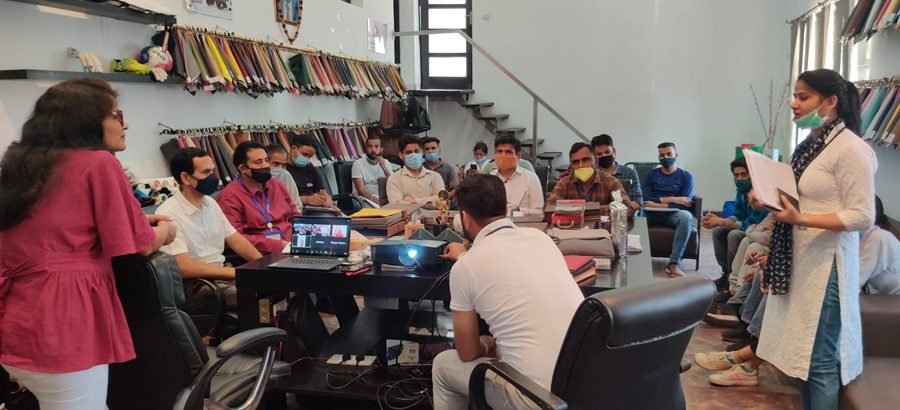
The lesson is timeless:
When we focus on helping others succeed, we succeed faster ourselves.
What Google’s Project Aristotle Teaches Us About Teams
Google conducted a landmark study called Project Aristotle, analyzing 180 teams over three years. The conclusion was powerful:
High-performing teams are not defined by talent alone, but by:
- Equal opportunity to speak
- Psychological safety
- Mutual respect
- Active listening
- Empathy and understanding
Teams where people feel heard outperform teams filled with silent brilliance. This reinforces the importance of listening skills counselling and emotional intelligence in the workplace.
Time Management Strategies That Strengthen Teams
Effective teams also master Time Management Strategies. When time is respected:
- Meetings become purposeful
- Priorities are clear
- Stress reduces
- Productivity increases
Time management is not about doing more; it is about doing what matters together. Teams aligned on priorities outperform teams working in isolation.
Why Employee Counselling Is No Longer Optional
Modern workplaces are complex, fast-paced, and emotionally demanding. Employee counselling provides a structured space to:
- Address conflicts
- Reduce stress
- Improve communication
- Strengthen trust
- Align personal and organizational goals
Organizations that invest in counselling build resilience, loyalty, and sustainable performance.
Working Together Is the True Definition of Success
Henry Ford said it best:
Coming together is a beginning. Staying together is progress. Working together is success.
We firmly believe that no individual brilliance can replace collective strength. Whether in families, organizations, or communities, unity transforms potential into performance.
Conclusion: We Win Only When We Win Together
Success is not about standing above others; it is about standing with them. When we listen deeply, manage time wisely, counsel with empathy, and build trust intentionally, teams become unstoppable.
The future belongs to organizations that value human resources, emotional intelligence, and teamwork. Together, we do not just survive—we thrive.