There is a moment in every person’s life where the ground beneath them simply ceases to exist. For me, that moment was in 2007. I was a housewife, a mother of two daughters, a woman who had traded her legal aspirations for the sanctity of the hearth. Then, in a single day, my world collapsed. My husband committed suicide, leaving behind not just a grieving family, but a staggering debt of 60 crore rupees and over 100 court cases.
People didn’t just look at me with pity; they looked at me with dismissal. The consensus was clear: if a seasoned businessman couldn’t handle this weight and chose to leave, how could a “mere housewife” survive it? But every morning, standing before the mirror, I gave myself a command: “I shall not be defeated. I will not give up today.”
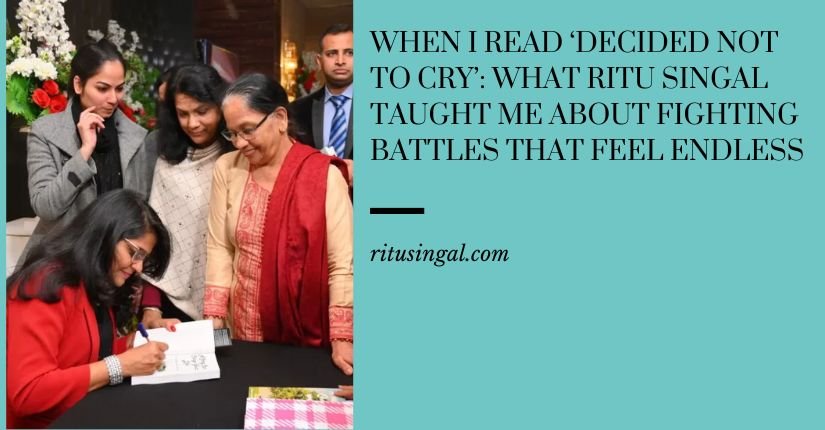
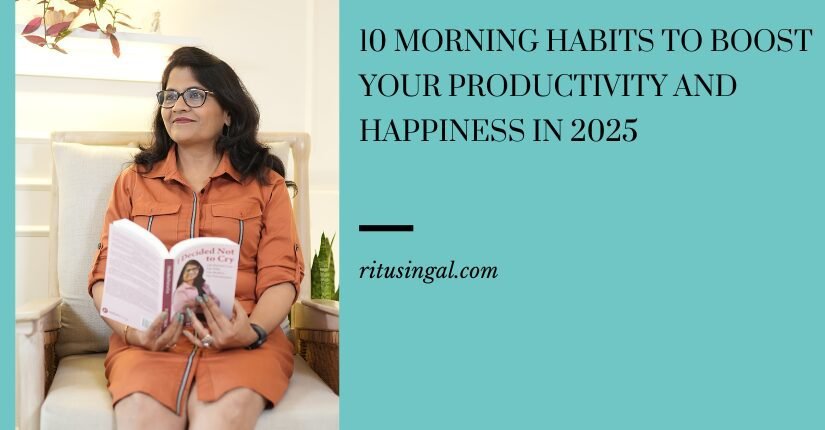
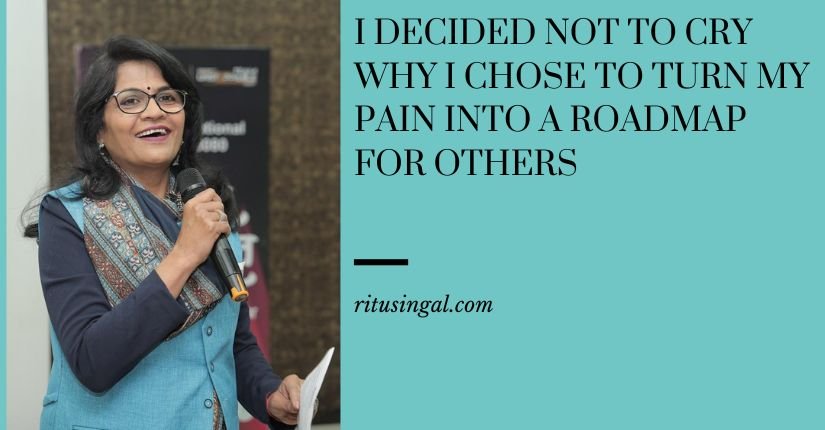
I wrote my book, I Decided Not to Cry, because I realized that my story wasn’t just about financial recovery—it was about reclaiming a soul that had been taught to stay small.
Checkout: A glimpse of my book I Decided Not to Cry
Breaking the Silence on Extramarital Pain
One of the most difficult chapters to write—and the one I receive the most messages about—is my husband’s extramarital relationship. I chose to be brutally honest about this because there is a silent epidemic of women suffering in the shadows.
MUST WATCH
When a partner wanders, a woman’s first instinct is often to look inward and ask, “What am I lacking?” We start to over-analyze our appearance, our clothes, our behavior. We try to “fix” ourselves to win them back. I did it too. But I wrote this book to tell every woman: It is not about you. Infidelity is not a reflection of your worth; it is a reflection of the other person’s internal void. By sharing this, I wanted to strip away the shame. When we realize we aren’t the cause, we stop shrinking. We start growing.
From the Kitchen to the Boardroom: A Woman’s Rise
The transition from managing a household to managing a 60-crore debt was a battlefield. I remember attending an industrialist function in Bombay shortly after I took over the business. I was the only woman in a room full of male competitors. They looked at me as a “poor, trapped woman.”
In our patriarchal society, we trust women to raise the next generation, to save pennies for the future, and to run a home with surgical precision. Yet, we question their ability to handle “finance.” Why? A woman who can balance a household budget during a crisis is a natural economist.
I had no experience, so I made the world my mentor. I sat with my laborers and asked how to mix concrete. I went to China and worked in labs to understand leather production. I refused to look “stupid” because I knew knowledge was my only shield against those who wanted to see me fail.
The Power of “I Have Not Reached” Mindset
In my journey, I discovered a fundamental flaw in how we handle hardship. In our culture, we often deflect responsibility. We say, “He didn’t come to Delhi,” rather than, “I didn’t reach Delhi.” We blame the stars, the luck, or the people around us.
I decided to stop being a victim of my circumstances and start being the architect of my recovery. I practiced radical gratitude. Even in the darkest months, I wrote in my journal. I thanked God for the water in the tap and the air in the room. If you can be thankful for the small things, the big problems start to look like mountains you are actually equipped to climb.
Checkout: From Hardships to Diamonds: Turning Life’s Challenges into Strength
A Message to the “Higher Ones”
To anyone reading this who feels they are drowning: Stop talking to the people who only sit and pity you. I call them the “sympathizers”—those who say, “Poor thing, you are so sad.” That energy will only pull you deeper. Talk to the “higher ones”—those who challenge you, who pull you up, and who remind you of your strength.
My life is like the movie Life of Pi. I was on a small boat in a vast, storm-tossed sea with a lion (my challenges) sitting right across from me. I had to stay awake to keep the lion at bay, but that lion is also what kept me alive and alert.
Why You Must Read “I Decided Not to Cry”
I wrote I Decided Not to Cry because I want to increase your “capacity.” We often cry over small things because our internal capacity is small. When you read about the suicide, the court cases, the betrayal, and the eventual victory, your own problems will start to feel manageable.
You have the power, the mind, and the spirit to change your situation. God doesn’t give these battles to the weak; He gives them to those who can handle them and then show others the way out. I am no longer just a businesswoman or a survivor. I am a woman who chose to fight. And if I can do it, so can you.